What are the Indiana Laws for Guns?

If you are interested in purchasing a firearm, it is strongly encouraged to educate yourself on the Indiana gun control laws first. Gun control laws are in place to regulate the purchase and use of firearms. And although pretty standard across the board, they do differ from state to state; so whatever laws you are familiar with in another jurisdiction may not be the same as your current place of residence.

Furthermore, there are states that have gun laws that overlap or contradict federal law, making the differentiation quite complex in some cases. So always be sure to review Indiana gun control laws before acquiring or carrying a firearm.

Continue reading to learn the basics surrounding Indiana gun control laws.

Criminal Defense Law Firm 317-636-7514

Who Can and Cannot Have a Gun

Across the board, regardless of state, both minors and convicted felons are prohibited to own or carry a firearm. However, other states add onto this “who can and who can’t” list. For instance, some states do not permit minors and felons, as well as, those with mental disabilities and illegal aliens, to own or carry a firearm.  

In addition to authorized individuals, states also regulate which types of firearms are legal and which are not. For instance, most states ban sawed-off shotguns, machine guns, silencer guns, armor-piercing bullets, and automatic weapons. To learn more details about gun licensing regulations in Indiana, visit the in.gov firearm licensing webpage.

Indiana Laws

§ 35-47-2-21

In Indiana, those who cannot own or carry a firearm include minors, convicted felons, drug and alcohol abusers, the mentally incompetent, and anyone convicted of a crime involving the misuse of a gun.

There is no imposed waiting period for prospective gun buyers, but certain criteria must be met in order to be approved for ownership.

Firearms that are banned include sawed-off shotguns, machine guns, silencer guns, armor-piercing ammunition, and automatic weapons.

Firearms are not allowed on or near school grounds.

In terms of gun control laws, any case where a state law overlaps with a federal law, federal law prevails.

Learn More About Your Right to Bear Arms

Criminal Defense Lawyer Indianapolis Indiana
Criminal Defense Lawyer 317-636-7514

Talk to an experienced Indiana criminal defense lawyer for help understanding your rights to purchase and carry a firearm. Call Attorney David E. Lewis at 317-636-7514 to schedule a free initial consultation to discuss your legal concerns with a seasoned Indianapolis criminal defense attorney you can trust. We work around the clock to ensure your rights are protected and your freedoms are preserved.


Is My Child Charged With a Delinquent Offense or Status Offense?

When a child under the age of 18 years old is arrested or breaks the law, they are entered into the juvenile court system. There, they will face a series of legal procedures, obligations, penalties, and ultimately, a conviction. Their conviction, however, largely depends on whether they are charged with a delinquent offense or a status offense.

If your child was recently arrested, it is important to learn the difference between the two types of offenses. Not only can this help you better understand what to expect from the juvenile court proceedings, it can also help you protect your child from future brushes with the law.

Continue reading to learn the difference between a delinquent offense and a status offense.

Juvenile Crime Lawyer 317-636-7514

Status Offenses

Status offenses are special because they can only be committed by people of a certain status. This does not mean wealth or intellect; instead, it refers to age. A status offense is only illegal for those who are underage, also known as minors. A minor is someone that is not old enough to partake in a certain behavior or action.

For example, a person under 16 years of age cannot operate a vehicle, a person under the age of 18 cannot smoke or purchase cigarettes, and a person under the age of 21 cannot consume nor purchase alcohol. All three of these individuals are considered “minors”, which means they would commit a status offense if they are caught partaking in any of the actions just mentioned.

Additional Examples of Status Offenses:

✤ Truancy

✤ Curfew Violations

✤ Running Away From Home

Delinquent Offenses

Delinquent offense are different from status offenses, primarily because they are crimes that can be committed by individuals of any age. Basically, both minors and adults can commit delinquent offenses. Examples of such crimes include shoplifting, operating a vehicle without a license, drunk driving, fraud, assault, vandalism, and any other action that is against state and federal laws. Minors who commit delinquent offenses are more likely to face harsher penalties.

Most often, less serious cases will result in an informal plan of probation; but more serious offenses can lead to a minor having to go before a judge and being sentenced to a juvenile detention center. If a minor is near 18 years old and commits an egregious crime, such as murder, they may be prosecuted as an adult. Check out our recent blog, “How Does the Juvenile Court System Work?” to learn more about juvenile court.

Who to Talk to About Your Child’s Case

David E. Lewis Attorney at Law 317-636-7514

Call David E. Lewis, Attorney at Law, at 317-636-7514 for aggressive and experienced criminal defense in Indianapolis, Indiana. Our law firm offers free initial consultations to discuss the best strategies for defense against your child’s criminal charges. Call 317-636-7514 to schedule your consultation with a trusted Indianapolis criminal lawyer, today.

What is the Preemption Doctrine?

If you are facing criminal charges for an act that is legal under one jurisdiction, but illegal under another, you may want to review the Constitution’s Preemption Doctrine. It can help you better understand your situation, and perhaps even develop a stronger defense to avoid the maximum penalties if ultimately convicted.

Continue reading to learn about the Preemption Doctrine, and how it may apply to your criminal case.

Criminal Defense Law Firm 317-636-7514

Criminal Defense Law Firm 317-636-7514

The Preemption Doctrine

The Preemption Doctrine stems from the United States Constitution. It is specifically derived from the Supremacy Clause, which states, “Constitution and the laws of the United States (…) shall be the supreme law of the land (…) anything in the constitutions or laws of any state to the contrary notwithstanding.”

So what does this mean in common language? It means that any federal law can override any conflicting state law. Basically, states cannot pass any laws that violate our rights outlined in the U.S. Constitution, otherwise, federal judiciaries can overturn the law for being unconstitutional. On the other hand, there are some exceptions.

You see, if any law provides citizens more rights or imposes more responsibility, such law will prevail. But if state and federal laws blatantly conflict with one another, we go back to the Supremacy Clause which states that federal law will always prevail. Here are some examples that will help you understand who it works:

If a certain law provides citizens more rights, that law will override the opposing jurisdiction. For instance, if state law allows same-sex marriage, but federal law does not, the state law will trump.

If a certain law imposes more responsibility onto citizens, that law will trump the opposing one. For instance, if the state law requires seat belts, but the federal law does not, the state law will prevail.

If state and federal law explicitly conflict, federal law will prevail. For instance, if state law allows cannabis use, but federal law does not, anyone caught in possession of cannabis will be arrested and charged.

Facing Criminal Charges Based on Conflicting State and Federal Laws?

David E. Lewis Criminal Defense Attorney

David E. Lewis Attorney at Law 317-636-7514

What you need is aggressive and skilled legal defense. Call 317-636-7514 to schedule a consultation with aggressive Indiana criminal defense attorney, David E. Lewis, who will stop at nothing to protect your rights and preserve your freedoms. With decades of hands-on experience, you can trust Attorney David E. Lewis to build you a strong and impactful defense against your criminal charges. Call 317-636-7514 to schedule a free initial consultation for Indianapolis criminal defense, today.

Can I Still Get Arrested Even if I Was Not the One Committing a Crime?

In life, regardless of age, you must choose your peers wisely. That is because the short answer to the question, “Can I Still Get Arrested Even if I Was Not the One Committing a Crime?” is yes. It is true that your presence alone could be enough to get you arrested and charged with a crime, even if you are innocent. You see, there are such offenses that permit law enforcement to arrest anyone who is in a “place of common nuisance.” The criminal charge for being present in a place of common nuisance is aptly referred to as, “visiting a common nuisance.” Furthermore, there is even a crime referred to as, “maintaining a common nuisance.”

Continue reading to learn more about these offenses, what to look out for, and how to avoid the maximum penalties for such criminal charges.

Criminal Defense Law Firm 317-636-7514

Criminal Defense Law Firm 317-636-7514

A Place of Common Nuisance

A “place of common nuisance” is considered to be any private property in which illegal activity is actively taking place. A place of common nuisance can be any structure, including houses, vehicles, apartments, hotel rooms, boats, and any other privately-owned residence. The most common types of crimes that occur in a place of common nuisance are the consumption and selling of illegal substances and paraphernalia. This includes street drugs, stolen merchandise, firearms, and medication.

Visiting a Place of Common Nuisance

Anyone person who knowingly attends a place of common nuisance is committing a crime, and if caught, can be charged with the offense of “visiting a common nuisance.” Individuals can be arrested and charged with this crime without actually taking part in any illegal activity. Here is an example:

A girl begins dating a new guy, and visits his apartment for the first time. He lives with two other male roommates. His roommates sell illegal drugs and partake in drug use at the apartment at all times. If she were to be visiting her boyfriend’s apartment while police show up, she too could be arrested just for being somewhere where illegal activity is taking place. This rings true even if she did not partake in any drug usage or trafficking.

Maintaining a Common Nuisance

If a person permits someone, or a group of people, to partake in illegal activity in their own home or vehicle, they can be charged with “maintaining a common nuisance.” Imagining the same scenario as before, the boyfriend can be charged with maintaining a common nuisance for allowing his roommates to sell and use illegal drugs in the home. Similarly, if the girl lets her new boyfriend use drugs in her apartment, she could be arrested and charged with maintaining a common nuisance. The same applies to parents who allow their children to drink underage or use drugs in their home.

Facing Criminal Charges in Indiana?

David E. Lewis Attorney at Law

David E. Lewis Attorney at Law 317-636-7514

Call 317-636-7514 to schedule a consultation with aggressive Indiana criminal defense lawyer, David E. Lewis. He will stop at nothing to protect your rights and preserve your freedoms. With decades of hands-on experience, you can trust Attorney David E. Lewis to build you a strong and impactful defense against your criminal charges. Call 317-636-7514 to schedule a free initial consultation for Indianapolis criminal defense, today.

What You Need to Know About Misdemeanor Charges

Criminal Defense Law Firm 317-636-7514

Criminal Defense Law Firm 317-636-7514

Criminal acts range in severity, from minor infractions to major offenses, which is why the law breaks down crimes into two chief categories: felonies and misdemeanors. Anyone convicted of a misdemeanor crime is called a misdemeanant, whereas anyone convicted of a felony is called a felon. Felonies are the more serious of the two, as they include major crimes like murder, forgery, tax evasion, robbery, auto theft, and repeat offenses. Misdemeanors on the other hand are less severe than felonies, but still carry a cumbersome load of consequences and legal penalties.

If you or a loved one were recently arrested on misdemeanor charges, it is wise to do your research and learn what to expect in all the possible outcomes. Continue reading to learn some important information about misdemeanor convictions and penalties in Indiana, including where to find the most aggressive criminal defense.

Misdemeanor Classifications

Misdemeanor offenses are crimes that are punishable by up to one year in jail. There are three “classes” of misdemeanor crimes. Depending on the state you live, these can include a series of letters or numbers. In states that classify misdemeanors with letters, they generally range from “A” to “C”, with Class C misdemeanors being the least serious and Class A being the most serious. In states that use numbers to classify their misdemeanors, they generally range from Class 1 to 4, with four being the least serious.

Misdemeanant Expectations

Even though misdemeanors are less serious, but still come with notable penalties. A misdemeanant (person convicted of a misdemeanor) can expect to pay fines (possibly restitution as well), complete a certain amount of community service hours, complete rehabilitation or anger management classes, attend victim impact panels, serve a term of probation, and more. The combination or extent of penalties largely depends on the defendant’s criminal history, the particular crimes they are convicted of, and the strength of their legal defense.

Misdemeanor Probation

Probation is a very common outcome of a misdemeanor conviction. The average term of probation generally ranges between 3 months and one year for misdemeanants. Conditions of probation also vary among misdemeanants, ranging in leniency and stringency. Most conditions of probation include regular drug screening, monthly meetings with a probation officer, mandatory employment, refraining from committing any more crimes, and more. Breaking the terms of probation results in a probation violation, which in turn, carries a whole other set of penalties, including extension of probation and even possible jail time.

Indianapolis Misdemeanor Lawyer

David E. Lewis Attorney at Law

David E. Lewis Attorney at Law 317-636-7514

Call Attorney David E. Lewis at 317-636-7514 to schedule a free initial consultation to discuss your Indiana misdemeanor criminal charges. We work around the clock to ensure your rights are protected and your freedoms are preserved. You can avoid the maximum penalties for your charges with our aggressive legal representation! Call 317-636-7514 to get started, today.

Facts About Indiana Death Penalty

The death penalty, also known as “capitol punishment”, is the most severe judicial penalty that can be handed down to a convict. Only those convicted of murder are eligible to be sentenced to death, but not all will face such grim sentencing. If you are interested in learning more about the Indiana death penalty, continue reading to review some common facts.

Murder Criminal Defense 317-636-7514

Murder Criminal Defense 317-636-7514

Application of Penalty

In order for a defendant to be sentenced to death, the prosecution must prove at least one of 18 “aggravating circumstances” to be true, as identified by the Indiana General Assembly in the state’s death penalty statute, IC 35-50-2-9. The jury cannot recommend the death penalty or life without parole unless they unanimously agree that the state provided sufficient evidence that supports of each charged statutory aggravating circumstance beyond a reasonable doubt. If the jury does agree unanimously, then the court is free to sentence the defendant to either extended prison time, life without parole, or capitol punishment.

Lethal Injection

Here in Indiana, our judicial system administers the death penalty by lethal injection. A prisoner is secured to a gurney with straps, and then fitted with an IV line that will send a series of chemical controlled substances into their bloodstream. In the past, the order of lethal substances generally begun with a barbiturate for the purpose of rendering the prisoner unconscious, followed by an aminosteroidal muscle relaxant (i.e. curonium bromide) to paralyze voluntary and reflex muscles, and finished with the actual lethal substance to stop their heart (i.e. potassium chloride).

After some significant lawsuits, the Indiana legislature’s budget bill made the identity of lethal injection drug provider’s secret as of 2017. Furthermore, the Indiana Supreme Court ruled that the Indiana Department of Correction may modify or adjust the drug protocol without public review, however, the issue of secrecy continues to be litigated to this very day.

Appellate Reviews

If a jury recommends the death penalty, and the court imposes it, the ruling may be subjected to three levels of appellate review before the actual punishment is fulfilled. These include 1) direct appeal, which takes place in Supreme Court and concentrates on legal issues, 2) state post-conviction review, which focuses on representing trial lawyer competency, suppressed evidence, recanted testimonies, and similar types of negligence, and 3) federal habeas corpus review, which entails federal constitutional issues.

National Death Penalty Facts:

70% of the world’s nations have abolished the death penalty. Since the year 2000, 36 additional states have done the same.

A total of 30 states, in addition to the federal government and the military, have a death penalty statute in law or practice. In contrast, 20 states do not have a death penalty statute.

New Jersey repealed its death penalty statute in 2007.

New Mexico repealed its death penalty statute in 2009.

Illinois repealed its death penalty statute in 2011.

Connecticut repealed its death penalty statute in 2012.

Maryland repealed its death penalty statute in 2013.

In 2015, the Nebraska legislature repealed its death penalty statute, but in 2016, a ballot measure struck down the ban.

The Delaware Supreme Court struck down its state's death penalty statute in 2016.

The Washington Supreme Court struck down its state's death penalty statute in 2018.

Do You Need a Murder Lawyer?

David E. Lewis Attorney at Law

David E. Lewis Attorney at Law 317-636-7514

Call the Law Office of Attorney David E. Lewis at 317-636-7514 to schedule a free initial consultation to discuss the best criminal defense for Indiana murder charges. We work around the clock to ensure your rights are protected and your freedoms are preserved. You may be able to avoid the maximum penalties for your charges with our aggressive legal representation! Call 317-636-7514 to get started, today.

Indiana Criminal Statute of Limitations Laws for Felonies and Misdemeanors

Criminal Statute of Limitations are a set of laws that regulate the amount of time state prosecutors have to file criminal charges against a suspected criminal. Each state has such regulations, including our own. Continue reading to learn more about the statutes of limitations for criminal charges in Indiana, and who to call for trusted legal counsel.

Criminal Defense Law Firm 317-636-7514

Criminal Defense Law Firm 317-636-7514

In Indiana, there are different time limits for different crimes. Such time limits vary depending on the severity of the crime. More serious crimes will have shorter time restraints, while less serious crimes will have longer ones.

Felonies5 Year Statute of Limitations
Misdemeanors2 Year Statute of Limitations
Murder ChargesNo Limit

Visit www.codes.findlaw.com to review some examples of both felonies and misdemeanors, and their set statute of limitations.

Purpose of Statute of Limitations

Our judicial system incorporates criminal statute of limitations for many good reasons. Most importantly, they ensure that all criminal trials are based on the best available evidence possible, such as testimonial evidence (police statements, eyewitness statements, etc.), physical evidence (fingerprints, DNA, etc.), and more. These kinds of evidence can be lost quickly, making it important to take action fast in terms of a criminal trial. They maintain a fair balance between fair trials and the severity of an offense.

Evading Criminal Statute of Limitations

If you are “on the lam” from the law, time is not on your side, even if you try to out smart the criminal statutes of limitations. There is simply no possible way to avoid criminal charges brought against you by the state. You see, the judicial system will pause criminal statute of limitations if a suspect leaves the state or goes into hiding. This is sometimes referred to as “toll the statutory clock.” Once the suspect comes back, the clock starts again.

What to Do if You are Facing Criminal Charges

David E. Lewis Attorney at Law 317-636-7514

David E. Lewis Attorney at Law 317-636-7514

Call Attorney David E. Lewis at 317-636-7514 to schedule a free initial consultation to discuss your criminal charges with a seasoned Indianapolis criminal defense attorney you can trust. We work around the clock to ensure your rights are protected and your freedoms are preserved. You can avoid the maximum penalties for your charges with our aggressive legal representation!

7 Probable Court Orders While on Probation

After being convicted of a state criminal charge, a judge may sentence a defendant to probation in place of jail time. Being on probation is a much better outcome than jail, however, there are still strict terms and conditions that you must adhere to, otherwise, you face additional criminal charges, including incarceration. In addition to rules and restrictions, a judge can sentence you to other types of conditions, such as community service, victim impact panels, drug testing, and more.

Continue reading to learn the top 7 court orders you may face while on probation.

Probation Violation Lawyer 317-636-7514

Probation Violation Lawyer 317-636-7514

House Arrest

If a person is a habitual offender, or has committed a more serious misdemeanor, a judge may sentence them to home detention, also known as house arrest. A person on house arrest is strictly prohibited to leave the confinements of their home for a specified period of time; if they do, they face additional criminal charges. While on home detention, a judge may also require them to wear a GPS electronic monitoring bracelet, which supervises and records their whereabouts.

GPS Electronic Monitoring Bracelet

GPS electronic monitoring bracelets, also known as ankle monitors, are a more lenient form of home detention. They are electronic devices that are worn around the ankle until the defendant is released from probation. It ensures that a defendant remains within the boundaries allotted to them by the court, which is usually just work, school, rehab, and home.

Drug Testing

A person on probation is likely to be drug tested at any given time. Most often, it is a standard part of the probation process. A judge may order them more frequently for those convicted of a drug or alcohol-related crime. It is mandatory by law to submit to random or routine drug screening, chemical testing, or urine analysis if ordered by a court.

Community Service

A common penalty, especially for less serious misdemeanors, is community service. This is basically mandatory, court-ordered volunteer work. If you have ever seen a group of people collecting garbage on the highway, or working at a local salvation store, they are likely community service workers. Most often, a person can choose their own type of work, and then a supervisor is appointed to record and sign off on their hours.

Ignition Interlock Device (IID)

A common term of probation used for habitual drunk driving offenders is an ignition interlock device (IID, which is installed in a person’s car to stop them from driving while drunk. They lock a car’s ignition, until the driver breathes into the device, like a breathalyzer, and shows a BAC lower than 0.04 percent. If the offender has a BAC higher than 0.04%, the engine will not start and the device record and send the reading to the proper authorities. It can be considered a violation of probation, which leads to more criminal charges.

Victim Impact Panels

For intoxicated driving charges, a defendant may be ordered to attend victim impact panels, which are basically public programs in which survivors, or family, of those injured or killed in drunk driving accidents, speak about their struggles and losses in an attempt to educate people about the extreme consequences of driving under the influence of drugs or alcohol.

Alcohol / Drug Education

Another common court order of probation are mandatory alcohol and drug education courses or rehabilitation. These are often reserved for addicts, and offenders who have been charged with a drug or alcohol-related crime. Participants are ordered to show up to all classes on time, complete all assignments on time, and pass the course to satisfy the court orders successfully.

Recently Arrested for a Misdemeanor in Indiana?

David E. Lewis Attorney at Law 317-636-7514

David E. Lewis Attorney at Law 317-636-7514

Call the Law Office of David E. Lewis at 317-636-7514 to schedule a free initial consultation and case evaluation with a licensed Indiana criminal defense lawyer you can trust. During this meeting, which is free of charge, you have the opportunity to sit down with Attorney David E. Lewis and discuss your Indiana criminal charges and the best strategies for your defense. Call as soon as today!

Examples of Federal Laws That Conflict With State Laws

Just because an act is legal under state law does not mean it is legal under Federal law, and vice versa. Continue reading to learn a couple of examples that fit this scenario, as well as, what you should do if you are facing prosecution for such laws.

Indiana Criminal Defense Lawyer 317-636-7514

Indiana Criminal Defense Lawyer 317-636-7514


In our country, there is a definite history of conflict between state and federal laws. Today, you can still find such conflicts surrounding controversial topics. Two of the most publicized laws that conflict between state and federal rule are same sex marriage and marijuana use.

Marijuana Usage

Recreational and medical marijuana use is legal in some state, but it is illegal under federal law. Currently, Washington and Colorado are the only two states that permit the legal recreation use of marijuana, while many other states permit legal medical marijuana use with a valid doctor’s prescription. This can cause conflicts in court since marijuana use is not legal under federal law since it is deemed a controlled substance. Even growers and possessors of marijuana in the state-allotted amounts can be arrested by federal authorities and prosecuted. And although businesses are legally allowed to sell marijuana, and even given state-licenses to do so, they cannot open bank accounts nor accept credit card payments because banks are not allowed to do business with them under federal law.

Same Sex Marriage

Since marriage licenses are issued by local governments, marriage is traditionally a state issue. When it comes to same sex marriage, it is legal in many states, but not all, and federal law can trump this. Back in 2013, California voters enacted a law to ban gay marriage, but federal law deemed this enactment unconstitutional, so it was overturned. When this decision was appealed, the U.S. Supreme Court refused to make a ruling on the appeal. As of 2015, same sex married couples in the United States have equal access to all the federal benefits that married opposite-sex couples have, even if it is illegal under state law.

Rules for Conflicting Law

There are some resolutions that come into play when state and federal law conflict:

When a person has more rights under state law than they do under federal law, the state law will legally prevail.

If state law enforces more responsibility on its citizens than federal law does, the state law will legally prevail.

If state and federal law clearly conflict, the federal law will prevail. For instance, when a state law specifically permits an act that the federal law specifically forbids, federal law will overcome state law.

Charged With a Misdemeanor or Felony Offense in Indiana?

David E. Lewis Attorney at Law 317-636-7514

David E. Lewis Attorney at Law 317-636-7514

Call 317-636-7514 to schedule a consultation with aggressive Indiana criminal defense attorney, David E. Lewis. He will stop at nothing to protect your rights and preserve your freedoms. With decades of hands-on experience, you can trust Attorney David E. Lewis to build you a strong and impactful defense against your criminal charges. Call 317-636-7514 to schedule a free initial consultation for Indianapolis criminal defense, today.

The 3 Elements of a Valid Search Warrant

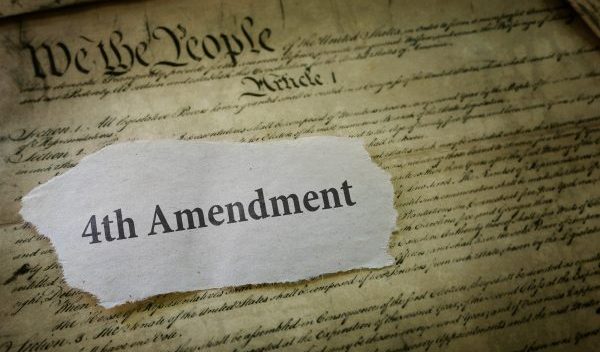
Your Fourth Amendment right permits you to a certain degree of privacy, and in most cases, law enforcement must obtain a warrant in order to legally perform a search and seizure event on your home, office, storage unit, car, or anywhere else you would have a reasonable expectation of privacy. So when being presented with a search warrant by law enforcement, you’ll first want to make sure it is a valid one.

There are three things to look for on a search warrant to have this assurance. Continue reading to learn what they are, as well as, what you should do if you are charged with a crime following a search and seizure.

Criminal Defense Law Firm 317-636-7514

Indianapolis Criminal Defense Law Firm 317-636-7514

Search Warrant Process

All search warrants must be filed in good faith by a law enforcement officer, and they must include reliable evidence that shows probable cause to search a premises. Aside from this fundamental requirement, a valid search warrant will have 3 specific elements: a magistrate’s signature, a description of the premises to be searched, and a description of the items to be seized.

Magistrate Signature

Before a search warrant can go into effect, it must be approved and signed by an impartial magistrate of the law. A valid search warrant will have a magistrate’s signature on the document. If this is not present, it is not likely a valid search warrant.

Description of Premises

A search warrant must also always state the where the search is to take place. If there is no description on a search warrant of an area law enforcement want to search, they cannot legally perform the search. A description does not have to be detailed though; it can be as simple as an address of a residence or building. However, if a cop has a search warrant for a storage unit, they cannot also search the person’s vehicle; they would need a separate warrant for that search.

Description of Items to Be Seized

Not only must a search warrant contain a magistrate’s signature and a description of the premises to be searched, it must also specify which items are to be confiscated. There are some exceptions to this rule. For instance, law enforcement can confiscate certain contraband, such as illicit drugs, if they are in plain sight, even if they are not listed on the warrant.

What Happens if You Resist a Search

There are several complexities involved with an officer’s right to perform legal searches without warrants, so you may be confused on whether or not your 4th Amendment right applies. In fact, a person can potentially be arrested and held in custody for resisting a search. If you believe you were unfairly searched, you can always file a claim afterwards that alleges a violation of your rights. Talk to a licensed Indianapolis criminal defense lawyer to learn your rights and get help with your case.

Indianapolis Criminal Defense Law Firm

David E. Lewis Attorney at Law 317-636-7514

David E. Lewis Attorney at Law 317-636-7514

Call Attorney David E. Lewis at 317-636-7514 to schedule a free initial consultation to discuss your white collar criminal charges. We work around the clock to ensure your rights are protected and your freedoms are preserved. You can avoid the maximum penalties for your charges with our aggressive legal representation! Call 317-636-7514 to get started, today.