Use These 3 Tips to Avoid Being Pulled Over By a Cop

Nobody wants to be pulled over by the police, whether for a routine traffic stop or a drunk driving offense. To avoid being pulled over by police, there are some certain things you can do. Continue reading to learn the top three ways you can prevent yourself from being stopped by a cop, as well as what to do if you were recently pulled over and charged with an offense in Indiana.

Criminal Defense and Appeals Indianapolis IN 317-636-7514
Criminal Defense Lawyers Indianapolis IN 317-636-7514

Your Rights During a Police Stop

Law enforcement officers are not permitted under law to stop just anyone they want at any time for no reason at all. They must have probable cause to stop and question a person for purposes of determining whether or not a crime is being or was committed. Although law enforcement can stop a person and detain them without arrest, they cannot detain them for an unreasonable amount of time or indefinitely without making an arrest and filing charges.

This violates our constitutional right against unreasonable searches and seizures. To arrest them, they must have probable cause or a warrant. So, although it might seem like a police officer stops someone for no reason, professional training and strategies used by law enforcement can allegedly spot the signs of suspicious or criminal behaviors.

How to Be a Non-Target for Law Enforcement

As for pulling people over, law enforcement’s top priority is to ensure the safety of all drivers and passengers on the road. Mostly, they are looking for intoxicated drivers, drug traffickers, reckless speeders, and similar offenders. Whether you are doing something illegal or not, in order to avoid being arrested or cited for a traffic offense, follow these three important tips:

Stick to Your Car’s Routine Maintenance Schedule

One of the most common reasons for being pulled over unexpectedly is for automotive defects like a dimmed taillight, broken turn signal, or some other type of illumination or equipment defect. In many cases, a minor traffic offense leads to additional officer suspicions, thus resulting in additional charges like DWI’s, drug possessions, suspended license, and more.

So, be sure to stay current on all scheduled car maintenance according to your car’s owners’ manual. This will prevent your vehicle from experiencing any sort of unanticipated equipment malfunctions or automotive defects that can lead police officers to pulling you over. For instance, if your head or taillights are not illuminated brightly enough, law enforcement will be inclined to pull you over insight you.

Stay Compliant With All Local and State Regulations

It is also very common to be pulled over if your plates or driver’s license is expired, or if you have not renewed the license plate stickers. Furthermore, if the cop runs your plates and learns that your vehicle is not properly insured or registered, they will also pull you over. So, to avoid being pulled over for these minor infractions, it is wise to ensure that you are always in compliance with all local and state automotive regulations.

Drive Mostly in the Daytime

If you restrict the majority of your driving during the daytime only, you can avoid being pulled over by police significantly. Not only can you see police officers better, but you can also see the roads better, which can reduce your chances of making any driving errors or traffic mistakes that bring attention to you.

Were you recently pulled over and arrested for a crime in Indiana? Contact Attorney David E. Lewis at 317-636-7514 for the best chance at reducing or dismissing your Indianapolis IN criminal charges. Our legal team specialize in DUI charges, drug possession crimes, drugged driving charges, and similar criminal traffic offenses. Consultations are free so act now and get started on your defense today!

You May Also Like:

Do I Need a Lawyer for Traffic Court?
Do Not Fall for These OWI Arrest Myths
Facts About Police Stops and Pat Downs

Indianapolis Criminal Defense 317-636-7514
Schedule a Free Consultation Today!

Top Indiana Criminal Law Facts Everyone Wants to Know

As a leading criminal defense law firm in Indiana that has been practicing for nearly 3 decades, we have heard almost every question in the book. But when it comes to the most frequently asked questions about criminal law and defense, there are a handful that certainly top the list. Continue reading to learn the top criminal law facts that everybody wants to know, and how to get protect yourself from the maximum penalties for your pending criminal charges.

Indianapolis Indiana Criminal Defense 317-636-7514

Indiana Criminal Law and Criminal Defense Facts

Whether you are somebody who lives in Indiana or simply passing through, it is important that you know these criminal law and criminal defense facts:

Law Enforcement Searches

Everyone wants to know the legalities surrounding law enforcement searches. The truth is, if law enforcement wants to search your house or car, you reserve the right to say no. However, if police have a valid search warrant for your house or other property, then you cannot decline. If this happens to you immediately contact in Indiana criminal defense lawyer for guidance.

Field Sobriety Testing

If a person is pulled over because they are suspected of driving under the influence of either alcohol, controlled substances, or drugs, the driver has the right to refuse a breathalyzer and field sobriety test. However, under Indiana law, if you do refuse either of these tests, your driver’s license is immediately suspended for six months. When signing your registration, you automatically agree to these terms. You will also face additional penalties if ultimately convicted of a DUI.

Suspended Licenses

Here in Indiana, is illegal to operate a motor vehicle driver’s license is suspended or revoked. If you are caught driving with a suspended or revoked license, not only will you be required to pay hefty fines, but you will also lose your driving privileges for an extended period of time.

Rights to Attorney Requests

When you are arrested in Indiana, you have the right to request to consult with an attorney before answering any questions asked by law enforcement or investigators. In fact, it is strongly encouraged to always speak with a criminal defense lawyer before agreeing to be interviewed by law enforcement. This entitlement has to do with your Miranda Rights.

Criminal Records

Many people assume that a criminal record is permanent, but not all criminal arrests, charges, and convictions have to be. Speak with a skilled and experienced Indianapolis crime lawyer who is well-versed in Indiana’s Second Law to learn your eligibility for criminal record expungement.

Juvenile Defense

Although contrary to common belief, juveniles can be tried as adults, and therefore be penalized like one. It is important to retain the services of a private criminal defense lawyer to avoid the situation, and to protect your child from being sentenced to the maximum penalties for their criminal charges.

Are you currently facing criminal charges in Indiana? Contact the Law Office of David E. Lewis at 317-636-7514 for intelligent and skilled criminal defense in Indianapolis, Indiana. We represent adults and juveniles.

You Should Also Read:

Can a Security Guard Arrest Me?
Your Guide to Appealing an Indiana Criminal Conviction
FAQS About DUI Checkpoints

Indianapolis Criminal Defense 317-636-7514
Schedule a Free Consultation Today!

Common Types of Property Crimes and Penalties in Indiana

There are several different types of property crimes that one can commit here in Indiana. From vandalism to arson, and many in between, Indiana does not take such offenses lightly. If you or someone you love was recently arrested or indicted on property crime charges, it is vital to hire a criminal defense attorney as soon as possible to protect your rights and preserve your freedoms.

In the meantime, continue below to review some of the most common types of property crimes in Indiana and the penalties that generally follow if convicted.

Indianapolis Criminal Defense Law Firm 317-636-7514

What is a Property Crime?

A property crime is any type of intentional or unintentional act of destruction or theft to a private or public premises. In Indiana, they are punishable on a wide scale depending on circumstances and details of the crime, from Class C Misdemeanors to Level 1 Felonies.

See Sentencing Guidelines for Indiana

Here are the most common types of property crimes in Indiana:

Theft

Also called larceny, theft crimes are any acts of intentionally and knowledgeably exerting control over one’s property without consent or authorization. “Exerting control” can mean a variety of actions, including taking, possessing, obtaining, controlling, leading away, carrying, driving, concealing, selling, abandon, encumbering, conveying, transferring, securing, reproducing, or extending a right to another’s property. Theft convictions range from Class A Misdemeanors to Level 5 Felonies depending on the value of stolen items and various other details.

Shoplifting

Shoplifting is a type of theft crime in which a person intentionally conceals merchandise from a retail store without any intention of paying for it. Putting a book in your inside jacket pocket or a necklace in your purse at a store so that you can walk out without paying for them are examples of shoplifting. Shoplifting sentences depend on the total value of the items, but they commonly range from low level infractions to Class A Misdemeanors. In more serious cases, shoplifting charges can be Felonies.

Burglary

Burglary is another subcategory of theft. Different from robbery, which involves the use of a weapon, burglary is the act of unlawfully and forcibly entering a house, building, or enclosed structure with the intent of stealing property or possessions. It can also be unlawfully entering a house or enclosed structure for the purpose of committing another type of illegal act. Like most theft crimes, the charges for burglary can range from low misdemeanors to high felonies depending on the circumstances of the crime.

Robbery

Robbery is the crime of burglary and theft all in one, but with the use of a deadly weapon, force, or threat of force. Commanding a cashier to hand over all of the money in the cash register while showing them a gun on your belt would be the crime of robbery. Robbery is a serious theft crime, so it comes with much higher charges and penalties, usually Felonies.

Arson

Arson is the crime of intentionally setting fire to or burning a house, building, structure, or area of property such as a forest or park. If someone commits the violent crime of arson, and as a result, someone suffered bodily injury, the level of punishment drastically increases, as do the subsequent penalties upon conviction. Minor cases of arson, usually with juveniles, result in Misdemeanors, while more serious crimes of arson are charged as felonies.

Vandalism

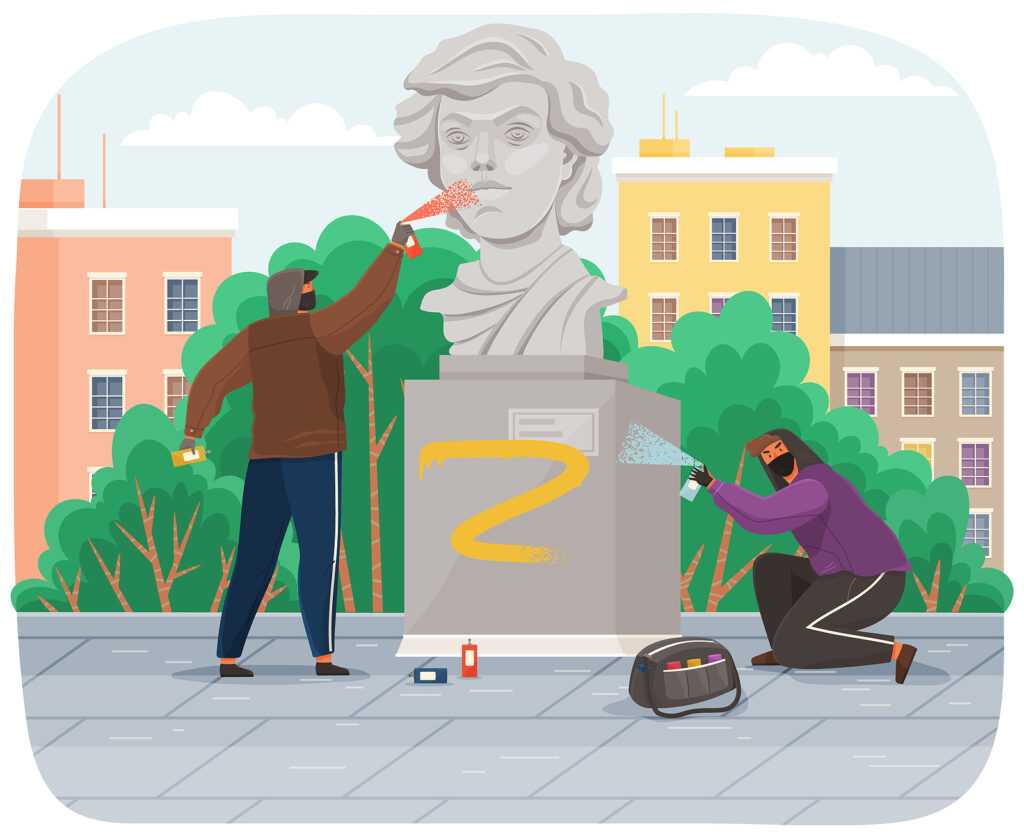
Vandalism is a very common crime that can be as minor as writing your name in marker on the bathroom stall to graffitiing an entire building façade with spray paint. Any act that degrades, devalues, destructs, defaces, damages, or destroys a property is considered a crime of vandalism. Like most property crimes, the level of punishment depends on the severity of the crime and total value of damage. Sentences range from low-level infractions to Level 5 felonies.

Are you facing criminal charges for one of these types of property crimes in Indiana? Contact Attorney David E. Lewis at 317-636-7514 to schedule a free case evaluation for theft crimes in Indianapolis, IN today.

You Should Also Read:

Is it Possible to Reduce My Criminal Charges?
Possible Court-Ordered Penalties for Felonies and Misdemeanors in Indiana
Can I Be Arrested for Setting a Fire on My Property?

Indianapolis Criminal Defense 317-636-7514
Schedule a Free Consultation Today!

FAQS About Being a Witness in a Criminal Case

Criminal cases at any level are serious, as they can significantly alter the course of your life and negatively impact your pursuit of happiness. For this reason, it is important to be prepared for your criminal case by retaining a skilled defense lawyer, especially if you must testify or have witnesses at your trial. Even if you have been subpoenaed to testify in another person’s criminal case, it is wise to be prepared, as court hearings are very serious matters.

Whether testifying at another’s trial or your own, continue below to review some frequently asked questions about being a witness in a criminal case, and who to trust for aggressive criminal defense that can preserve your rights and freedoms.

Indianapolis Indiana Criminal Defense 317-636-7514

Frequently Asked Questions About Trial Testimonies  

What To Do After Receiving a Subpoena

If you were subpoenaed to be a witness at another defendant’s criminal case, be sure to take it seriously by responding according to instructions and within the allotted time period. Although subpoenas are usually prepared by the lawyers, a judge can be offended and provoked if you ignore one. As a result, the judge can take a personal interest in you and pursue penal action. The first thing to do upon receiving a subpoena is to contact a lawyer. If you already work with a lawyer or have worked with a trusted one in the past, contact them and inform them of the subpoena.

How Can I Be a Good Trial Witness?

First and foremost, always be honest. Perjury is a felony, so be sure your testimony is truthful, intelligent, and non-misleading. If you are caught lying, you can face criminal charges for perjury. Furthermore, dress business casual, be on time, and maintain a calm and polite composure. Avoid using bad or offensive language, and only speak when spoken to. If you are testifying at your own trial, always take your lawyers advice and follow their instructions.

Can a Child Be a Witness in a Criminal Case?

In the case that you have witnesses at your trial, whether in support of proving your innocence or guilt, there is a possibility that it can be a child or juvenile minor. Each state has their own laws regarding child witnesses, including age requirements. From these varying laws, the common denominator is that every witness, regardless of age, must be competent and able to testify at trial. This same prerequisite applies to children. A child must be deemed to have sufficient intelligence, be able to remember and describe events, answer questions clearly, and know the difference between truth and lies.

Can I Get Immunity For Being a Witness?

Immunity is basically a “hall pass” or “get out of jail free card” for a person who is charged with or suspected of a minor crime. In exchange for vital information and testimony that will help prosecute a more high-profile criminal, a prosecutor will not move forward with charging a suspect. But, not every is offered immunity. Immunity is typically reserved for more high-profile cases and long-standing investigations. Common cases that might involve an offer of immunity include crime bosses, drug traffickers, smugglers/black-marketers, white collar fraud, sex trafficking, and similar serious crime enterprises.

Can I Be a Witness in My Own Criminal Case?

Although most criminal lawyers will recommend that you do not testify at your trial, there are times when a defendant’s personal testimony can be a good strategy for the defense. If this is the case for your own trial, there are some rules to follow. In addition to being honest with the courts and opposing lawyers during your testimony, it is equally important to do the same with your own criminal defense lawyer. They must know everything in order to build an impenetrable defense against your criminal charges. They cannot do their best to protect your interests if you are not entirely forthcoming with them about the information you have on case details.

Are you looking for an experienced and aggressive defense lawyer who won’t let you be subjected to the maximum penalties for your Indiana criminal charges? Contact the Law Office of David E. Lewis at 317-636-7514 to connect with one of our esteemed criminal defense attorneys in Indianapolis, Indiana. We can meet over the phone, via online video conference, or in person at our office.

You Might Also Read:

The Top Three Rules for Testifying in Court
The Importance of Witness Depositions in a Criminal Case
What are My Rights at Trial?

Indianapolis Criminal Defense 317-636-7514
Schedule a Free Consultation Today!

The 6 Stages of an Indiana Juvenile Case

When your child is facing charges in the juvenile court system, your mind is full of questions. By learning what to expect from the juvenile court process, you can feel more at ease and be better prepared with the proper legal defense. Continue reading to learn the 6 stages of a juvenile case in Indiana, and who to trust for skilled criminal defense for minors in Indianapolis.

Juvenile Criminal Defense Indianapolis Indiana
Juvenile Criminal Defense Indianapolis Indiana 317-636-7514

Hire a Juvenile Defense Lawyer

Child arrests are never easy, even if your child is merely weeks away from turning 18. So, when they happen, your first priority should be to hire a licensed criminal defense attorney who is well-versed and experienced in juvenile cases. They can help navigate you every step of the way and provide a pillar of support throughout the whole process. From the detention hearing to the final review hearing, your juvenile defense lawyer will ensure your child’s rights are protected and their freedoms preserved.

Juvenile Justice System Process in Indiana

Although the stages of your juvenile’s case will vary depending on several factors, such as the scope of the offense and the presiding jurisdiction, the possible stages your child will experience in the Indiana juvenile justice system process are the detention hearing, initial hearing, waiver hearing, fact-finding hearing, dispositional hearing, and review hearing.

Detention Hearing

The detention hearing is the very first appearance in juvenile court. It usually takes place within the first 48 hours following an arrest, but not including weekends or holidays. At this hearing, a judge will determine whether the juvenile must remain in custody of the detention facility or if they can go home. This hearing is an opportunity for your child’s criminal defense attorney to present the wishes of the child to the judge and confirm who will be responsible for supervising the child while released from juvenile detention custody.

Initial Hearing

The initial hearing comes next, which is the court appearance in which the child is read their official charges. It is vital that your juvenile has a reputable criminal defense attorney present at this initial hearing.

Waiver Hearing

A waiver hearing is not always part of the juvenile justice system process. It only takes place if the prosecutor requests that the juvenile case be transferred to an adult court, therefore having the child tried as an adult.

Fact-Finding Hearing

The fact-finding hearing is held to allow witness testimonies, cross examination of witness and the accused, and for the defense attorney to present evidence in support of the child’s benefit. At the conclusion of this trial, the judge will determine if the child has in fact done something wrong. If the judge decides the child is innocent, or not liable for the offense, the case is over and the child walks, penalty-free.

Dispositional Hearing

A dispositional hearing is only held if the judge concludes that the child has done something wrong or broken the law in some way. At this hearing, the judge will decide the appropriate penalties or punishment for the child’s offense. Generally, this includes probation, community service, fines, restitution, mandatory school attendance, treatment, and counseling. In worst case scenarios, the judge will order the child to juvenile detention.

Review Hearing

A review hearing is held every 6 months, until the probation period is completed in full and as ordered. This hearing is used to check on the child’s progress while on probation.

Was your child recently charged or accused of a crime? Contact the Law Office of David E. Lewis at 317-636-7514 for skilled juvenile criminal defense in Indianapolis, Indiana. Schedule your consultation over the phone, via online video conference, or in person at our office.

You Should Also Read:

Important Laws That Pertain to Parents of Teenagers
Is My Child Charged With a Delinquent Offense or Status Offense?
What To Do After Your Child is Arrested

Indianapolis Criminal Defense 317-636-7514
Schedule a Free Consultation Today!

I Was Arrested So What Happens Now?

Being arrested, or even experiencing the arrest of another person, can be a traumatizing event. Upon an arrest, it is common to feel an influx of anxiety, concern, fear, and various other emotions. But more often, people under arrest, or have just arrived home after being bailed out of jail, or simply filled with questions. Continue reading to learn what you can expect from the Indiana criminal justice process following your arrest, and who you need to call for aggressive criminal defense that can reduce or dismiss your Indiana criminal charges.

Criminal Defense and Appeals Indianapolis IN 317-636-7514

The Basic Stages of a Criminal Case

Although it may differ from state to state, here in Indiana, all criminal cases start with the arrest, whether that be a physical arrest, an indictment, or an arrest warrant. Following an arrest, the preceding stages are bail, arraignment, preliminary hearing, pretrial motion, trial, sentencing hearing, and if applicable, an appeal.

Bail

A person is arrested, they are eventually given the opportunity to post their bail. To do this, you would contact a local bail bondsman and follow their instructions. There is a nonrefundable fee for a bail bond, and you will be required to sign a legally-binding contract that holds you liable for the full bond amount in the case that the defendant fails to appear for their scheduled court date.

If you are turning yourself in for an arrest warrant, meaning you are the one that is to be arrested, you can contact a bail bondsman ahead of time for prearranged bail bond service. This will get you in and out of jail much faster.

If a person is arrested under the influence of drugs or alcohol, they will not be eligible for booking until they’re sober, and they cannot get bailed out of jail until they are booked. Jails usually wait 6 to 8 hours before booking and intoxicated inmate into the system. So, you will need to wait at least six hours before even attempting to bail and intoxicated person out of jail.

Arraignment

The defendant’s first court appearance is called the arraignment. This is simply a court hearing to notify the defendant of their official criminal charges, generally read by the judge, and allow the defendant to plead guilty or not guilty to their charges.

Preliminary Hearing

Depending on whether a defendant is facing state or federal level charges, charges may be brought against them either through a “bill of information” secured through a preliminary hearing, or grand jury indictment. States can use either process, while the federal government uses grand jury indictments. Basically, a preliminary hearing (or in a federal case, grand jury) is held to establish that enough probable cause exists to pursue criminal charges against the defendant. During this hearing, both sides question witnesses, present evidence, and make their arguments. Preliminary hearings are also called preliminary examinations. In the case of grand jury, only the prosecutor is heard.

Pre-Trial Motion

A pretrial motion is held right before the trial. It is intended to give   both the prosecution and defense attorneys an opportunity to resolve any lingering issues, and confirm which pieces of evidence will and will not be admissible at trial.

Trial

At the trial, a judge or jury will find a defendant guilty or not guilty. Since the prosecution is the party that holds the burden of having to prove the criminal case, they are responsible for proving beyond a reasonable doubt that is the defendant guilty of the charges being brought against them. During this hearing, you can expect opening and closing statements, cross examinations, witness testimonies, and ultimately a verdict. When mistrials declared, they happen during pretrial motion hearings.

Sentencing

After the trial, the defendant will then attend their sentencing hearing.  During this hearing, the judge and jury panel will decide which punishments are appropriate for their particular criminal conviction, and then the judge will officially sentence the defendant to those penalties. Such penalties can include fines, committee service, jail time, and more.

Appeal

In the case that a defendant believes they were wrongly accused or convicted, they can choose to file an appeal and applet court. This means that their criminal case will be reviewed by a higher court, one that may decide to reduce or reverse their conviction if they find any errors or unconstitutional elements that took place in the case.

Are you looking for a qualified and skilled criminal defense lawyer who will fight your criminal charges and keep you out of jail? Contact the Law Office of David E. Lewis at 317-636-7514 to schedule a free consultation with a seasoned Indianapolis Indiana criminal lawyer who will build you a strong and impactful defense.

You Might Also Enjoy:

What is Going to Happen at My Pre-Trial?
What are My Rights at Trial?
Proper Conduct for a Trial Witness

Indianapolis Criminal Defense 317-636-7514
Schedule a Free Consultation Today!

Current News on the Decriminalization of Marijuana

Currently in Indiana, and under federal law, marijuana consumption, possession, distribution, trafficking, and cultivation are all illegal, and punishable by jail time, fines, and much more. Although several states within the country have decriminalized marijuana on local and state levels, marijuana continues to be against the law in the eyes of the federal government. However, Senate Democrats have recently unveiled a new bill that would decriminalize marijuana on a federal level.

Continue reading to learn some facts regarding the current news on the decriminalization of marijuana, as well as what you need to do right now if you are facing marijuana drug crimes in Indiana.

Indianapolis Marijuana Crime Lawyers
Indianapolis Marijuana Crime Lawyers 317-636-7514

Facts About the New Federal Marijuana Decriminalization Bill

Yesterday, Wednesday, July 14th, Democratic Leader Chuck Schumer and Senators Cory Booker and Ron Wyden led the unveiling of the new Federal marijuana decriminalization bill. Although this new draft does not legalize the sales and distribution of cannabis products and marijuana itself, it does decriminalize it by ending federal enforcement against marijuana crimes.

During the unveiling of this new potential bill, Sen. Cory Booker pointed out that in 2019 alone, there were more arrests for minor marijuana offenses than there were for violent crimes. Ultimately, the Democrat’s mission is to in the war marijuana.

How the Bill Can Help

Senate Democrats suggest that this could be monumentally advantageous to our economies, and as a state in whole. According to Sen. Ron Wyden, the passing of this bill would help generate revenues that would be directly applied to the support and restoration of those whose lives were affected by the war on drugs.

Democratic Leader Chuck Schumer stated that many of these outdated federal laws, such as the one on minor, non-violent marijuana crimes, significantly impact people’s lives in a negative way, holding them back from employment opportunities, good income, good credit, and simply being able to live a normal life.

In addition to promoting leniency against minor marijuana offenses, this new bill also pushes for justice for minority groups.

There are Many Who are Opposed

However, there are some opposed to this new potential marijuana decriminalization bill. For instance, Luke Niforatos with Smart Approaches to Marijuana insists that if this bill were to be passed, it would be harmful to our society. He strongly believes that this idea of decriminalizing marijuana is aligned with the same type of company missions created by tobacco, alcohol and big Pharma, stating, “It’s invested in by tobacco, alcohol and pharma — the drug is much more potent and much more addictive than it’s ever been (…)”.

Will it Pass?

If this bill were to pass, it would decriminalize marijuana on a federal level, but still allow states to keep marijuana illegal on a state level. In addition to legislation removing marijuana from the list of federal controlled substances, thus allowing cannabis-based business to be eligible for banking, as well as regulate and tax all marijuana sales.

Upon the passing this bill, marijuana sales up to 10 ounces for individuals 21 and older would be permitted. Furthermore, there would also be criminal expungement rights to seal or destroy criminal records for those who were charged and convicted with a minor or non-violent marijuana offense in the past.

In order for the new federal marijuana decriminalization bill to be passed, at least 10 Republicans must be in agreements and vote for the bill to move forward. It is very likely that this bill will see more revisions before it is officially introduced.

Current CBD and Marijuana Laws in Indiana

Currently in Indiana, possession of just a single marijuana joint is punishable by up to one year in jail and a fine of up to $5,000. Our state is one of the few state’s left that still imposes imprisonment penalties for minor and nonviolent marijuana offenses.

CBD oils and vape pens have been legal in Indiana since 2018, when Gov. Eric Holcomb legalized low-THC CBD derived from industrial hemp. There are now many CBD stores and retailers all across the state that sell a wide variety of CBD-based products, legally. So long as a CBD product meets certain labeling requirements and has 0.3 percent or less THC content, it is perfectly legal under state and federal law.

Are you currently facing misdemeanor or felony marijuana charges? Contact the Law Office of David E. Lewis at 317-636-7514 to schedule a free consultation with a seasoned marijuana crime lawyer in Indianapolis, Indiana. Get started on your drug crime defense now!

You Should Also Read:

Marion County Grants Legal Leniency for Minor Marijuana Offenses
Is it Legal to Buy Marijuana in Illinois and Bring it Back to Indiana?
Can I Buy Marijuana in Michigan and Bring it Home to Indiana?

Indianapolis Criminal Defense 317-636-7514
Schedule a Free Consultation Today!

What You Need to Know About Hiring a Criminal Attorney

When you are charged with a criminal offense in Indiana, it is vital that you hire a seasoned criminal defense lawyer to build a strong and impactful defense on your behalf. In order to find the right criminal attorney for your case, you must choose a reputable criminal defense law firm. These are not the only criminal defense tips you should be following.

Continue reading to learn the top 4 factors you need to know about hiring a criminal attorney, from how much they charge to finding a trusted professional who can obtain the most successful outcome for you.

You Don’t Have to Face the Indianapolis Courts Alone.

Finding Criminal Defense Attorney

The most impactful element of your defense will be the attorney you choose to hire for your case. You must look for criminal defense lawyer who has extensive experience working with the local courts in the county of your charges. Furthermore, you want to ensure they have experience in the type of criminal charges you are facing. For instance, if you are charged with your third DUI, it is imperative that you choose a qualified defense attorney who has extensive knowledge and experience in DUI defense and drunk driving laws.

Hiring a Team of Attorneys

When it comes to hiring a criminal defense attorney, it is imperative that you ask in the initial consultation whether the attorney will be working alone on your case, or if your case will be handled by a team of attorneys and legal staffs. It is wise to choose a criminal defense lawyer who works alone or with only one or two other staff members to ensure that your defense is managed with a strict focus on your rights and future freedoms.

Paying for Your Criminal Defense

Private criminal defense lawyers are not free. Although you can choose to accept a court-appointed public defender free of charge, it is a very risky decision when your future and freedom are at stake. To get the best possible outcome to your criminal case, you must hire a private criminal defense law firm; and yes, it will not be cheap. But can you really put a price on avoiding jail time, substantial fines and restitution, and a criminal record that holds you back from employment opportunities? A lawyer may cost you a large sum of money upfront, but the cost is well worth it in the long run.

Expecting a Guaranteed Outcome

Speaking of your court case outcome, it is important that you go in with the mindset that nothing is ever guaranteed. When it comes to criminal charges and convictions, no one, not even the presiding judge nor the most experienced criminal attorney, can predict the guaranteed conviction, dismissal, or reduction of charges and penalties. However, a skilled and experienced criminal defense attorney has the acumen and professional resources to help to ensure you avoid the maximum penalties for your criminal charges.

Are you unsure of which defense attorney to trust with your Indiana criminal case? Contact the Law Office of David E. Lewis at 317-636-7514 to speak with an esteemed Indianapolis Indiana criminal lawyer who can get your charges reduced or dismissed!

You Might Also Like:

Can I Change Criminal Defense Lawyers?
Is a Private Criminal Defense Attorney Really Worth it?
Facts About Your Sixth Amendment Right to Counsel

Indianapolis Criminal Defense 317-636-7514
Schedule a Free Consultation Today!

How to Successfully Fight Your Felony Criminal Charge in Indianapolis

Do not think you will get off easy is you are facing a felony charge in Indiana. Felonies of any kind or category are serious criminal charges, and therefore require aggressive and skilled criminal defense to avoid the maximum penalties, like jail. If you are facing a felony criminal charge or felony arrest warrant in Indianapolis, it is vital that you act fast and retain the services of a seasoned criminal defense lawyer.

Continue below to learn exactly how you can be successful at reducing, or even dismissing, your felony charges in Indianapolis.

Indiana Felony Defense Lawyer
Indiana Felony Defense Lawyer 317-636-7514

Beat Your Felony With the Right Criminal Defense

Felony charges are serious. If convicted, defendants face a very stern and strict list of consequences. And these consequences can affect a person for the rest of their life. A felony conviction on your permanent record can hold you back from employment and better job opportunities, as well as, housing, professional licenses, relationships, and more.

Aside from a permanent record, you can face jail time, and will be obligated to pay hefty fines and fees. For these reasons and more, it is vital to hire an Indianapolis criminal defense lawyer to represent you in court. They have the knowledge, skills, and resources to challenge your charges at every angle, and protect your from being sentenced the maximum punishment for your crime.

But Who Can You Trust to Represent Your Case the Best?
Trust none other than Attorney David E. Lewis!

Here at the Law Office of David E. Lewis, we offer free initial consultations, so there are never any out-of-pocket fees to discuss the best strategies for your criminal defense. As a longtime professional in the industry, Attorney David E. Lewis has what it takes to build a strong and impactful defense on your behalf. He never uses confusing legal jargon, which ensures that you fully understand everything you need to know.

Are you ready to get started with a free consultation to meet Attorney David E. Lewis? Contact us at 317-636-7514 to schedule a meeting with an Indianapolis IN felony criminal defense lawyer you can trust. Our law firm also offers Indiana criminal record expungement and appeal representation.

You Might Also Read:

Indiana Incarceration Times for Misdemeanor and Felony Convictions
How Can I Get a Job if I Have a Felony?
Information About State Felony Appeals and Criminal Defense

Indianapolis Criminal Defense 317-636-7514
Schedule a Free Consultation Today!

Will I Go to Jail if My Case Has Aggravating Factors?

When facing criminal charges, one the biggest fears among defendants, other than losing time away from their family and loved ones, is the potential risk of having to go to jail. As for those whose criminal case involves aggravating factors, this concern is even more pressing. Continue reading to learn what you need to know about aggravating factors, and how they might impact the outcome of your criminal case.

Indianapolis Indiana Criminal Defense 317-636-7514

Aggravating Factors

In a criminal case, any element of truth pertaining to the details of the offense that make the offense more serious is considered an aggravating factor. Consequently, aggravating factors increase the severity and harshness of any penalties handed down for such convictions. Basically, you don’t want to be facing aggravating factors in your criminal case. Oppositely, there are elements of truth pertaining to the details of the fence called mitigating factors, which decrease the severity of the offense and therefore subsequent penalties.

An example of a criminal case involving an aggravating factor could be an assault situation. If a person intentionally touches another person in an angry, insolent, or malicious manner, and as a result, the victim suffers bodily harm, the attacker would be charged with assault, as well as an aggravating factor because of the bodily harm they caused.

This would mean that their assault charge would increase from a low level misdemeanor to a higher level misdemeanor or even a felony. Other examples of criminal case elements that would be considered aggravating factors include assault against a law enforcement officer or firefighter, assault against a minor under the age of 14 years old, and the use of a deadly weapon or firearm.

Why You Need a Criminal Defense Lawyer and Not a Public Defender

Are you facing assault charges or aggravating factors in your criminal case? If so, do not accept a free public defender. If you choose to accept the help of a public defender, you are taking a huge risk with your case. Under the counsel of a public defender, your case is very likely to be handed off to another person or group of people who are unfamiliar with the details of your case. This includes paralegals, assistants, investigators, and more.

When facing aggravating factors and serious charges, you need a skilled and experienced Indianapolis Indiana criminal defense lawyer to build you a strong and impactful case against your suspected charges. A skilled private defense lawyer can help you avoid the maximum penalties for your charges including the most feared, jail time. Not only can jail cause you to lose time with your family and loved ones, but it also forces you to miss work, which can greatly jeopardize your employment and income.

It is in your best interest to avoid jail time when facing criminal charges and aggravating factors in Indiana. Contact Attorney David E. Lewis at 317-636-7514 for the best chance at reducing or dismissing your Indianapolis IN criminal charges. Consultations are free!

You Might Also Read:

Answers to Your Questions About Public Defenders
What You Need to Know About Aggravating Factors in a Criminal Case
Learn What Makes a Crime Violent or Non-Violent

Indianapolis Criminal Defense 317-636-7514
Schedule a Free Consultation Today!