Progression is something that is important in our society,
and we would be nowhere without its principles. The same theory applies to the
law, which is ever-changing, ever-evolving, and for very good reason. In Indiana,
the judicial system has seen several drastic changes within Indiana Criminal
Code. One of the most recent and notable changes has to do with felony charges
and convictions. What used to be categorized as a Class D Felony is now
something quite different.
When did Indiana make these changes to the state criminal
code? Continue reading to learn this and more.
Indiana Federal Crime Lawyer 317-636-7514
July 1, 2014
The Indiana Criminal Code changes to the felony criminal
punishment scale took effect on July 1, 2014. Prior to this date, there were
four levels of felonies. Upon this date, the levels of felonies increased to
six. Accordingly, the penalty ranges for each of the six felony levels changed
too.
Felonies are now divided into 7 categories in Indiana: Level
1, Level 2, Level 3, Level 4, Level 5, Level 6, and Murder. Level 6 felony
crimes are the least serious type of felony, and are commonly referred to as
“wobblers” since they can most often be reduced to Class A Misdemeanors. Murder
is of course, the most serious offense.
Look below to see the current levels of felonies, including
their minimum, maximum, and advisory sentences. Misdemeanors were not affected
by the 2014 changes to the Indiana Criminal Code.
Murder – Most Serious
Level 1 Felony: Minimum 20 Years Maximum 40 Years, Advisory Sentence 30 Years
Level 2 Felony: Minimum 10 Years Maximum 30 Years, Advisory Sentence 17.5 Years
Level 3 Felony: Minimum 3 Years Maximum 16 Years, Advisory Sentence 9 Years
Level 4 Felony: Minimum 2 Years Maximum 12 Years, Advisory Sentence 6 Years
Level 5 Felony: Minimum 1 Year Maximum 6 Years, Advisory Sentence 3 Years
Level 6 Felony – Least Serious Minimum 6 Months, Maximum 2.5 Years, Advisory Sentence 1 Year
Changes to the Credit Time Calculation
The credit time calculations for felony charges were also
revised. Prior to July 1, 2014, crimes allegedly committed will get one day’s
credit for each day served. Once changes were made, the credit time calculations
for felonies changed to one day’s credit for every seven days served, with certain
exceptions.
Trusted Legal Advice for Felony Charges in Indiana
Call 317-636-7514 to schedule a consultation with aggressive Indiana felony crime lawyer, David E. Lewis. He will stop at nothing to protect your rights and preserve your freedoms. With decades of hands-on experience, you can trust Attorney David E. Lewis to build you a strong and impactful defense against your criminal charges. Call 317-636-7514 to schedule a free initial consultation for Indianapolis criminal defense, today.
Your past is in the past, but the same does not apply to
your criminal record. If you were ever arrested, charged, or convicted of a
crime or infraction in Indiana, including traffic offenses, your criminal report
will showcase them. Worst of all, your criminal report is available to the
public, which means everyone from your next door neighbor to your employer can
look it up and see what kind of criminal history you have on record in the state.
Furthermore, this means that your criminal history affects several significant aspects of your life, professionally, financially, socially, and even in terms of housing. If you have criminal content on your personal record, it is in your best interest to see if you qualify for criminal record expungement or record sealing in Indiana.
Continue reading to learn more about these new Indiana Second Chance laws, including how to determine your eligibility and how to get started on a petition.
Indiana Criminal Record Expungement 317-636-7514
CRIMINAL RECORD EXPUNGEMENT
Expungement is the legal removal or elimination of criminal
convictions and/or arrests from one’s permanent record. Only under certain
circumstances does a person qualify to expunge criminal records. Records that
are not eligible for expungement, however, may be eligible for criminal record
sealing. Records that may be expunged include arrest records, misdemeanors,
level 6 felonies, level 6 felonies reduced to misdemeanors, and more.
CRIMINAL RECORD SEALING
Criminal record sealing criminal records refers to the restriction
of certain access. Once sealed, such records can only be viewed by particular
authorities, such as criminal justice agencies, and at times, childcare
agencies. Records that may be sealed with restricted access include arrest
records, misdemeanors, level 6 felonies, level 6 felonies reduced to
misdemeanors, and more. Indiana arrest records can be sealed after one year
from the date of the arrest. But keep in mind that there are more
qualifications aside from the amount of time that has passed.
Qualifications
Not all criminal charges and convictions are approved for expungement
nor sealing in Indiana. Such offenses include murder, sex crimes, feticide,
manslaughter, reckless homicide, human trafficking, assisting or causing
suicide, transfer of contaminated bodily fluids, registered sex offender
status, and inappropriate communication with a child or minor. If a person has
any of these arrests, charges, or convictions on their record, they cannot
qualify for expungement.
Warnings
The Indiana Second Chance Laws may not be active for much longer because they are highly opposed by many private organizations and in interest groups. This means they are subject to repeal in the near future. For this reason, be sure to act fast and take advantage of criminal record expungement in Indiana right now. Furthermore, the process is complex and very strict; just one minor filing error can get your application denied, and you can only apply for criminal record expungement ONE TIME in your life. If your application is denied, you cannot re-apply. . For this reason, you need to hire a licensed criminal defense lawyer who specializes in this area of law. They can make sure your petition is completed correctly, and on time.
How to Get Started on Your Petition
Call David E. Lewis, Attorney at Law at 317-636-7514 to learn more about sealing or expunging your criminal records in Indiana. He is eager to help you get the fresh start in life that you deserve! Best of all, his services start as low as $850, so you can afford to clean up your record just as much as the next guy. Call 317-636-7514 to schedule a free initial consultation, today.
If you are suspected of being involved in a crime, and as a
result, must cooperate with a detective interview, it is gravely important to
know how to protect yourself from self-incrimination and more. Continue reading
to learn some vital criminal defense tips you need to know before being
interrogated or interviewed as a potential suspect in a crime.
Criminal Defense Law Firm 317-636-7514
Police Gimmicks and Ploys
When a detective asks a person to voluntarily come by the
station to answer a few questions regarding a criminal case, they actually have
a hidden agenda that is not made evident to the person being asked to come in.
For one, law enforcement officials are not legally obligated to tell you that
you are a suspect in a criminal investigation.
In fact, one of the oldest tricks in the book is to address you initially as a potential witness, and act very polite and friendly to lower your guard and make you feel comfortable giving up wanted information. Another part of this ploy is that if you come into the station voluntarily, you are not in custody. This means law enforcement does not have to read you your Miranda Rights, which remind you of your right to remain silent and your right to a lawyer.
And the gimmicks do not stop there. People often feel like they can handle a police interrogation, and feel confident that they have no valid evidence against them. But this is one of the biggest mistakes you can make as a possible suspect in a criminal investigation. This is because police can make up anything they want to get a person to say things that didn’t really happen.
It is common for detectives to tell suspects that they have
video surveillance of them committing the crime, or that they found their DNA
all over the scene of the crime. They will say anything they have to in order
to get a suspect to admit or give up information. It is also common for
suspects to give false confession after hours of endless interrogation.
Always Hire a Criminal Defense Attorney
If you are ever asked to voluntarily come into a police
station for questioning, or provide a statement regarding a criminal matter,
remain silent. And then contact an experienced criminal defense lawyer
immediately. They can evaluate your situation and determine if it’s best for
you to give a statement or remain silent. They will protect your rights and
preserve your freedom to their best ability.
Aggressive Criminal Defense in Indiana
Contact David E. Lewis, Attorney at Law, at 317-636-7514 to start building a strong and impactful defense against your criminal charges so that you have a chance at avoiding the maximum penalties for your suspected crimes. Our Indianapolis criminal defense law firm offers free initial consultations, so there is no out-of-pocket obligations to you. Get started protecting your future, today.
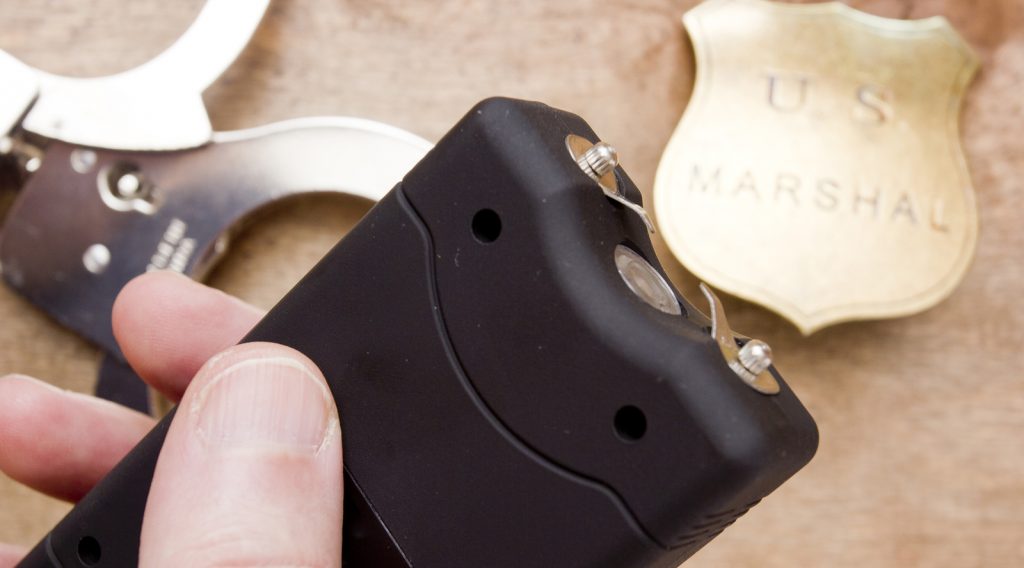
Law enforcement are the country’s first line of defense, so
it is important to appreciate their line of work and understand the dangers
they face on a day to day basis. For this reason, they are legally trained and
equipped to carry and use a wide variety of lethal and nonlethal weapons,
including guns, batons, and Tasers. Although they are permitted to use these
weapons at their discretion, it doesn’t give them the right to abuse or overuse
their power.
In the case of nonlethal weapons, this has come up quite a
bit in the recent years. People want to know what happens when a cop excessively
uses their non-lethal weapon. Is it still lawful? Are there consequences for
the police officer? Does the defendant have rights?
Every situation involving the actions, behaviors, and protocols of law enforcement’s action varies greatly, and should always be assessed on the individual facts surrounding the case. For example, take a look at the case of “Peru City Police Department v. Martin”.
Criminal Defense Law Firm 317-636-7514
Peru City Police Department v. Martin
In the lawsuit, after an officer repeatedly employed a Taser
on an elderly nursing home patient suffering from Alzheimer’s, Peru Police
Chief Steve Hoover recommended dismissal of Officer Martin for excessive use of
force and conduct unbecoming of an officer. The City of Peru Board of Public
Works and Safety conducted a hearing and agreed with Chief Hoover; Officer
Martin was discharged and sought review in the trial court.
The court of appeals reviews the decision of a municipal
safety board like a decision of an administrative agency, “limited to whether
the [board] decision rests upon substantial evidence, whether the decision was
arbitrary and capricious, and whether it was contrary to any constitutional,
statutory, or legal principle.” The trial court tossed out his firing and
entered over one hundred “reasons that Board’s decision should not be
affirmed.” However, the appellate panel disagreed, finding the trial court
erred in substituting its own judgment for that of the police chief and board.
The panel focused its analysis on the Taser training Officer
Martin underwent as part of his role as an officer. He had been specifically
instructed that exposure for over 15 seconds, whether due to multiple
applications or a continuous one, increased the risk of death or serious
injury. In total, the nursing home patient was exposed for 31 seconds. The
panel concluded, “Substantial evidence supports the Board’s findings, and its
decision to terminate Martin for use of excessive force and conduct unbecoming
of an officer was not arbitrary and capricious.”
Do You Have Questions About Your Criminal Charges?
If you do not already have a licensed criminal defense lawyer working on your case, you need one right away. Contact David E. Lewis, Attorney at Law, at 317-636-7514 to start building a strong and impactful defense against your criminal charges so that you have a chance at avoiding the maximum penalties for your suspected crimes. Our law firm offers free initial consultations, so there is no out-of-pocket obligations to you. Call 317-636-7514 and get started protecting your future, today.
The Law Office of David E. Lewis has the aggressive and
professional Indianapolis criminal defense lawyers you need to avoid being
sentenced to the maximum penalties for your criminal charges. Continue reading
to learn why we are a leading criminal defense law firm in Indiana, and what we
will do to ensure your rights are protected and your freedoms are preserved. We
may even be able to help clean up your arrest record.
Schedule a Free Consultation Today!
The Law Office of David E. Lewis provides criminal defense
representation for anyone facing criminal charges in Indianapolis, as well as,
throughout the entire state of Indiana. Our highly experienced criminal defense
attorneys are well-versed and seasoned in criminal law, and will work around
the clock to ensure you are not subjected to the maximum penalties for your Indiana
criminal charges.
Criminal Cases We Represent
Here at the Law Office of David E. Lewis, our seasoned Indianapolis
criminal defense lawyers aggressively represent most state and federal criminal
cases, including DUI charges, marijuana charges, heroin charges, cocaine
charges, theft charges, white collar crimes, sex crimes, violent crimes, misdemeanor
charges, felony charges, domestic violence charges, probation or parole
violation charges, and much more. Although we represent several areas of
criminal law, we specialize in drunk driving defense, so if you are charged
with a DUI or OWI, we can conceivably help you avoid jail time and possibly
lower or dismiss your charges.
Indiana Criminal Record Expungement
Want to clean up your criminal record? With our help, you
might be able to as early as this year! You see, criminal record expungement is
now legal in our state, but only under very explicit conditions. And applicants
are only allotted one single opportunity to file for expungement in their
lifetime. YOU CANNOT PETITION TWICE.
To make matters more challenging, only certain offenses can
be expunged, and courts will only grant record expungement based on several key
requirements. David E. Lewis, Attorney at Law, is well-versed in the new
Indiana criminal record expungement laws, and knows the precise procedure to
obtaining approval. He provides criminal record expungement services starting
as low as $850!
Learn About Your Criminal Defense Needs
Call the Law Office of David E. Lewis at 317-636-7514 to schedule a free initial consultation to determine the best strategies for defense pertaining to your individual charges and criminal history. When you call the Law Office of David E. Lewis, you can expect to reach a knowledgeable and friendly legal representative that will ask you a series of questions while setting up your free initial appointment. You can also submit an email directly from our website.
You can trust that all the information you give over the
phone and in-person will be handled discreetly and with the upmost care and
concern. Most importantly, our office is a 100% judgement-free zone, and you
will feel warmth and welcome as if you were family every time you walk through
our doors.
Many people assume that a No Contact Order is the same legal action as a Protective Order. The truth is, they are two different types of legal actions, yet very similar. Continue reading to learn the difference between the two, including the common Indiana penalties for violating such orders.
Protective Order Violation Lawyer 317-636-7514
Protective Orders
A protective order is a civil-based court order of protection that is signed by a judge, ordering a recognized “perpetrator”, or respondent, to stay away from the petitioner, or protected party. When a person fears that another individual is going to physically hurt them, they can file a petition with the civil court explaining their “fear of imminent bodily injury” and how a legal order is the only way to put an immediate end to their danger.
The courts can order specific legal boundaries for the respondent, including city zones, residences, family members, and more. Often times, a judge will simply order a respondent to keep a specified distance away from the petitioner at all times, such as 500 feet.
No Contact Orders
No contact orders are very similar to protective orders, since they are both signed by a judge and approved in a court or law. However, no contact orders are requested by a prosecutor in a criminal case, not by a petitioner, also making them criminal-based orders rather than civil-based ones.
When alleged victims are involved in criminal cases, more often than not, no contact orders are issued at the same time criminal charges are filed against a defendant. And in most cases, these orders stay in effect throughout the case and for as long as the defendant’s sentence. No contact orders can generally be terminated beforehand if a person from the protected party is willing to testify that it is no longer necessary.
Invasion of Privacy Charges
If a respondent violates any aspect of a no contact order or
protective order, they are committing a crime and criminal charges will be
filed against them. Generally, the crime is Invasion of Privacy, which can be a
misdemeanor or felony charge. Physical contact is not the only way a respondent
can violate an order as well. For example, other forms of violation can
include:
☛ Direct contact (i.e. same vicinity, physical, eye-to-eye, etc.) ☛ Phone contact (i.e. calls, voicemails, text messages, email, etc.) ☛ Indirect contact (i.e. mail, sending flowers, leaving notes, etc.) ☛ 3rd party contact (i.e. sending messages through mutual friends) | ☛ Social media contact (i.e. Twitter, Facebook, Gmail, apps, etc.) ☛ And More
Indiana Criminal Defense Law Firm
Call 317-636-7514 to schedule a consultation with aggressive criminal defense attorney, David E. Lewis. He will stop at nothing to protect your rights and preserve your freedoms after being charged with invasion of privacy in Indianapolis. With decades of hands-on experience, you can trust Attorney David E. Lewis to build you a strong and impactful defense against your criminal charges.
Drunk driving charges and convictions can have all sorts of
impacts on a person’ life. But what many do not recognize until much later is,
such circumstances also affect family and loved ones. In fact, many defendants
ask whether or not they can lose full or partial custodial rights if they are
arrested, charged, or convicted of an intoxicated driving offense. Both mothers
and fathers ask, “Will my kids be taken away?” “Will I lose visitation?” “Will
my ability to regain custody be affected?”
If you are asking these same types of questions, whether for
yourself or on behalf of a loved one, continue reading to learn what you need
to know about DUI charges and child custody in Indiana.
Indianapolis Drunk Driving Attorney 317-636-7514
DUI Penalties
If a person is arrested for a DUI, their impending charges
will vary depending on the details of the offense and arrest. For instance, if
a person has an unregistered gun or drugs in their possession at the time of
the arrest, they will face more severe penalties than a standard 0.08BAC drunk
driving arrest with no priors.
Potential enhancements depend on several factors, but the
most common types of enhancements to drunk driving charges include operating a
motor vehicle with a BAC of 0.15% or higher, drunk driving with a minor as a
passenger, drunk driving that causes another person bodily injury, and drunk
driving that causes the death of another person.
Indiana Penalties for DUI Convictions:
FIRST DUI – Class C Misdemeanor
⇾ 60 Days to 1 Year in Jail ⇾ Probation Up to 2 Years ⇾ License Suspension Up to 2 Years ⇾ Fines Up to $5,000
SECOND DUI – Level 6 Felony
⇾ 5 Days to 2 ½ Years in Jail ⇾ Probation Up to 2 ½ Years ⇾ License Suspension 6 Months – 2 Years ⇾ Fines Up to $10,000
THIRD DUI – Level 6 Felony
⇾ 10 Days to 2 ½ Years in Jail ⇾ Probation Up to 2 Years ⇾ License Suspension 1 – 10 Years ⇾ Fines Up to $10,000
DUI Crimes and Child Custody
When you are contesting, requesting, or negotiating for child
custody in court, you must demonstrate to the judge that giving you rights to
child custody, in any aspect, is in the best interest of the child. Therefore,
if you have multiple arrests and DUI convictions, it is possible that a judge
would not be willing to grant full or partial custody, but rather, supervised
visitation or similar setup. On the other hand, if you were convicted of your
first DUI, and you have no criminal priors, a judge may be willing to overlook
it if you can further demonstrate that you are living a healthy and responsible
lifestyle.
Hire an Aggressive DUI Lawyer for Help
The best way to ensure your custodial rights are protected
and preserved after being arrested for a drunk driving offense is to retain
professional criminal defense representation. But not just any lawyer will do;
you need an aggressive attorney who is well-versed and seasoned with DUI cases,
and knows exactly how to build a defense to avoid the maximum penalties for
your charges.
Call David E. Lewis, Attorney at Law, Today
Call 317-636-7514 to schedule a free initial consultation with aggressive Indiana DUI defense attorney, David E. Lewis, who will stop at nothing to protect your rights and preserve your freedoms. With decades of hands-on experience, you can trust Attorney David E. Lewis to build you a strong and impactful defense against your criminal charges.
Everyone has questions following an arrest or investigation.
Getting accurate answers to your legal questions can provide the lawful insight
you must have in order to fully comprehend your criminal charges and possible
maximum penalties. The best course of action for obtaining this level of legal
guidance and knowledge is to schedule a meeting with a reputable criminal
defense law firm.
In the meantime, it will help your understanding to review
some of the most important questions and answers regarding criminal defense and
criminal law. The more familiarity you have about the Indiana judicial system,
the wiser your decisions can be regarding your legal matters.
Criminal Defense Law Firm 317-636-7514
Am I Mandated to Answer Police Questions After Being Arrested?
According to the 5th Amendment in the United States
Constitution, you have the right to remain silent. You also have the right to
an attorney, which should be used AS SOON AS POSSIBLE. Call Attorney David E.
Lewis before charges are filed against you, and let him do the talking for you.
He may be able to present your side of the story to the police before they
file, and get your charges dismissed. This cannot happen once charges have even
filed, so call from the jail cell or the moment you are released from jail.
Can I Talk About My Criminal Case With Friends and Family?
Never discuss your case with anyone except your defense
lawyer or legal team. This is critical to the outcome of your case. Everything
discussed among your defense team is confidential, but with anyone else, it’s
not. It is especially important to not discuss your case with law enforcement
officers. They are not your friends and anything you tell them can be and will
be used against you in a court of law. If anyone tries to ask you about your
case, including insurance adjusters, cellmates, coworkers, friends, family, and
strangers. Simply remain silent, and if they persist, tell them you refuse to
discuss anything without your lawyer present.
What Does a “Washout” Period Mean in Indiana?
Indiana has a look back period of 5 and 10 years called a
washout period. This is the time period in which prosecution “looks back” upon
to check for prior convictions on a person’s criminal record following an
arrest. As you know, priors are enhancements and make the penalties for
criminal charges more serious.
What are Advisory Sentences?
An “advisory sentence” is a guideline that the court may
voluntarily consider as the midpoint between the maximum and minimum sentence
for a certain crime. For example, if a person commits a Level 6 Felony having
no priors, they are facing a minimum of 6 month, up to 2 ½ years maximum in
prison, with an advisory sentence of 1 year.
A Friend was Convicted of the Same Offense. Will I Have the Same Penalties as Them?
Never believe what inmates, friends, or other people tell
you about similar cases. It is important to remember that EVERY CASE is
different and retains its own set of unique qualities and circumstances. This
is why it is important to have a custom defense built for you by a competent and
experience criminal attorney who can use the law in your favor to reduce or
dismiss your charges. Call David E. Lewis, Attorney at Law, at 317-636-7514 for
personalized legal representation you can trust.
Do I Have to Go to Jail?
There is no way of knowing the future. Even if the law says
a certain crime is punishable by a certain amount of jail time, every case is
different and courts may decide to reduce charges by eliminating jail time or
entering into alternative sentencing agreements. In Indiana, community service
is often substituted in place of serving jail time. It all depends on the
skills of your defense lawyer and your criminal record.
Do I Need a Criminal Defense Attorney?
Yes, if you want to avoid jail or have your charges dropped
or reduced. Although you can choose to use a public defender, a stronger chance
at dismissing criminal charges or entering into alternative sentencing
agreements is by hiring a licensed defense lawyer. They have the experience,
litigation skills, and acute knowledge of the law to effectively build a
defense that challenges your criminal allegations and pursue a more favorable
outcome for your case.
How Much Does a Criminal Attorney Charge?
When your life and freedom are on the line, don’t let money
get in the way. It is important to never establish your decision on a criminal
attorney based on price. Some law firms charge more than others, while some
charge less than they should. If the price quote seems too good to be true from
a defense attorney, it may be because they are inexperienced and trying to
build their practice. Choose an experienced attorney that will get you the
fairest possible outcome for your case, not an attorney with a cheap retainer
fee. Your future depends on it!
What Will a Criminal Lawyer Do that a Public Defender Can’t
Do?
Public defenders often work for larger firms, and do not do
the investigation and research on their cases themselves. Instead, paralegals
and investigators do most of the work, leaving the public defender out of the
loop on details about the case circumstances. This leaves them unqualified and
unequipped to effectively fight a person’s criminal charges. A criminal lawyer
does all the investigative research themselves, and personally commits to every
detail of the case. This is just one reason why they are the most promising
choice for defense.
Have More Questions?
Contact David E. Lewis, Attorney at Law, at 317-636-7514 for aggressive and experienced criminal defense in Indianapolis, Indiana. Our law firm offers free initial consultations to discuss the best strategies for defense against your criminal charges.
Your criminal defense lawyer is ultimately your most
influential weapon against the maximum penalties for your criminal charges. For
this reason, it is vital, for both protecting your rights and preserving your freedoms,
to hire a seasoned and qualified attorney to build your defense. However, the
fate of your legal proceedings are not entirely reliant on your lawyer; there
are things you can do as well to help improve the outcome of your case.
Continue reading to learn what you can do to help your own
criminal case, including who to trust to build you a strong and impactful
defense to avoid the maximum penalties for your charges.
Indiana Criminal Defense Law Firm 317-636-7514
If you are facing criminal charges in Indiana, your fate is
mostly in the hands of the state prosecutor’s office since they have complete
discretion over giving you a plea deal, and what goes into the agreement
altogether. This is another reason why you must choose a seasoned and qualified
lawyer for your defense; they are likely to have longstanding relationships
with the local prosecution and magistrate community.
When it comes to prosecution giving you a plea deal, there
are various factors that influence their decision. Such factors include
criminal history, behavioral conduct with law enforcement, substance abuse, severity
of crime and whether or not it involved bodily harm to another person, and
more. It may seem like there is nothing you can do to alter their
decision-making process, but that is not true.
Here are two things you can do that might help your case:
❶ Create a Sentencing Memorandum
Your criminal defense lawyer can draft a document referred
to as a “sentencing memorandum”, which basically illustrates an accurate
depiction of your life and who you are as a person. Topics to include in this
document include your employment, level of education, goals, contribution to
the local community, explanation of your criminal history, reason for committing
the alleged crime, conduct since the arrest, role as a partner, spouse, parent,
or legal guardian, and similar personal details about your life. This document can
show the prosecution that you are not defined by your alleged crime, nor a threat
to your community.
❷ Gather Character Reference Letters
Another great way to improve the outcome of your criminal
case is to gather a collection of character reference letters from important
members of your family, friends, co-workers, employers, and local community. These
letters should be written by those you trust to be honest, yet supportive of
your reputation. Examples of people to ask for character reference letters
include employers, teachers, professors, mentors, friends, children, and even
religious leaders. Within these letters, you would need to also include forms
of verification, such as employment records, school transcripts, college
acceptance letters, certificates and awards, attendance logs, doctors’ letters,
and more.
Get Aggressive Criminal Defense in Indiana
Contact David E. Lewis, Attorney at Law, at 317-636-7514 to start building a strong and impactful defense against your criminal charges so that you have a chance at avoiding the maximum penalties for your suspected crimes. Our Indianapolis criminal defense law firm offers free initial consultations, so there is no out-of-pocket obligations to you. Get started protecting your future, today.
When you are a client of criminal defense attorney, David E. Lewis, you can expect high standards from start to finish. He and his legal team provide professional 24/7 client communication and unparalleled client support. We understand that our clients’ needs don’t revolve around convenient office hours.
This is why we are always available by means of email or phone, and remain prepared to take action whenever our client’s, or their case, calls. Our criminal law firm never cuts corners when it comes to criminal defense, and we will always go the extra mile for our client’s and their families. We leave no stone unturned when fighting our clients’ criminal charges.
Continue below to learn why the Law Office of Attorney David
E. Lewis is the right choice for your criminal defense in Indiana!
David E. Lewis Attorney at Law 317-636-7514
Our Company Pledge
We vow to never give up or back down. We use every resource
in our power to preserve our clients’ freedoms and protect their rights in all
ways, including:
☑ Building a Custom Defense for Each Individual Client
We are determined to win an advantageous outcome in court
for clients that have been charged or convicted of a misdemeanor or felony in
Indiana. He uses his cunning knowledge of law, as well as his extensive trial
and litigation experience, to aggressively represent his clients in both state
and federal courts.
☑ Keeping Clients Fully-Informed at All Times
Our law firm understands that an arrest in the family is
troubling, and everyone has several questions afterwards. This is why we work
side-by-side with our clients from start to finish, guiding them throughout the
entire criminal process safely and securely, all while working to win them a
better outcome in court.
☑ Respecting All Clients & Never Passing Judgement
We recognize that people make mistakes, and sometimes get
caught up in the wrong place at the wrong time. The law office of David E.
Lewis is committed to being a strong and reliable helping hand that stays firm
in order to safeguard our client’s legal rights and re-open doors for them so
they may have an opportunity for a second chance in life.
Our Mission
Our hope for all our clients is simple: That they may be
reunited with their families and loved ones, and get back to leading a happy
and law-abiding life after a distressing arrest. Attorney, David E. Lewis can
accomplish this for many people charged with a crime in Indianapolis, Indiana.
Start Today!
Call the Law Office of David E. Lewis at 317-636-7514 to schedule a free initial consultation and case evaluation. From there, will develop the best strategies for your defense so that you can avoid the maximum penalties for your criminal charges in Indiana.