Common Types of Property Crimes and Penalties in Indiana

There are several different types of property crimes that one can commit here in Indiana. From vandalism to arson, and many in between, Indiana does not take such offenses lightly. If you or someone you love was recently arrested or indicted on property crime charges, it is vital to hire a criminal defense attorney as soon as possible to protect your rights and preserve your freedoms.

In the meantime, continue below to review some of the most common types of property crimes in Indiana and the penalties that generally follow if convicted.
Indianapolis Criminal Defense Law Firm 317-636-7514

What is a Property Crime?

A property crime is any type of intentional or unintentional act of destruction or theft to a private or public premises. In Indiana, they are punishable on a wide scale depending on circumstances and details of the crime, from Class C Misdemeanors to Level 1 Felonies.

See Sentencing Guidelines for Indiana

Here are the most common types of property crimes in Indiana:

Theft

Also called larceny, theft crimes are any acts of intentionally and knowledgeably exerting control over one’s property without consent or authorization. “Exerting control” can mean a variety of actions, including taking, possessing, obtaining, controlling, leading away, carrying, driving, concealing, selling, abandon, encumbering, conveying, transferring, securing, reproducing, or extending a right to another’s property. Theft convictions range from Class A Misdemeanors to Level 5 Felonies depending on the value of stolen items and various other details.

Shoplifting

Shoplifting is a type of theft crime in which a person intentionally conceals merchandise from a retail store without any intention of paying for it. Putting a book in your inside jacket pocket or a necklace in your purse at a store so that you can walk out without paying for them are examples of shoplifting. Shoplifting sentences depend on the total value of the items, but they commonly range from low level infractions to Class A Misdemeanors. In more serious cases, shoplifting charges can be Felonies.

Burglary

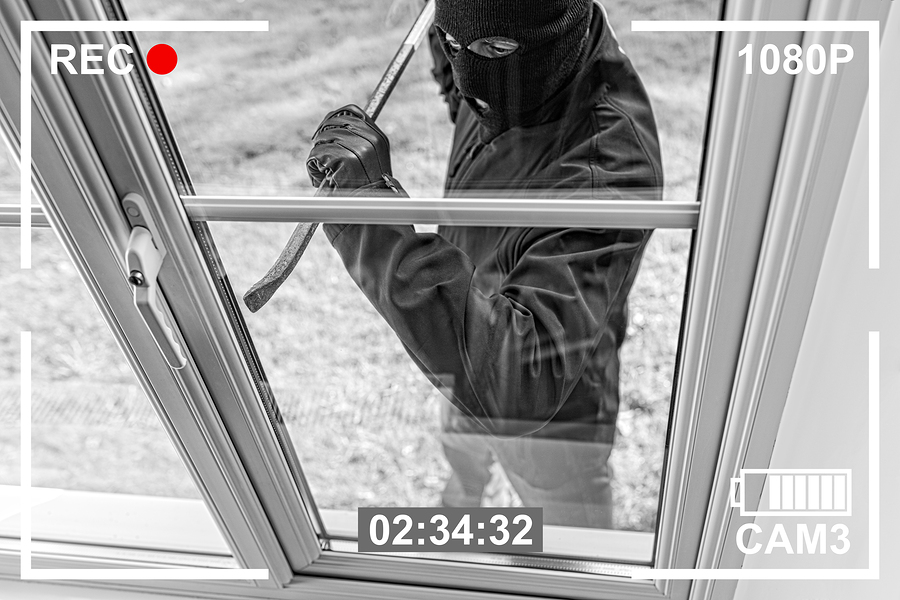
Burglary is another subcategory of theft. Different from robbery, which involves the use of a weapon, burglary is the act of unlawfully and forcibly entering a house, building, or enclosed structure with the intent of stealing property or possessions. It can also be unlawfully entering a house or enclosed structure for the purpose of committing another type of illegal act. Like most theft crimes, the charges for burglary can range from low misdemeanors to high felonies depending on the circumstances of the crime.

Robbery

Robbery is the crime of burglary and theft all in one, but with the use of a deadly weapon, force, or threat of force. Commanding a cashier to hand over all of the money in the cash register while showing them a gun on your belt would be the crime of robbery. Robbery is a serious theft crime, so it comes with much higher charges and penalties, usually Felonies.

Arson

Arson is the crime of intentionally setting fire to or burning a house, building, structure, or area of property such as a forest or park. If someone commits the violent crime of arson, and as a result, someone suffered bodily injury, the level of punishment drastically increases, as do the subsequent penalties upon conviction. Minor cases of arson, usually with juveniles, result in Misdemeanors, while more serious crimes of arson are charged as felonies.

Vandalism

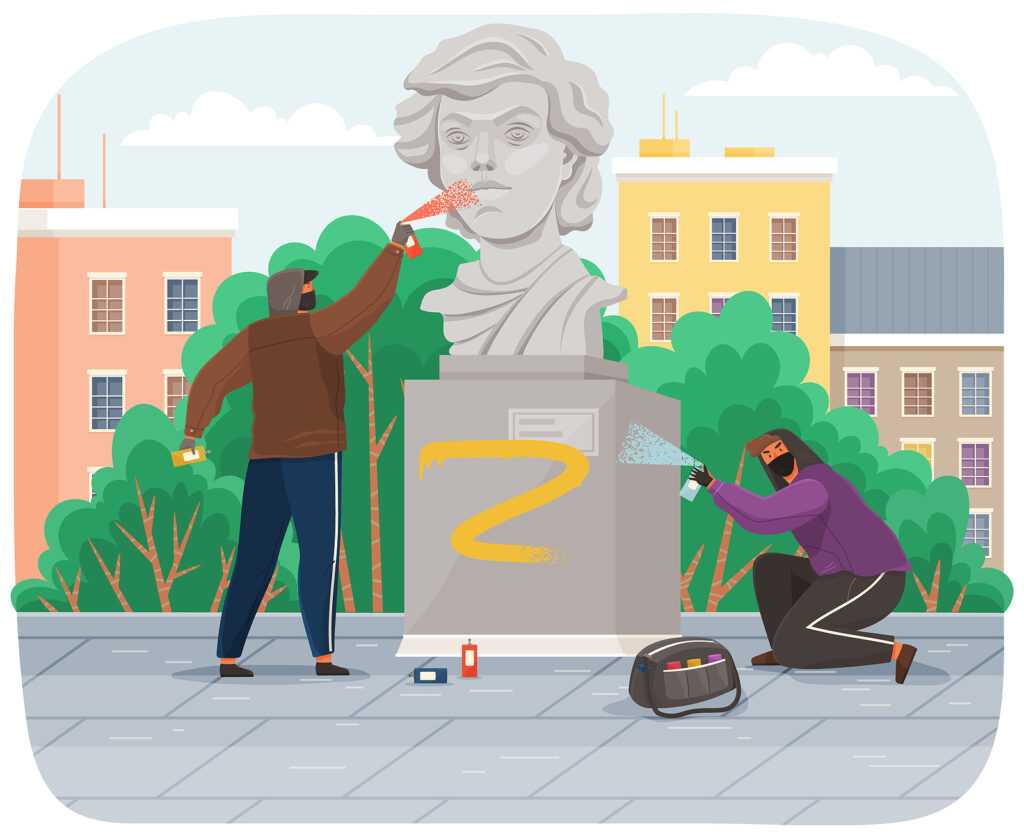
Vandalism is a very common crime that can be as minor as writing your name in marker on the bathroom stall to graffitiing an entire building façade with spray paint. Any act that degrades, devalues, destructs, defaces, damages, or destroys a property is considered a crime of vandalism. Like most property crimes, the level of punishment depends on the severity of the crime and total value of damage. Sentences range from low-level infractions to Level 5 felonies.

Are you facing criminal charges for one of these types of property crimes in Indiana? Contact Attorney David E. Lewis at 317-636-7514 to schedule a free case evaluation for theft crimes in Indianapolis, IN today.

You Should Also Read:

Is it Possible to Reduce My Criminal Charges?
Possible Court-Ordered Penalties for Felonies and Misdemeanors in Indiana
Can I Be Arrested for Setting a Fire on My Property?

Indianapolis Criminal Defense 317-636-7514
Schedule a Free Consultation Today!

Common Arrests That Happen on Halloween and How to Avoid Them

Halloween is a fun and festive seasonal holiday that brings about all sorts of innocent mischief. But sometimes, after too much celebrating, adults can find themselves in a not-so-innocent position with the law. In fact, a much higher number of arrests happen on this night compared to most other nights of the year. So, if you are planning to hit the streets this weekend to celebrate Halloween with your friends and loved ones, be sure you are behaving safely, and within the law. The police will be out policing, doing their job to protect us and the community from danger, which means you have a higher chance at being caught in the middle of mischievous conduct. Perhaps learning which types of arrests are more frequent on Halloween can give yourself a good reminder on which situations to avoid.

Continue reading to do just that, as well as what to do if you or a loved one is taken to jail on Halloween.

Indianapolis Criminal Defense Law Firm 317-636-7514

The Most Common Types of Halloween Arrests

Drunk Driving Arrests

Between parties and bar crawls, many people on Halloween are drinking alcohol. Since a larger number of people are drinking, more people are drinking and driving, which is why there are a lot of DUI arrests that take place on Halloween. Do not drive after having more than 1 drink to be safe. There will be DUI checkpoints out this weekend, so do not set yourself up for failure. A Lyft or Uber is much cheaper than all the court costs, fines, and probation fees you’ll have to pay if charged with a DUI.  

Public Intoxication Arrests

We’ve covered that people drink a lot more on holidays like Halloween. There are parties outdoors, in neighborhoods, and on the strips of popular city areas. This combination leads to a larger number of public intoxication charges. Just because you choose to not drive does not mean that you can’t still be arrested for being drunk. So long as you are not a public nuisance and disturbing the peace, you should be fine hopping from bar to bar, or walking home. If you are passed out, getting sick in public, being aggressive with others, making threats, or simply being too loud, you could be putting yourself at risk for a PI or disorderly conduct arrest.

Assault and Battery Arrests

As mentioned, alcohol consumption plays a large role in Halloween festivities. And when people drink, their emotions can tend to heighten. For this reason, a high number of altercations take place in bars, at house parties, and on the streets. If you make threats, attempt to harm, or actually assault another person, you could be at risk of being arrested for assault. Claiming to kill someone or hurt them can be charged as assault, while physical contact is battery.

Theft Arrests

On Halloween, a lot of theft happens. On any holiday where people tend to be out of their houses attending other parties or festivities, home burglaries and car thefts are more common. Since people are also masked at night on this holiday, it is easier for thieves to conceal their identity, or evade looking suspicious to others in the community.

What to Do After Being Arrested on Halloween

If by some flash of bad luck, or simply being in the wrong place at the wrong time, you or a loved one is arrested this Halloween, immediately contact an Indianapolis criminal lawyer so they can begin building an impactful, rock-solid defense against your charges. The longer you wait to retain legal counsel, the more time you waste protecting your rights and preserving your freedoms. In fact, after an arrest, your next few moves will greatly influence the outcome of your case. So, having a skilled and experienced defense attorney on the job is a monumental advantage. In the case that you are arrested this weekend, it is vital to remain calm and make good decisions. Here’s how to do that.

An Indianapolis Criminal Defense Lawyer That Won’t Back Down

Call Attorney David E. Lewis at 317-636-7514 if you are arrested on Halloween in Indianapolis, Indiana. Our criminal defense law firm works around the clock to protect your rights and preserve your freedoms. David E. Lewis, Attorney at Law, has decades of trial and litigation experience, and will stop at nothing to obtain a more favorable outcome to your criminal charges. Call 317-636-7514 to schedule a free initial consultation with an Indianapolis criminal defense attorney you can trust.

Indianapolis Criminal Defense 317-636-7514
Schedule a Free Consultation Today!

Can I Be Arrested for Defending Myself in a Fight?

If someone threatens you with physical violence, you have a right to protect yourself according to federal and Indiana law. But can you get in trouble yourself if your self defense tactics go to far? Will you be charged with assault if you defend yourself too strongly? Continue reading to find out.

Criminal Defense Law Firm 317-636-7514

Self Defense Versus Assault

Many people have a hard time defining self-defense. Although it is technically legal to protect yourself from physical violence; when does self-defense become assault? Many argue the limits of self-defense, with interpretations ranging from liberal to conservative. But regardless of common belief or misconceptions, it is the law and only the law that dictates the rules of self-defense. Indiana legislation recognizes that citizens have the right to protect their home against unlawful intrusion, as well as, defend themselves and third parties from physical harm or crime. These details can be read in Indiana Code 35-41-3-2. Here is an excerpt:

A person is justified in using reasonable force against any other person to protect the person or a third person from what the person reasonably believes to be the imminent use of unlawful force. However, a person:
(1) Is justified in using deadly force; and
(2) Does not have a duty to retreat;
…if the person reasonably believes that that force is necessary to prevent serious bodily injury to the person or a third person or the commission of a forcible felony. No person in this state shall be placed in legal jeopardy of any kind whatsoever for protecting the person or a third person by reasonable means necessary.

Evidence of Rationality

Basically, Indiana legislation is saying that a person has the right to defend themselves if two types of “rationality” are evident. First, the victim must use a form of self-defense that is reasonable to the relation of the force being used against them. For instance, if a bully pushes you, it is not reasonable to take a blunt object to their head. That would not be considered self-defense. However, if the bully were swinging a blunt object at your head, you would have the right to do the same back out of self-defense.

Second, the victim’s belief that the person will harm them with unlawful force must be reasonable. For example, if a girlfriend is yelling at her boyfriend, and then she punches him because he yelled back at her, it would not be self-defense because it was unreasonable to think that her boyfriend was going to physically harm her just because he yelled at her.  

Both elements of rationality must be present in order to qualify for defending oneself. But also, the same stipulations apply to self-defense using deadly force. If a person is trying to use deadly force against you or third parties, you have the right to defend yourself and the others with equal deadly force. For instance, if an intruder breaks into a home and aims a gun at the family, the occupants have the right to shoot and kill the intruder in order to protect their own lives.

Additional Elements of a Self-Defense Case

If a lawyer cannot persuade prosecution that a person’s self-defense claim is substantiated, then the case must go to trail and be presented to a judge and jury. In this situation, the criminal defense lawyer would have to prove the above-mentioned elements, as well as, these 3 additional ones:

1. The victim was in a place they had a right to be in.

2. The victim:
a) acted without fault;
b) did not provoke or instigate the violence;
c) did not participate willingly in the violence.

3. The victim showed a reasonable fear and/or apprehension of harm or death.

So, in the case of a stereotypical bar fight, two guys screaming at each other to “do something” or “hit me” would be considered provocation and a willingness to participate in violence. Therefore, if one guy knocks out the other guy’s teeth, a claim for self-defense would not stand up in court.

Where to Get Trusted Criminal Defense in Indiana

Call the Law Office of David E. Lewis at 317-636-7514 to schedule a free initial consultation with aggressive Indianapolis criminal defense lawyer. Attorney David E. Lewis will stop at nothing to ensure you are not charged with assault in Indiana after defending yourself against another person or group of people. With decades of hands-on experience, you can trust our law firm to build you a strong and impactful defense against your Indiana criminal charges.

Indianapolis Criminal Defense 317-636-7514
Schedule a Free Consultation Today!

Brief Explanation of Indiana Gun Laws

When the topic of gun ownership comes up, everyone’s primary concern is safety, whether a gun owner or part of the general public. Indiana, like all other states, use a system of laws and regulations that consider both public safety and gun ownership. However, some state laws overlap or contradict federal law. In these cases, one’s rights can be confusing.

Continue below to learn the basics surrounding Indiana gun laws, and better protect yourself from self-incrimination and accidents.

Indianapolis Firearm Crime Lawyer 317-636-7514

State Gun Control Laws

As mentioned, the purpose of our state’s gun control laws is to protect the general public, while also honoring civil rights. These laws regulate all sales, registration, and use of firearms, which include a wide array of guns. Under Indiana gun controls laws, certain firearms are illegal, including sawed-off shotguns, silencers, machine guns, and armor-piercing ammunition.

As far as requirements go to be a gun owner, Indiana does not have any laws that impose a waiting period. One does, however, have to meet certain, specific criteria to be approved to purchase a gun. Buyers are required to fill out a detailed survey, as well as a consent form for a background check. Once the data comes back, and a buyer is approved, they can complete the transaction for their new firearm.

When it comes to the criteria used to evaluate a gun buyer’s eligibility, there are come individuals who are automatically ineligible to purchase a firearm in Indiana. Such individuals include convicted felons, known drug or alcohol abusers, those who are mentally incompetent, and those who have been convicted of a crime that involved the inability to safely handle a gun. Minors under the age of 18 without a parent or guardian to sign for them cannot purchase a firearm either.

Federal Gun Control Laws

In addition to Indiana gun control laws, individuals must also adhere to all federal statutes surrounding the purchase and use of firearms. It is important to know these laws since they always trump state law in court in the case that they contradict each other. Although the 2nd Amendment gives United State citizens the right to bear arms, the federal government has the discretion to place certain restrictions on gun procurement and ownership, as supported in the Brady Handgun Violence Prevention Act and the National Firearms Act. See our blog, “What is the Brady Bill and How Does it Relate to Gun Control?” to learn more. Some laws are the same for both state and federal. For instance, you cannot carry or have a firearm on or near school grounds (§ 35-47-9-20).

Gun laws are complex on many levels, which is why it is important to handle a firearm-related criminal charge aggressively. Do this by always taking advantage of your right to hire an attorney. Never waive your right to counsel.

Choose an Indiana Criminal Defense Lawyer Who Will Fight For Your Rights

Call 317-636-7514 to discuss your issues with your current legal representation with David E. Lewis, Attorney at Law. He is an aggressive and experienced Indianapolis criminal defense attorney who will stop at nothing to protect your rights and preserve your freedoms. With decades of hands-on experience, you can trust Attorney David E. Lewis to help you through the process of changing lawyers, and then build you a stronger and more impactful defense against your Indiana criminal charges. Call 317-636-7514 to schedule a free initial consultation for Indianapolis criminal defense, today.

Indianapolis Criminal Defense 317-636-7514
Schedule a Free Consultation Today!

The Difference Between Robbery and Burglary

Theft is an umbrella offense, meaning it is a category that encompasses a larger scope of crimes. Two of the most common types of theft crimes are burglary and robbery. In fact, you have likely watched movies depicting sneaky burglars and quick-handed bank robbers. But many assume these two terms are synonymous, when in fact, they are quite different; especially when you ask the law.

Continue reading to learn what these two crimes mean, and what you need to do if you or someone you love is facing theft charges in Indiana.

Robbery Criminal Attorney 317-636-7514
Indiana Robbery Criminal Attorney 317-636-7514

The Crime of Theft in Indiana

According to the statute decreed in Indiana Code § 35-43-4-1, “A person who knowingly or intentionally exerts unauthorized control over property of another person, with intent to deprive the other person of any part of its value or use, commits theft.” Whether the crime of theft is burglary or robbery has a big impact on the severity of punishment an offender faces if caught by the authorities.

Burglary

A burglar is someone who breaks and enters into private commercial or residential property for the purpose of committing a felony or stealing something of value that does not belong to them. Here in Indiana, all forms of burglary are felony crimes, but ones that occur in a home or dwelling, or with the use of a deadly weapon, carry even higher punishment. The type of felony one faces depends on the type of structure or property they broke into, as well as, any existing enhancements (gun possession, deadly weapon, etc.). See the Indiana Code Section 35-43-2-1 to learn the details surrounding the statutes and penalties for burglary.

➣ Basic Commercial Burglary – Level 5 Felony
➣ Residential Burglary – Level 4 Felony
➣ Burglary Resulting in Physical Injury – Level 3 Felony
➣ Burglary While Armed with Deadly Weapon: Level 2 Felony
➣ Residential Burglary Resulting in Physical Injury : Level 1 Felony

Robbery

A robber is someone who uses force, intimidation, or violence against another person to commit a crime of theft. When an offender uses a deadly weapon to commit robbery, it is considered armed robbery, and is a more serious offense. See the Indiana Code Section 35-43-5-1 to learn the details surrounding the statutes and penalties for robbery.

➣ Robbery: Level 5 felony
➣ Armed Robbery: Level 3 felony

An Example of the Difference

If a person enters a bank, holds up a gun, and demands cash from the teller, they are robbing the bank. If they were to have broken into the bank after hours and stole from the safe, it would be considered burglary.

If a person walks up to an old lady and uses a knife to steal her phone, he is robbing her. If the same person were to have taken the phone from the old lady’s pocket when she wasn’t looking, he would have committed pick-pocketing, which is not robbery.

How to Defend Your Theft Charges

Theft is a common crime here in the United States, but it comes in many different shapes and forms. Accordingly, it also comes with a wide scope of legal penalties, all of which depend on the severity of the crime itself, as well as other mitigating and aggravating factors. If you are suspected of theft crimes, your first and only priority should be to consult with a seasoned criminal defense lawyer who can build you a strong and impactful defense that will help you avoid the maximum penalties for your charges.

Indiana Theft Lawyer

Call David E. Lewis, Attorney at Law at 317-636-7514 to get help with your Indiana theft charges, today. Whether charged with robbery or burglary, our law firm offers free initial consultations to discuss the best strategies of defense for your case. Avoid the maximum penalties for your misdemeanor or felony criminal charges by calling David E. Lewis, Attorney at Law, today!

Indianapolis Criminal Defense 317-636-7514
Schedule a Free Consultation Today!

The Difference Between Aggravating and Mitigating Factors

Sometimes, when a person is charged with a criminal offense, their charges can include aggravating factors. Generally, the inclusion of such factors increase the seriousness of the charges, and therefore, the penalties upon conviction. Many people confuse aggravating factors with mitigating factors, which are quite the opposite. If you are facing criminal charges with certain aggravating or mitigating factors, it is vital that you understand what this means for your case, your defense, and ultimately, your rights to freedom.

Continue reading to learn the difference between aggravating factors and mitigating factors, including what to do if you are facing such criminal charges in Indiana.

Criminal Defense Law Firm 317-636-7514

Aggravating Factors

Aggravating factors are not something you want as a part of your criminal charges. Such factors are specific circumstances of a crime that intensify the severity of the offense, elevate the criminal charges, and increase the maximum penalties upon conviction. Here in Indiana, there are eleven aggravating circumstances provided by statute:

➀ The use of a weapon;
➁ Significant harm, injury, loss, or damage to victim;
➂ Victim of crime is less than 12 years old;
➃ Victim of crime is a senior citizen (65 years old+)
➄ Offender has delinquent or criminal history;
➅ Crime is committed in the presence or vicinity of a minor less than 18 years old;
➆ Crime violates a protection order;
➇ Crime violates probation, parole, pretrial release, etc.;
➈ Offender knew the victim of the crime was disabled;
➉ Offender had active custody or control of the victim;
⑪ Employee of a penal facility commits inmate trafficking.

Mitigating Factors

If there are mitigating factors involved in your criminal charges, you can feel a slight sense of relief. Mitigating factors are certain circumstances of a criminal offense that might influence a court to be less strict when it comes to judgement and sentencing. There are several examples of mitigating factors, some of which might include the following:

▷ Offender was strongly provoked;
▷ Substantial cause to excuse or justify the crime exist;
▷ Offender has no delinquent or criminal history;
▷ Crime was the result of conditions that are unlikely to happen again;
▷ Victim of crime encouraged or aided the offense;
▷ No bodily harm not threat of harm resulted;
▷ Offender did not know the crime would cause nor threaten serious harm;
▷ Offender is a good candidate for probation or short term jail time;
▷ Offender’s character demonstrate they are not likely to commit the crime again;
▷ Offender makes restitution to victim;
▷ Imprisonment would cause hardship to offender and their dependents;
▷ Victim is habitually abusive to offender;

Important Note:

Although the court usually compares and considers the number of aggravating factors versus mitigating factors when reaching a sentencing decision. But keep in mind that courts are explicitly allowed to enforce any sentence that is authorized by the Indiana constitution, as well as these statutes, regardless of any of the above-mentioned factors. Always consult with a licensed and experienced Indianapolis criminal defense attorney who can educate you on your case and the best course of action for defense.

Where to Get Started on Your Criminal Defense

Call the Law Office of David E. Lewis at 317-636-7514 to schedule a free initial consultation with aggressive Indiana criminal defense attorney who will stop at nothing to protect your rights and preserve your freedoms. With decades of hands-on experience, you can trust Attorney David E. Lewis to build you a strong and impactful defense against your Indiana criminal charges.

Indianapolis Criminal Defense 317-636-7514
Schedule a Free Consultation Today!

Facts About Indiana Death Penalty

The death penalty, also known as “capitol punishment”, is the most severe judicial penalty that can be handed down to a convict. Only those convicted of murder are eligible to be sentenced to death, but not all will face such grim sentencing. If you are interested in learning more about the Indiana death penalty, continue reading to review some common facts.

Murder Criminal Defense 317-636-7514

Murder Criminal Defense 317-636-7514

Application of Penalty

In order for a defendant to be sentenced to death, the prosecution must prove at least one of 18 “aggravating circumstances” to be true, as identified by the Indiana General Assembly in the state’s death penalty statute, IC 35-50-2-9. The jury cannot recommend the death penalty or life without parole unless they unanimously agree that the state provided sufficient evidence that supports of each charged statutory aggravating circumstance beyond a reasonable doubt. If the jury does agree unanimously, then the court is free to sentence the defendant to either extended prison time, life without parole, or capitol punishment.

Lethal Injection

Here in Indiana, our judicial system administers the death penalty by lethal injection. A prisoner is secured to a gurney with straps, and then fitted with an IV line that will send a series of chemical controlled substances into their bloodstream. In the past, the order of lethal substances generally begun with a barbiturate for the purpose of rendering the prisoner unconscious, followed by an aminosteroidal muscle relaxant (i.e. curonium bromide) to paralyze voluntary and reflex muscles, and finished with the actual lethal substance to stop their heart (i.e. potassium chloride).

After some significant lawsuits, the Indiana legislature’s budget bill made the identity of lethal injection drug provider’s secret as of 2017. Furthermore, the Indiana Supreme Court ruled that the Indiana Department of Correction may modify or adjust the drug protocol without public review, however, the issue of secrecy continues to be litigated to this very day.

Appellate Reviews

If a jury recommends the death penalty, and the court imposes it, the ruling may be subjected to three levels of appellate review before the actual punishment is fulfilled. These include 1) direct appeal, which takes place in Supreme Court and concentrates on legal issues, 2) state post-conviction review, which focuses on representing trial lawyer competency, suppressed evidence, recanted testimonies, and similar types of negligence, and 3) federal habeas corpus review, which entails federal constitutional issues.

National Death Penalty Facts:

70% of the world’s nations have abolished the death penalty. Since the year 2000, 36 additional states have done the same.

A total of 30 states, in addition to the federal government and the military, have a death penalty statute in law or practice. In contrast, 20 states do not have a death penalty statute.

New Jersey repealed its death penalty statute in 2007.

New Mexico repealed its death penalty statute in 2009.

Illinois repealed its death penalty statute in 2011.

Connecticut repealed its death penalty statute in 2012.

Maryland repealed its death penalty statute in 2013.

In 2015, the Nebraska legislature repealed its death penalty statute, but in 2016, a ballot measure struck down the ban.

The Delaware Supreme Court struck down its state's death penalty statute in 2016.

The Washington Supreme Court struck down its state's death penalty statute in 2018.

Do You Need a Murder Lawyer?

David E. Lewis Attorney at Law

David E. Lewis Attorney at Law 317-636-7514

Call the Law Office of Attorney David E. Lewis at 317-636-7514 to schedule a free initial consultation to discuss the best criminal defense for Indiana murder charges. We work around the clock to ensure your rights are protected and your freedoms are preserved. You may be able to avoid the maximum penalties for your charges with our aggressive legal representation! Call 317-636-7514 to get started, today.

Learn What Makes a Crime Violent or Non-Violent

There are two main categories a crime can fall into: Violent or Non-Violent. Learn the difference between the two in order to better understand your criminal charges.

Criminal Defense Law Firm 317-636-7514

Criminal Defense Law Firm 317-636-7514


Crimes can be either violent or non-violent in the eyes of the law. Defendants, however, can commit one crime and be guilty of both. For instance, a person can trespass onto private property, which is a non-violent crime, and then proceed to assault someone, which is a violent crime. Continue reading to learn more about the difference between the two categories of crimes.

Non-Violent Crimes

A non-violent crime is a crime that does not involve any sort of physical violence. In detail, it is loosely defined as any crime that does not involve force or harm to another person. The extent of non-violent crimes are determined by the severity of loss incurred to the victim, as well as, economic damages, such as damaged property. Two of the most common non-violent crimes committed involve fraud, theft, or larceny. Here are some more examples of the most common types of non-violent crimes:

▣ Forgery
▣ Bribery
▣ Fraud
▣ Theft/Burglary
▣ Larceny
▣ Prostitution
▣ Embezzlement
▣ Arson of Personal Property
▣ Drug Possession
▣ Intoxication
▣ Illegal Gambling/Racketeering

Violent Crimes

Violent crimes are really not too difficult to point out. They are crimes that involve using force to cause physical harm to another person. Violent crimes are more serious, so naturally, they come with more severe penalties, including longer jail time, probation, fines, court-ordered penalties, and much more. The most common types of violent crimes include:

▣ Robbery
▣ Assault
▣ Battery
▣ Domestic Violence
▣ Homicide
▣ Sexual Abuse
▣ Rape
▣ Intimidation with a Deadly Weapon
▣ False Imprisonment

**Sometimes crimes such as harassment and stalking can be considered violent in a court of law if the result of the crime caused serious injury, whether physical or mental, to the victim.

Indianapolis Criminal Defense

Criminal Defense Lawyer Indianapolis Indiana

Criminal Defense Lawyer 317-636-7514

Regardless of which type of crime you have been charged with, there are possible defenses for both. Contact David E. Lewis, Attorney at Law, at 317-636-7514 to learn the best strategies for Indianapolis criminal defense. Our law firm will work around the clock to ensure your rights are protected and your freedoms are preserved. Take your best opportunity at avoiding the maximum penalties for your criminal charges, and call today. We offer free initial consultations.

Who Gets Arrested in a Domestic Violence Police Call?

If you are currently in an abusive relationship of any kind in Indiana, please visit The Indiana Coalition Against Domestic Violence to get the help and support you deserve.

Domestic Battery Crimes

Criminal Defense Attorney 317-636-7514

Criminal Defense Attorney 317-636-7514

Domestic violence, also called domestic battery, is a crime that is defined in Indiana Code § 35-42-2-1.3 as any act of causing physical injury through intentionally touching to a current or former spouse. Domestic battery charges are serious, and can result in a Class A Misdemeanor or Level 6 Felony, depending on the severity and details of the crime, as well as the criminal history of the defendant. It also comes with a wide variety of legal penalties, including jail time, probation, protection orders,
child custody orders, intervention courses,
fines, fees, and much more.

If convicted of a Class A Misdemeanor, a person faces up to 1 year in jail, up to $5,000 in fines, and other court-ordered penalties like probation and intervention classes. A Level 6 Felony may render up to 3 years in prison and up to $10,000 in fines. You must retain the services of an experienced Indiana criminal defense lawyer for any chance at avoiding the maximum penalties handed down for domestic violence crimes.

What Constitutes a Spouse?

In Indiana, in order to be defined as a “domestic” battery charge, the two individuals involved must meet at least one of the following requirements:

• Spouse
• Ex-Spouse
• Share a Child
• Living Together as Spouses
• Used to Live Together as Spouses

Spouses are not just married and divorced couples in the eyes of the law. There are several factors that qualify a person as a “spouse” in a domestic battery case. Courts are obligated to consider these factors in order to determine whether or not two people are, or were, spouses.

They will consider the length of the relationship and the frequency of contact, as well as, whether or not they are financially interdependent, if they are raising children together, if they engage in activities or behaviors toward maintaining a common household, and more. If the two people are indeed considered spouses or former spouses, then it would be a domestic charge. But if a person is not a spouse in any regard, then the criminal charge would be a regular battery charge.

Who Gets Arrested at the Scene?

Many times, domestic violence calls are not made by the victims and abusers, but rather the neighbors and onlookers that call to notify police of a problem. In these cases, many people might wonder who, if anyone, will be arrested on a domestic violence police call. What if both individuals accuse the other person of battery? What if both individuals assert that no violence occurred? On the other hand, many calls are made by the victims, themselves. In these cases, who gets arrested? Will it be the accuser or the accused? Or both?

Many states have mandatory arrest policies for domestic violence calls. But in Indiana, it is up to the discretion of the responding police officers to determine if arrests need to be made. Depending on the circumstances at the scene, police may arrest one or both parties. If a cop is on the cautious side, they may make an arrest even for a simple argument between couples. If police believe that no assault occurred, it is possible that no one is arrested, but they may still follow procedures on making sure no further violence or dispute takes place. They do this by separating the two parties. It is common for an officer to politely assist one person in collecting some personal belongings and then escorting them to a safe place, such as a friend or relative’s house.

Accused of Domestic Violence in Indiana?

David E. Lewis Criminal Defense Attorney

David E. Lewis Attorney at Law 317-636-7514

Call David E. Lewis, Attorney at Law, at 317-636-7514 if you were recently arrested on a domestic battery charge in Indiana. He is an experienced and aggressive Indianapolis criminal defense attorney who will work hard to protect your rights and preserve your freedoms. We offer free initial consultations to discuss the best strategy for your defense. Call 317-636-7514 to get started today.

What is the Brady Bill and How Does it Relate to Gun Control?

Indianapolis Criminal Defense 317-636-7514

Indianapolis Criminal Defense 317-636-7514

These days, it seems as though national gun-related crimes are gaining frequency every time we turn on the news. And from all these reports and unfortunate events, the inquiry that never fails to arise is a question of whether or not the assailant should have had access to a gun. In the United States, every adult has the right to bear arms, according to our country’s constitution. But in today’s society, it is very easy for a person to lose their right to carry, posses, own, or purchase a firearm.

The state and federal governments can disqualify an individual of these rights based on their criminal record. In fact, there is a term called, Brady Disqualified that is used in gun control law. It is related to the Brady Bill, which we will discuss further in this blog. Continue reading to learn about the Brady Bill and how it relates to gun control in our country.

Brady Disqualifications

The Brady Bill, also called the Brady Handgun Violence Prevention Act, was passed by congress in the mid-1990’s with the help of a man named James Brady. James Brady was an assistant and Press Secretary to Ronald Reagan . On March 30, 1981 in Washington, Brady and Reagan were walking in-between the Washington Hilton Hotel, on their way to the Presidential motorcade. During this walk, a man named John Hinckley Jr. shot Brady in an attempt to assassinate the President. James Brady suffered a gunshot wound to the left eye, leaving him alive, but in serious condition. He was not only blind in the left eye, he also suffered partial paralysis and slurred speech, causing him to spend the majority of his life afterwards in a wheelchair. From that day, Brady and his wife dedicated the rest of their lives lobbying for gun control. They wished for laws to place tight restrictions on handguns and other assault weapons. As a result of their passion and fervency, Brady was able to help facilitate the passing of the Brady Bill.

The Brady Bill altered the political landscape for gun ownership and possession. Any person that wished to purchase a firearm from a federally-licensed importer, manufacturer, or dealer was required to pass a full background check. An FBI-based system called the NICS check, or National Instant Criminal Background Check System, is still used to this day to run these scans. It also placed specific exclusions and restrictions on the right to own, possess, or purchase firearms.

For example, if a person has a criminal conviction that was punishable by a jail term of more than one year, is a fugitive of the law, is a habitual substance abuser, has been adjudicated as being mentally ill or committed to a mental institution, is an illegal alien, has been dishonorably discharged from armed forces, has relinquished citizenship, or was convicted of stalking, harassment, Domestic Violence Lawyer, making threats, or other Violent Crimes Lawyer, they can be Brady Disqualified from owning or possessing a firearm.

In Indiana, in order to be Brady Disqualified under any of the above-mentioned exclusions, there has to be a court order and hearing addressing the specific events that disqualifies a person of their right to bear arms. To undo a Brady Disqualification, a court order is needed. It is best to discuss your rights with an experienced criminal defense attorney. They have the knowledge and resources to accurately assess your case and divulge your rights.

Indianapolis Criminal Defense

Criminal Defense Lawyer

Criminal Defense Lawyer 317-636-7514

Call The Law Office of David E. Lewis at 317-636-7514 for information about Brady Disqualifications in Indianapolis, Indiana. David E. Lewis, Attorney at Law, is experienced in criminal defense that can help you with your legal problems. If you have been charged with a crime that could potentially preclude your right to bear arms, call Attorney David E. Lewis for help with your case. Call 317-636-7514 and schedule a free initial consultation for criminal defense in Indianapolis, IN today.