Facts About Immunity in Criminal Cases

Our country’s Constitution gives every United States Citizen various liberties and freedoms. One of which that has to do with criminal charges is our 5th amendment, which protects criminal suspects from self-incrimination. What does that mean for those facing criminal charges? Mostly, it means that you cannot be forced to reveal certain information that will a) directly incriminate you, or b) indirectly incriminate you by giving investigators information of incriminating evidence. In some cases, prosecutors can work their way around this amendment by offering immunity.

Continue reading to learn more about immunity in a criminal case, including the types of immunity, their potential restrictions, and who to trust for superior criminal defense advice near you.

Criminal Defense Law Firm 317-636-7514

Immunity Basics

In the case that a prosecutor suspects a person of criminal activity, but cannot get any usable information out of them as a result of their constitutional rights, they may instead offer them immunity in exchange for their testimony against another suspect or criminal group. This type of prosecution bargain is most common in cases that can lead investigators to stopping much larger, organized criminal operations, such as drug and sex trafficking, black market businesses, white collar crimes, and more.

Types of Immunity

There are two common types of immunity offered by prosecution in criminal cases: Total Immunity and Use and Derivative Use Immunity. Total immunity, also known as transactional immunity, refers to an arrangement that gives a suspect complete protection against being charged at any point in the future based on matters related to their testimony. Keep in mind that, under this arrangement, prosecution can still bring charges against an immunized suspect, so long as the charges are based on entirely independent matters unrelated to their testimony.

Use and derivative use immunity is a similar arrangement to total immunity, but with more restriction, which is why it is the more common type offered in criminal cases. A person who is granted this type of immunity will be protected against being charged by prosecution based on statements, or any evidence uncovered from their statements, given in their immunized testimony. Essentially, this situation renders the same result as a person invoking their 5th amendment right.

Deciding on Immunity

Because there is more than one type of immunity, it is vital to your future and your freedom to fully understand the deal being offered to you before agreeing to it and signing any documents. In fact, it is strongly encouraged to have your Indiana criminal defense lawyer review such offers and help you make the best decisions for your case. Furthermore, there are several limitations to immunity, which can also confuse or mislead you. For instance, once you agree to an immunity, you must comply and go through with the deal. If you do not, you will face various penalties, including hefty fines and jail time.

Get Trusted Criminal Defense Advice in Indiana

Call David E. Lewis, Attorney at Law, at 317-636-7514 if you have been charged with a crime in Indianapolis or anywhere else within Central Indiana. He offers aggressive and experienced criminal defense for anyone facing criminal charges in Indiana. Don’t settle for an attorney that doesn’t have the drive. Attorney David E. Lewis will stop at nothing to protect your rights and preserve your freedoms. We also offer criminal record expungement services to help clean up your criminal history and improve your quality of life!


Indianapolis Criminal Defense 317-636-7514
Schedule a Free Consultation Today!

Tips for Being Deposed for a Criminal Case

A Notice of Deposition is simply a legal phrase that describes a formal meeting that involves a recorded interview under oath. If you received one, it means that you are being asked to provide answers under oath as a witness to a case. It is a formal, recorded, interview session that is used for two primary reasons: to learn what you know pertaining to the case in question, and as evidence for later use. Either parties in a lawsuit can have anyone provide a deposition 20 days after the lawsuit is filed. Even if you have nothing to do with the lawsuit or the parties involved, you can still be asked to come in for a deposition since the Indiana Rules of Trial Procedure allows authorities to do so.

Continue reading to learn some tips on how to prepare to give a deposition regarding a criminal case.

Criminal Defense Law Firm 317-636-7514

Deposition Tips

Depositions are not meant to be comfortable. In fact, you can expect to feel a bit of discomfort while being interviewed during a deposition session. However, if you follow these simple tips, it can relieve some of the pressure and anxiety you might feel prior to and during your interview.

Prepare Yourself – Meet with a seasoned criminal defense lawyer who can guide you through the process and provide you with the information you need to fully defend your deposition.

Be Honest – Always be 100% honest and tell the truth. Remember, you are under oath and can be penalized under law if caught telling a lie.

Remember the Transcript – While being deposed, keep in mind that every word is being transcribed. Avoid using slang words and short, inaudible responses such as “uh huh” and “yea.”

Only Answer the Given Question – When being asked a question, only answer that question. Do not volunteer additional information related to subjects in the question.

Do Not Guess or Speculate – In addition to telling the truth, be sure to only provide the information that you know when being asked a question. Never make guesses or speculations.

Do Not Offer Assistance – During the interview process, do not offer the examiner any sort of assistance in collecting additional evidence or information related to the questions being asked of you.

Don’t Tolerate Bullying – Do not tolerate being bullied or intimidated. Examiners do not have the right to use aggressive or inappropriate methods to get information from those being deposed.

Remain Calm – During a deposition, remain relaxed to show that you are in control of your emotions. Erratic behaviors and aggravation can cause examiners to doubt the veracity of your answers.

Questions About Your Indiana Criminal Case?

Call Attorney David E. Lewis at 317-636-7514 to schedule a free initial consultation to discuss your Indiana criminal charges with a seasoned Indianapolis criminal defense attorney you can trust. We work around the clock to ensure your rights are protected and your freedoms are preserved. You can avoid the maximum penalties for your charges with our aggressive legal representation!

Indianapolis Criminal Defense 317-636-7514
Schedule a Free Consultation Today!

The Harsh Realities of an Indiana Conviction

There are various outcomes that can result from being convicted of a crime. In fact, the broad range of potential collateral consequences after being found guilty of misdemeanor or felony is so vast and variable that every single criminal case is different. No two criminal cases are ever alike regardless of how similar they may seem. Accordingly, there is a very real possibility that such consequences can stick with the person for life. If you are currently facing criminal charges, whether just arrested or already indicted, it is important to learn how to protect your rights and preserve your freedoms considering just how harsh the realities of Indiana conviction can be.

Continue reading to learn exactly what an Indiana conviction might mean for you, and what you can do to begin building an impactful defense to protect yourself from such consequences.

Indiana Criminal Record Expungement Law Firm 317-636-7514
Indiana Criminal Defense and Expungement Lawyer 317-636-7514

Felony Convictions

Felonies are divided into 7 levels in Indiana. Level 6 felonies are the least serious and commonly referred to as “wobblers” because they can usually be decreased to a misdemeanor charge. Level 6 felonies are punishable up to 3 years in prison, up to $10,000 in fines, and several other court-ordered penalties. Level 1 and 2 felony crimes are the most serious levels, excluding murder. Murder is the most serious felony offense a person can commit, and is in its own category.

Misdemeanor Convictions

Misdemeanor crimes are lesser offenses compared to felonies, but are still serious crimes that come with harsh penalties and life-long consequences. Misdemeanors are divided into three “classes”, from most serious to least serious: Class A Misdemeanors, Class B Misdemeanors, and Class C Misdemeanors. Class A misdemeanors are the most serious, and Class C misdemeanors are the least serious.

Consequences of Having a Criminal Record

When a person has a criminal record, it can create a downhill spiral of consequences for life.  Whether a person was arrest, convicted, or both, a record will hold them back from certain benefits and advantages in normal society. Taking out a bank loan, applying for a job opening, renting an apartment, and more can create obstacles for someone who has been arrested or convicted of a crime. The good news to counter all of these negative consequences is that a person can now have their arrest and conviction records expunged in certain states. See our blog, “Basic Information About Record Sealing and Expungement in Indiana” to learn how to clean up your criminal record.

How to Protect Yourself From a Conviction

If you are facing criminal charges, you need to hire a seasoned and aggressive Indiana criminal defense lawyer who can protect your rights and preserve your freedom, and obtain the best possible outcome for your case. Without a lawyer on your side, you have a severe and massive risk of being sentenced to the maximum penalties for your criminal charges, including major fines and long-term jail time. See our blog, “How to Hire a Criminal Defense Attorney” to learn some tips for obtaining legal counsel.

Indiana Criminal Defense You Can Trust

Call the Law Office of David E. Lewis at 317-636-7514 to schedule a free initial consultation with aggressive Indiana criminal defense attorney who will stop at nothing to protect your rights and preserve your freedoms. With decades of hands-on experience, you can trust Attorney David E. Lewis to build you a strong and impactful defense against your Indiana criminal charges. Our law firm also offers legal services for appeals and expungement.

Indianapolis Criminal Defense 317-636-7514
Schedule a Free Consultation Today!

Common Courts of Law and What They Do

There are 3 branches of law, but various legal fields and accordingly, different types of courts. If you are preparing to enter into a litigious endeavor, whether if facing criminal charges, being sued in civil court, or something else, you should educate yourself on the type of court you will be in. Continue reading to learn some of the most common types of courts of law, and where to get more information regarding your legal issues.

Criminal Defense Law Firm 317-636-7514

Small Claims Court

Small claims court, also known as civil court, deals mostly with civil cases disputing small amounts of money. Civil law is the area of the American legal system that manages disputes or wrong-doings between private parties. A common example of such cases involves property damage, family law and divorce cases, disagreements over property ownership, breach of contracts, landlord cases, wrongful terminations, personal injuries, and similar legal matters. The dollar limit that defines a small claim is $6,000 or less. However, in Indianapolis, the cap is set at $8,000. Suing for more than these amounts in Indiana will require you to go through a different court system.

District Court

District courts are subordinate courts that hold trials for federal-level criminal cases, including general litigation issues and challenges to federal laws. They also deal with sentencing and hand down penalizations. District courts cover ninety four different geographic regions within the United States, including linked territories like Guam, the Virgin Island, Puerto Rico, the District of Columbia and the Northern Mariana Islands.

Although reserved for federal cases, there are some states, such as Florida and Texas, which refer to their state-level court systems as “district” courts. In a district court, a single judge resides over a case. Federal cases are first sent through the district court system, and then work their way up the judicial system depending on the outcome in district court. After a case is ruled on, the verdict can be appealed in appellate court, otherwise known as the circuit court system.

Circuit Court

Circuit courts are one step below the Supreme Court, which can send cases back to district or circuit court to be reviewed. They are also known as “Federal court of appeals” because they are appellate courts responsible for overseeing criminal appeals for cases arising from the district court system. Rather than handing down sentences and penalties, they oversee appeals on federal cases. Circuit courts exclusively cover thirteen administrative regions within the United States. In a circuit court, a panel of judges (usually 3) reside over a case, and then rotate through each of the 13 regions in the “circuit”, hence the name.  Since only about 1% of cases are accepted and seen by the Supreme Court, circuit courts basically set legal precedent.

Appellate Court

An appellate court is also known as the Court of Appeals, where verdicts are appealed. Appellate courts will take one of three actions: affirm, vacate, or modify. Typically, an appeals case is reviewed by a panel of 3 or more judges. They will go over all the details and aspects of your appeal and your appeal brief, before making a decision on your case. During this review hearing, defendants are not usually ordered or requires appearing in court. In place of you appearing in court during this time of review, the appeals court can set your case for “oral argument”, meaning your lawyer can verbally argue your case in front of the judges. 

Are You Facing Indiana Criminal Charges?

If you do not already have a licensed Indiana criminal defense lawyer working on your case, you need one right away. Contact David E. Lewis, Attorney at Law, at 317-636-7514 to start building a strong and impactful defense against your Indiana criminal charges so that you have a chance at avoiding the maximum penalties for your suspected crimes. Our law firm offers free initial consultations, so there is no out-of-pocket obligations to you.

Indianapolis Criminal Defense 317-636-7514
Schedule a Free Consultation Today!

Facts About Violating Probation in Indiana

If you are facing minor criminal charges in Indiana, it is very likely that the judge will order you to probation in lieu of jail time. Although this is one of the best possible outcomes in a criminal case, probation is still a strict, government-mandated, court-monitored program that should be taken very seriously. There are many rules and limitations that an individual is subjected to while on probation, all of which can lead to severe penalties if violated in any way. These are known as probation violations, and they are not something you want to do.

Continue reading to learn more important facts about probation violations in Indiana, including the best way to avoid the maximum penalties if you violate your probation.

Probation Violation Lawyer 317-636-7514

Probation Violation Basics

After a person is found guilty of an offense in Indiana, they may be placed on probation for a temporary period of time in order for the state to supervise them and ensure they do not continue to commit crimes. Probation is a serious legal obligation that requires a person to follow a strict set of rules handed down by the courts. This includes terms like refraining from illegal activity and maintaining employment.

If a person fails to abide by all the terms of their probation, they are committing the crime of violating their probation. If this happens, they can be arrested, detained, and charged with violation of probation. If the probation violation doesn’t happen in front of police, then a warrant or Notice to Appear is issued for them, and they will be forced to stand before a judge and face additional criminal charges. A person needs a competent and experienced probation violation lawyer to effectively protect their rights and avoid maximum sentencing. See our blog, “What is a Notice to Appear?” to learn more about penalties surrounding missed court dates.

Terms of Probation

The first element you should know about probation is the importance of obeying all the rules. There is a long list of rules and restrictions while on probation, all of which must be adhered to 100% or severe legal and financial consequences will follow. Depending on the county of your conviction and probation, the rules will vary. However, all jurisdictions enforce the general requirements of probation.

On probation, you are legally required to:

✤ Obey all laws and refrain from all further criminal activity;
✤ Satisfy all court-ordered penalties, like community service, fines, rehab, etc.;
✤ Be present and on-time for all probation meetings with their assigned probation officer;
✤ Refrain from all alcohol and drug use;
✤ Take and pass all drug screenings on the date they are scheduled;
✤ Remain in the state;
✤ Maintain full-time employment;
✤ Immediately inform probation officer of address and job changes;
✤ And much more!

Indiana Criminal Defense for Probation Violations

Call David E. Lewis, Attorney at Law, at 317-636-7514 if you have been charged with a crime in Indianapolis or anywhere else within Central Indiana. He offers aggressive and experienced criminal defense for anyone facing criminal charges in Indiana. Don’t settle for an attorney that doesn’t have the drive. Attorney David E. Lewis will stop at nothing to protect your rights and preserve your freedoms. We also offer criminal record expungement services to help clean up your criminal history and improve your quality of life!

Indianapolis Criminal Defense 317-636-7514
Schedule a Free Consultation Today!

3 Circumstances That Do Not Allow a Pre-Trial Release

Monetary bail is used to maximize the likelihood of a defendant’s presence in court, ensure a defendant’s right to remain innocent until proven guilty, and for general public safety. However, when a court believes that a defendant does not pose a threat to themselves or to the public, nor poses any flight risk or re-offense, the court mat decide to release them from jail without the obligation to pay for bail or surety.

This is known as a pre-trial release, and they are significant to the local community in many ways. Continue reading to learn more.

Criminal Defense Law Firm 317-636-7514

Pre-trial releases sanction trial judges to release arrestees sooner, which provides defendants a load of opportunities they would otherwise not have. Since defendants get to avoid jail, they can get straight back to their lives, such as work, school, and family. This lets them keep their employment, continue making money, tend to the needs of their children, avoid missed days at school, and much more. Furthermore, pre-trial releases reduce the overutilization of local jail resources, thus reducing state expenses.

Circumstances That Deny Pre-Trial Release

Not everyone will be granted a pre-trial release following an arrest. There are circumstances in which a court will not let an arrestee go, and instead, set their monetary bail. If a defendant falls into one of the three categories below, it is very likely that they will not be eligible for pre-trial release.

❶ The defendant is charged with murder or treason. 

❷ The defendant is already on a pre-trial release that is not related to the current suspected offense that is the basis for the present arrest.

❸ The defendant is currently on probation, parole, or other form of governmental supervision.

If You are Not Eligible for Pre-Trial Release…

Even if you or your loved one was not granted pre-trial release privileges following an arrest, there is still the option of posting bail. In most cases, a judge will set an offender’s bail within a few hours, and always within 24 hours. If bail is not set, an arrestee must wait in custody until their scheduled court hearing. If bail is set, simply contact a local Indianapolis bail bondsman for a safe and secure release from jail using a bail bond.

Are You Facing Indiana Criminal Charges?

If you do not already have a licensed Indiana criminal defense lawyer working on your case, you need one right away. Contact David E. Lewis, Attorney at Law, at 317-636-7514 to start building a strong and impactful defense against your Indiana criminal charges so that you have a chance at avoiding the maximum penalties for your suspected crimes. Our law firm offers free initial consultations, so there is no out-of-pocket obligations to you.

Indianapolis Criminal Defense 317-636-7514
Schedule a Free Consultation Today!

Will I Go to Jail for Writing a Bad Check?

When someone uses a checking account to pay for something, but they have insufficient funds in the account they are paying with, it is referred to as writing a bad check, or bouncing a check. But under state and federal law, it is called check fraud. There are various reasons why a person might write a bad check, both knowingly and unknowingly. In tough times, someone might write a bad check for something they know it won’t cover because it’s simply their only option to get by. Others might accidentally write a bad check due to innocent accounting errors.

Regardless of why a person writes a bad check, penalties can be at play if restitution is never made. Such penalties can include arrest, criminal charges, fines, probation, reimbursement, community service, and perhaps even jail.

Continue reading to learn more about check fraud laws in Indiana, and what you need to do to ensure your rights are protected following an arrest.

Indianapolis Check Fraud Lawyer 317-636-7514

Writing a Bad Check

If you write a bad check, the penalties you face will depend on the circumstances of the incident. For instance, if you write a bad check for your car payment, your leaser will contact you and ask for an alternative form of payment. If you cannot make that payment, your car might be repossessed until you can. The more time you take to satisfy this payment, the more fees will add up. If you never make the car payment, the company can sue you in civil court for recompense. Furthermore, you would be flagged as a high-risk leasee, and will have trouble leasing other cars in the future.

This same scenario is likely to apply to all retailers, vendors, and municipal companies. In most cases, the party being paid will just contact you and ask for a new payment; and if you neglect to satisfy the debt, you can face being sued by them in civil court. In some states, the law permits plaintiffs to sue for up to three times the amount of the original check.

In cases that a person crosses the line into a more serious type of fraudulent bank activity, the situation can turn into a criminal matter. In fact, such cases can render both civil and criminal repercussions.

Check Fraud

Check fraud, also referred to as debit card fraud or bank fraud, is a different type of illegal check-writing activity. Under Indiana law, it is considered an act of check fraud when a person intentionally defrauds or deceives another party by writing a check knowing there aren’t sufficient funds to cover the amount on the check, and as a result, that the check is rejected when presented to the bank.

Fraud crimes are charged as either misdemeanors or Level 6 felonies, depending on the particulars of a person’s case. In Indiana, bank fraud is generally charged as a Level 6 Felony, which comes with 6 months to two and half years in jail, up to $10,000 in fines, and several court orders, such as restitution, community service and probation.

In order for a bank fraud charge to turn into a conviction, two facts must be proven beyond a reasonable doubt:

The defendant knowingly carried out a scheme to defraud a bank or other financial institution

The defendant knowingly carried out a scheme to gain financial assets in the possession of a bank or other financial institution.

Are You Facing Fraud Charges in Indiana?

Call David E. Lewis, Attorney at Law at 317-636-7514 for to speak with a seasoned Indianapolis criminal defense lawyer about your bank fraud charges in Indiana. Our law firm offers free initial consultations to discuss the best strategies of defense for your case. Avoid the maximum penalties for your misdemeanor or felony criminal charges by calling David E. Lewis, Attorney at Law, today!

Indianapolis Criminal Defense 317-636-7514
Schedule a Free Consultation Today!

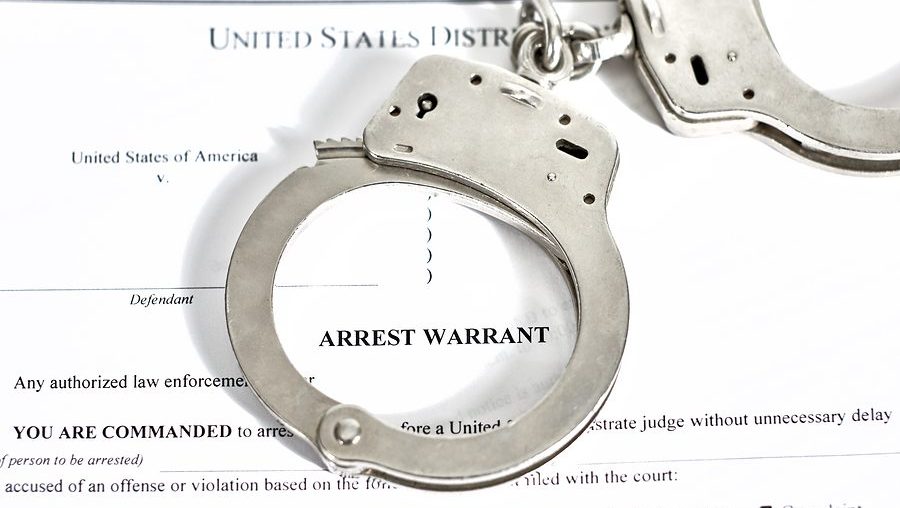
What to Do if You Just Found Out About Your Arrest Warrant

Arrest warrants are serious court orders, but they are nothing to worry about so long as you choose the proper recourse. You never want to ignore an arrest warrant, because the legal circumstances surrounding the order will only worsen as time goes on. So the sooner you deal with a warrant, the less severe your penalties are likely to be.

If you just discovered that you have an arrest warrant in your name, continue reading to learn exactly what you need to do to protect your rights and preserve your freedoms.

Criminal Defense Law Firm 317-636-7514

Arrest Warrants in Indiana

An arrest warrant is a legal court order that orders your arrest on contact. Once a warrant is issued, all local law enforcement is immediately notified through a universal database to arrest you on the spot. Police can come looking for you at home, work or school, or even while you’re out with friends. For less serious offenses and infractions, police are not likely to come after you. Instead, you can get arrested on the spot during a routine traffic stop, or during any other type of police encounter that requires law enforcement to scan your name in their database.

If this happens, you will be arrested on the spot; even if you were just pulled over for having a taillight out. As soon as the cop runs your license through their system, the warrant will appear, and they have no other choice but to detain you on the spot and take you directly to jail. If you are pulled over in a traffic stop, your car will be towed to the nearest impound lot, and you will have to pay to get it out later.

Being arrested on the spot or hunted down by police for an arrest warrant is not an ideal situation. Nor do you do not want your warrant to turn outstanding. The legal consequences for ignoring or procrastinating on an arrest warrant are exponential, so you must deal with a warrant as soon as possible to make your life easier. Courts are not lenient on those who intentionally evade a warrant, so do the right thing and get your legal process in motion.

What You Need to Do

As soon as you become aware of an arrest warrant, or even a bench warrant, your first step is to hire a licensed Indianapolis criminal defense lawyer. From there, your lawyer will manage all aspects of your arrest warrant, which will eventually involve your physical surrender to the jail. Although you will actually have to turn yourself in and be arrested, with a lawyer handling your case, you will not have to stay in jail very long. In most cases of arrest warrant surrenders, defendants are in and out in as little as one hour.

Where to Get Help With Your Arrest Warrant

Contact David E. Lewis, Attorney at Law, at 317-636-7514 for help managing your arrest warrant in Indiana. Not only can he get you out of jail quickly, he will build a strong and impactful defense against your criminal charges so that you have a chance at avoiding the maximum penalties for your suspected crimes. Our criminal defense law firm offers free initial consultations, so there is no out-of-pocket obligations to you. Call 317-636-7514 and get started protecting your future, today.

Indianapolis Criminal Defense 317-636-7514
Schedule a Free Consultation Today!

Are You Innocent of a Recent Criminal Charge in Indiana?

If you were recently arrested and charged with a crime that you are not guilty of, you should be worried. That is because, unfortunately, many innocent suspects are found guilty when they really aren’t. Naturally, the outcome of your case will depend on the skill of your criminal defense lawyer.

For these reasons, your number one priority when facing a conviction for a crime you did not commit is to retain adept, experienced, and aggressive criminal defense. Otherwise, not only can you risk being convicted, you risk being sentenced to the maximum penalties, which can include jail or prison. Furthermore, a conviction can linger in your life forever, affecting everything from your education and career, to your social life, child custody, and more.

If you were recently charged with a crime that you did not commit, continue reading to learn exactly what you need to do, starting RIGHT NOW.

Criminal Defense Law Firm 317-636-7514
v

Contact a Qualified Lawyer ASAP

Innocence is very difficult to prove on your own. You need a skilled criminal defense attorney who knows the law, the court system, the prosecutors, and magistrates. You need an experienced criminal defense attorney who knows how to build a strong and impactful defense in order to protect your rights and preserve your freedoms.

You Need David E. Lewis, Attorney at Law…

David E. Lewis, Attorney at Law is a licensed defense lawyer with more than 25 years of experience practicing criminal law, and has developed an extensive understanding of the how the justice system works in Indiana. He has a passion to reunite his clients with their loved ones so they can get back to leading a happy and law-abiding life after a distressing criminal case. The Law Office of David E. Lewis provides aggressive criminal defense for anyone charged with a crime in Indiana. And although based out of Indianapolis, our firm’s legal services are available to clients in all cities and counties within the state.

Start With an Easy Phone Call

Call David E. Lewis, Attorney at Law, at 317-636-7514 if you have been charged with a crime in Indianapolis or anywhere else within Central Indiana. He offers aggressive and experienced criminal defense for anyone facing criminal charges in Indiana. Don’t settle for an attorney that doesn’t have the drive. Attorney David E. Lewis will stop at nothing to protect your rights and preserve your freedoms. We also offer criminal record expungement services to help clean up your criminal history and improve your quality of life!

Indianapolis Criminal Defense 317-636-7514
Schedule a Free Consultation Today!

What Happens if I Do Not Show Up For My Court Date?

When it comes to facing criminal charges, you will, without a doubt, have to go to court. Although most court hearings, such as arraignments, can be handled by your lawyer without your presence, there are other court dates that do mandate your appearance. And forgetting or neglecting to show up for such court dates is not like missing a doctor’s appointment.

Continue reading to learn more about criminal court appearances, and what to expect if you do not show up for yours.

Criminal Defense Law Firm 317-636-7514

Criminal court dates are mandatory. When a person is facing criminal charges, or is involved in a criminal proceeding, they are legally obligated to show up for all court hearings. Missing a court date is referred to as a “failure to appear” or “FTA”, and it is a crime punishable by law. A person will face serious criminal charges in addition to the ones they were already charged with prior to missing their court date.

Without the help of an experienced criminal defense attorney, those charged with FTA will likely be sentenced to the maximum penalties decreed by their state. Depending on where they live and their criminal history, these penalties will vary. Continue reading to learn more about FTAs and what to expect if you are facing a similar charge in your town.

Bench Warrants

If a person misses a mandatory court hearing, they will be issued a bench warrant. This is a type of arrest warrant that demands a person’s presence on the judge’s bench. When a person has a bench warrant, they can be arrested and taken into custody at any time, whether during a routine traffic stop or at their front door. They can post bail and be released from police custody in most cases, but they will have to sit in jail for at least a few hours.

A person must face the judge once again, not only for their past matters, but for new criminal charges as a result of missing their court date. That means a separate set of penalties on top of the ones they were facing with their original charges. However, the severity of penalties for an FTA generally depends on the seriousness of the original crime a person was charged with. Penalties also vary by state. Look below for an example of misdemeanor crimes and felony crimes.

Here in Indiana…

Misdemeanor Crimes – A Failure to Appear charge will be penalized as a Class A Misdemeanor if the original crime was a misdemeanor. Class A Misdemeanors are punishable by up to 1 year in jail and $5,000 in fines.

Felony Crimes – FTAs charges are penalized as Level 6 Felonies if the original criminal charge was a felony offense. Level 6 felonies are punishable by 6 months to 3 years in jail and up to $10,000 in fines. Sometimes they can be reduced to Class A Misdemeanors for first-time offenders.

Indiana Criminal Defense Law Firm

Call 317-636-7514 to schedule a consultation with aggressive criminal defense attorney, David E. Lewis. He will stop at nothing to protect your rights and preserve your freedoms after being charged with invasion of privacy in Indianapolis. With decades of hands-on experience, you can trust Attorney David E. Lewis to build you a strong and impactful defense against your criminal charges.

Indianapolis Criminal Defense 317-636-7514
Schedule a Free Consultation Today!