
Does Your Indiana Criminal Defense Case Involve Aggravating Factors?

What are aggravating factors? If you were recently arrested in Indiana, and your criminal charges involve aggravating factors, you need to read this. Continue below to learn what you want to know about your aggravating factors, including what they mean, how they can impact your ultimate judgement, and how you can build a strong and impactful defense against them.

Indianapolis Indiana Criminal Defense Lawyers
Indianapolis Indiana Criminal Defense Lawyers 317-636-7514

Aggravating Factors

Aggravating factors are specific facts and elements involved in your alleged offense that can make your criminal charge more serious. Ultimately, if the judge or jury finds that your criminal charges do in fact involve aggravating factors, your sentence and subsequent penalties will be harsher than if your case did not involve aggravating factors. Here’s an example: Jeff was arrested for selling drugs. The location in which he was caught by law enforcement trafficking illegal drugs was within 50 yards of an elementary school. Because his offense took place within close proximity to the school, this element would be considered an aggravating factor.

In another example, if a person were to commit the crime of assault and battery against a person, Indiana statutes would penalize them with a Class B misdemeanor. However, if their offense caused the opposing party bodily harm, it would be considered an aggravating factor to the case, and their criminal charges would be increased to a Class A misdemeanor. In the same example, if the offender used a weapon against the victim, such as a baseball bat or even a beer bottle, it would be considered another aggravating factor, so the criminal charges would be increased to a Class C felony.

Mitigating Factors

Do not confuse aggravating factors with mitigating factors. Mitigating factors, also known as extenuating circumstances, are the opposite of aggravating factors because instead of increasing the severity of the charge, they reduce it or suggest the opportunity for leniency. For example, if a person is arrested shoplifting at a store to satisfy a substance abuse addiction, their criminal charges might be reduced if they agree to alternative forms of sentencing such as drug rehabilitation. This element would be considered a mitigating factor to their case.

Are you facing aggravating factors in your current or pending criminal case? Contact the Law Office of David E. Lewis at 317-636-7514 to schedule a free consultation with a seasoned Indianapolis Indiana criminal defense lawyer who cares about your freedoms.

You Might Also Enjoy:

The Difference Between Aggravating and Mitigating Factors
Factors That Affect Jail Sentences
How Your Sentence Will Be Determined as a Defendant Facing Criminal Charges

Indianapolis Criminal Defense 317-636-7514
Schedule a Free Consultation Today!

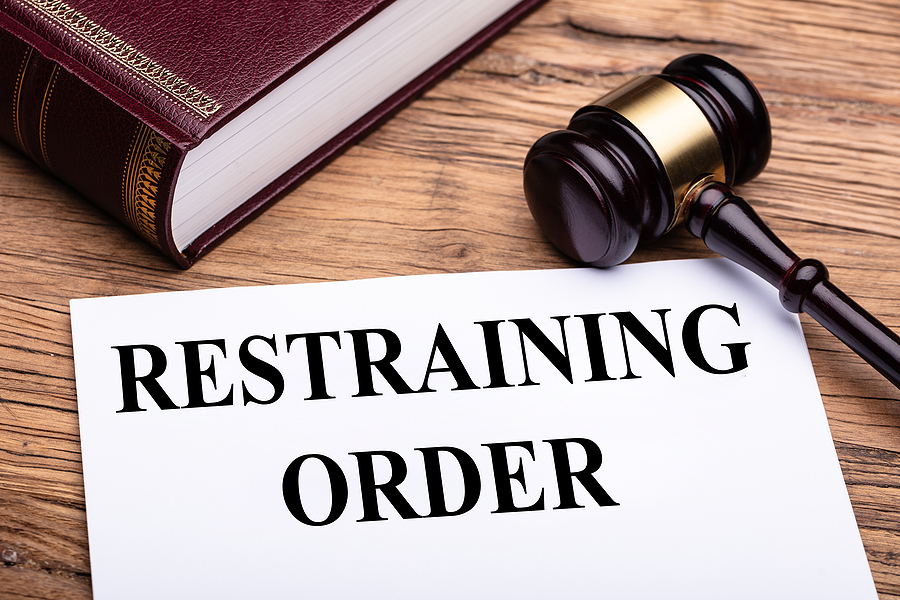
Does Someone Need Proof to Issue a Restraining Order Against Me?

Have you recently had some toxic relationship troubles? Or perhaps a person at work feels threatened by you? Maybe a family reunion over the holidays went bad at some point in the celebratory revelries? Regardless of the circumstances that got you here, facing a restraining order is not something anyone wants to deal with. Unfortunately, just about anyone can petition for a protective order against another person, so long as they have valid justification to do so. But what makes a restraining order request valid in the eyes of the law? Or at least the presiding judge?

Continue reading to learn more about restraining orders, including what is needed to officially put one into motion, and what to do if you violate one.

Indiana Restraining Order Violation Attorney
Indiana Restraining Order Violation Attorney 317-636-7514

Restraining Orders are Court-Ordered Documents

A restraining order is a court-ordered document that legally mandates a defendant (the person the order is against) to stay a specified distance away from the plaintiff (the person filing the order). In most cases, such orders are issued in situations of domestic violence or stalkers. However, they are often issued in legal matters regarding bullying, harassment, provocation, voyeurism, and similar threatening behaviors. It is against the law for a person named in a restraining order to violate any of the terms decreed.

The Process of Filing for a Restraining Order

The process of filing a restraining order is very similar to any other type of court filing process. You would go to the local courthouse, fill out the proper documents given to you by the clerk, and submit the paperwork as instructed. From there, a hearing will be scheduled in which you and the person named in the restraining order will be mandated to appear.

After delivering the facts of the case, the judge will decide if you have provided valid facts that justify granting you a restraining order against the defendant. At this same hearing, the defendant will also have the opportunity to tell their side of the story. If you are the one named in the order, it is vital to have a criminal defense lawyer represent you at this hearing.

Types of Proof

The person filing for a restraining order holds the burden of proving that they are indeed in some form of danger. They must provide facts to the judge that show the defendant is threatening and unwilling to stay away at the plaintiff’s repeated requests. Such proof might include text messages, emails, witness statements, photographs, surveillance video, police reports, and medical records. Word of mouth is not enough to convince a judge to grant a restraining order against a person.

Temporary Restraining Order (TRO)

A temporary restraining order (TRO) is basically the same thing as a standard restraining order, with the only real difference being time. Standard restraining orders, once granted, are kept active until the filer drops the order of protection. Temporary restraining orders are short-term, and only remain in effect for 15 to 20 days. They are mostly used in situations of domestic violence, as well as victims of verbal, emotional, and mental abuse.

Protective Orders Vs. Restraining Orders

Protective order is just another term for restraining order. The exact term used in court proceedings varies among jurisdictions, but they do mean the same thing. Here in Indiana, we use the term, protective order.

What to Do if You Violate a Protective Order in Indiana

Call the Law Office of David E. Lewis at 317-636-7514 to learn how to protect yourself after violating a restraining order in Indianapolis, Indiana. Attorney David E. Lewis offers free initial consultations, so you do not have to pay anything to simply talk to a lawyer and get advice on how to approach your potential or pending charges. Call 317-636-7514 to schedule your online, over-the-phone, or in-office appointment, today.

Indianapolis Criminal Defense 317-636-7514
Schedule a Free Consultation Today!

Can I Be Arrested for Defending Myself in a Fight?

If someone threatens you with physical violence, you have a right to protect yourself according to federal and Indiana law. But can you get in trouble yourself if your self defense tactics go to far? Will you be charged with assault if you defend yourself too strongly? Continue reading to find out.

Criminal Defense Law Firm 317-636-7514

Self Defense Versus Assault

Many people have a hard time defining self-defense. Although it is technically legal to protect yourself from physical violence; when does self-defense become assault? Many argue the limits of self-defense, with interpretations ranging from liberal to conservative. But regardless of common belief or misconceptions, it is the law and only the law that dictates the rules of self-defense. Indiana legislation recognizes that citizens have the right to protect their home against unlawful intrusion, as well as, defend themselves and third parties from physical harm or crime. These details can be read in Indiana Code 35-41-3-2. Here is an excerpt:

A person is justified in using reasonable force against any other person to protect the person or a third person from what the person reasonably believes to be the imminent use of unlawful force. However, a person:
(1) Is justified in using deadly force; and
(2) Does not have a duty to retreat;
…if the person reasonably believes that that force is necessary to prevent serious bodily injury to the person or a third person or the commission of a forcible felony. No person in this state shall be placed in legal jeopardy of any kind whatsoever for protecting the person or a third person by reasonable means necessary.

Evidence of Rationality

Basically, Indiana legislation is saying that a person has the right to defend themselves if two types of “rationality” are evident. First, the victim must use a form of self-defense that is reasonable to the relation of the force being used against them. For instance, if a bully pushes you, it is not reasonable to take a blunt object to their head. That would not be considered self-defense. However, if the bully were swinging a blunt object at your head, you would have the right to do the same back out of self-defense.

Second, the victim’s belief that the person will harm them with unlawful force must be reasonable. For example, if a girlfriend is yelling at her boyfriend, and then she punches him because he yelled back at her, it would not be self-defense because it was unreasonable to think that her boyfriend was going to physically harm her just because he yelled at her.  

Both elements of rationality must be present in order to qualify for defending oneself. But also, the same stipulations apply to self-defense using deadly force. If a person is trying to use deadly force against you or third parties, you have the right to defend yourself and the others with equal deadly force. For instance, if an intruder breaks into a home and aims a gun at the family, the occupants have the right to shoot and kill the intruder in order to protect their own lives.

Additional Elements of a Self-Defense Case

If a lawyer cannot persuade prosecution that a person’s self-defense claim is substantiated, then the case must go to trail and be presented to a judge and jury. In this situation, the criminal defense lawyer would have to prove the above-mentioned elements, as well as, these 3 additional ones:

1. The victim was in a place they had a right to be in.

2. The victim:
a) acted without fault;
b) did not provoke or instigate the violence;
c) did not participate willingly in the violence.

3. The victim showed a reasonable fear and/or apprehension of harm or death.

So, in the case of a stereotypical bar fight, two guys screaming at each other to “do something” or “hit me” would be considered provocation and a willingness to participate in violence. Therefore, if one guy knocks out the other guy’s teeth, a claim for self-defense would not stand up in court.

Where to Get Trusted Criminal Defense in Indiana

Call the Law Office of David E. Lewis at 317-636-7514 to schedule a free initial consultation with aggressive Indianapolis criminal defense lawyer. Attorney David E. Lewis will stop at nothing to ensure you are not charged with assault in Indiana after defending yourself against another person or group of people. With decades of hands-on experience, you can trust our law firm to build you a strong and impactful defense against your Indiana criminal charges.

Indianapolis Criminal Defense 317-636-7514
Schedule a Free Consultation Today!