Is a Public Defender a Good Choice for My Indiana Criminal Case?

If you were recently arrested for a crime, and now you are considering using a public defender as your legal counsel, it is important for you to know what to expect if you choose a court-ordered attorney. Continue reading to learn what a public defender is, what they do, and what to expect when being represented by one in Indiana. This information will help you make the right decision for your criminal defense.

Indianapolis Criminal Defense Law Firm 317-636-7514

Court-Appointed Attorneys

A public defender is a court-appointed attorney that is paid by the government to represent defendants that are incapable of affording private legal counsel. Generally, they are given to those facing jail time for misdemeanor or felony charges. Although they are fully-qualified lawyers, public defenders often carry a stigma implying otherwise. They have the equivalent training and licenses and extensive courtroom experience that private lawyers do. But this does not mean they should be a “first choice” for someone facing serious criminal charges.

Choosing a Public Defense Lawyer

After an arrest, a court hearing called an arraignment will be scheduled. This is a defendant’s initial hearing in which their criminal charges will be read to them by a judge, and then they will be asked to plead ‘guilty’ or ‘not guilty’ to their charges. For those with private counsel, their attorney will already be present. As for all others, the arraignment hearing is when a defendant will be given the opportunity to accept a public defender.

If a defendant replies yes to a public defender, one will be appointed to them for the duration of the arraignment only, or until they can prove they are indigent. Eligibility requirements for public defense varies from jurisdiction to jurisdiction. Some courts may require defendants to provide fee estimates from multiple private law firms, along with proof of financial records, to prove they cannot pay for private representation. While other courts simply take a defendant’s word or allow them to choose regardless of how much they earn.

Why Private Criminal Defense Lawyers are More Effective

Public defenders have a much heavier caseload compared to private lawyers. This means they do not have very little time to spend on each individual case. For this reason, it can be risky working with one. If you are facing criminal charges and possible jail time, you want to invest in an attorney who can dedicate 100 percent of their time and attention building a defense against your charges. They are the professionals who can afford to put time into protecting your rights and preserving your freedoms.

The Right Choice for Private Criminal Defense in Indianapolis, Indiana

Call the Law Office of David E. Lewis at 317-636-7514 to learn how you can beat your Indiana criminal charges with aggressive defense. Attorney David E. Lewis is your solution to reducing your sentence, and protecting your freedom. Our Indianapolis criminal defense law firm offers free initial consultations, so you do not have to pay anything to simply talk to a lawyer and get advice on how to approach your charges. Call 317-636-7514 to schedule your online, over-the-phone, or in-office appointment, today.
Indianapolis Criminal Defense 317-636-7514
Schedule a Free Consultation Today!

Do Not Fall for These OWI Arrest Myths

There are many acronyms to describe driving a motorized vehicle under the influence of alcohol or controlled substance. These acronyms include “DUI”, which stands for “driving under the influence”, “DWI”, which means driving while intoxicated”, and “OWI”, which means “operating while intoxicated.” The important thing to know about these three acronyms is that they all represent the same criminal charge: operating a motor vehicle while under the influence of drugs or alcohol. This includes wine, beer, liquor, street drugs, and controlled drugs like prescription medication.

If you are currently facing criminal charges for drunk or intoxicated driving, it is critical to hire a private defense attorney who can protect your rights and preserve your freedoms. In the meantime, it is also wise to educate yourself about OWI’s and subsequent charges to better understand the penalties you may face.

So, continue reading to learn the top 3 misconceptions about OWI’s and subsequent charges.

Indianapolis OWI Lawyer
Indianapolis OWI Lawyer 317-636-7514

Common OWI Misconceptions

#3 Fifty Percent of Road Fatalities are a Result of Drunk Driving

This statistic is well and wide-spread, but it is simply inaccurate. In fact, it is a bit embellished. The reality is that 40 to 50% of highway fatalities are “alcohol-related”, but this does not mean that all 40-50% are drunk-driving related. This statistic also includes pedestrians and passengers who may have had alcohol in their system. It is also inaccurate because these statistics include those with nominal amounts of alcohol in their systems, meaning only a drink or two, which does not necessarily make every person intoxicated. A more accurate representation of drunk driving fatalities lies more around ten percent.

#2 Lowering the Legal BAC Level Will Abate Drunk Driving Arrests

Humans have imbibed on fermented, alcoholic libations for centuries. And lowering the BAC levels will not thwart people from drinking. Accordingly, it is not likely it will change the rate of drunk driving either. You see, the average DUI BAC level is between 0.15 and 0.17 percent, so lowering the legal limit will not make an impact on those who are a serious threat.

#1 Breathalyzers Accurately Measure BAC Levels

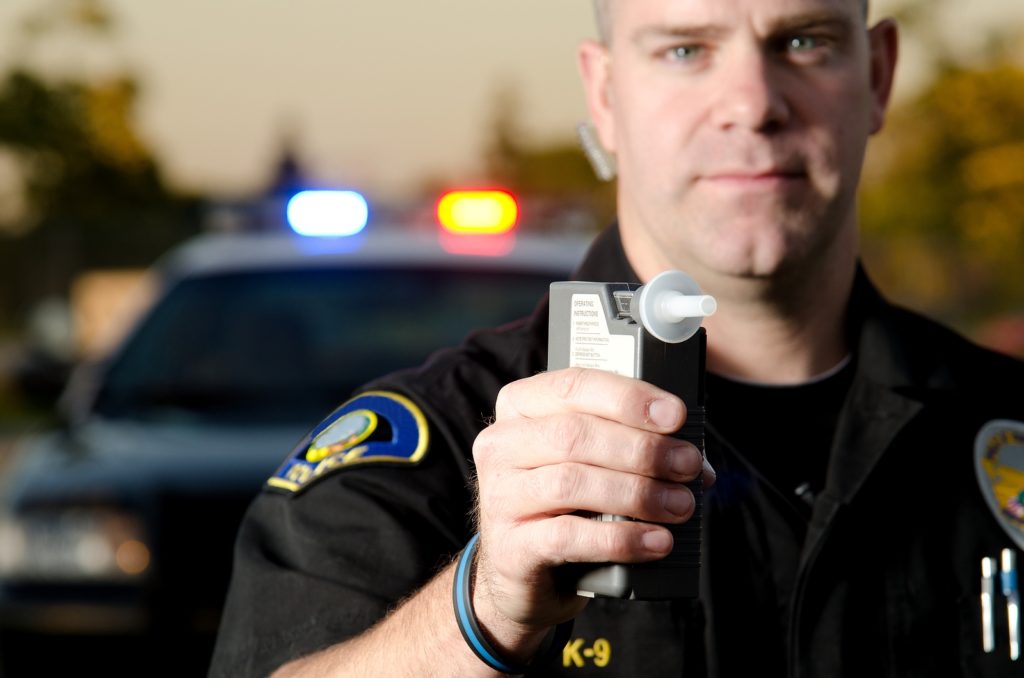
This is a common myth about DUI’s and roadside chemical breath testing. Unfortunately, these devices are not always accurate at measuring the exact alcohol content in a person’s system. This is because breathalyzers only measure the amount of alcohol content on a person’s exhaled air. This is not always an accurate (nor reliable) indication of a person’s toxicity or impairment levels, especially since there are so many variables that can influence the number derived from such devices. This include body temperature, stomach fluid, rate of respiration, and more. Talk to a criminal attorney for help defending an inaccurate breathalyzer test.

The Truth About OWI’s

Being charged with an OWI can come with steep penalties and fines. This may include jail time, community service, restricted or suspended drivers’ license, ignition interlock device, ankle monitoring, house arrest, and more. It is encouraged to retain private counsel from an experience criminal defense attorney for the best chance at avoiding the maximum penalties for your OWI charges.

An Indiana Criminal Defense Law Firm That Will Fight Your OWI Charges

Call David E. Lewis, Attorney at Law, at 317-636-7514 if you have been charged with a DUI or OWI in Indianapolis, Indiana. Our Indianapolis DUI defense team offers free initial consultations for anyone who wishes to discuss their recent OWI charges. If you have past convictions, we are also well-versed in Indiana expungement laws and provides criminal record expungement services starting at $850. Call 317-636-7514 to make an appointment today, and get started building an impactful defense against your Indiana criminal charges.

Indianapolis Criminal Defense 317-636-7514
Schedule a Free Consultation Today!

What You Should Do if Stopped By a Police Officer

When you are stopped by a police officer, whether in a public place or in your vehicle, you have certain rights, but you also have to follow certain rules. And just like you, the officer has certain rights and rules too. It is okay to not know these rules and rights, but important to learn them in the case that a cop ever stops you.

Continue reading to learn more about police and civilian interactions, including how you should conduct yourself and how long police can detain you without making an arrest.

Indianapolis Criminal Defense Law Firm 317-636-7514

The Facts About Police and Civilian Interactions

Cops are allowed to stop anyone for a certain period of time without arresting them, for purposes of determining whether or not a crime is being or was committed. Although law enforcement can stop a person and detain them without arrest, they cannot detain them for an unreasonable amount of time or indefinitely without making an arrest and filing charges. This violates our constitutional right against unreasonable searches and seizures. But “when” and “for how long” a cop can stop you without making an arrest is a little ambiguous since it depends on the particular circumstances of the encounter.

What You Can Expect During a Cop Encounter

During a typical cop stop, the amount of time they detain you will vary depending on the situation. But the reasonable amount of time for a cop to stop someone without arresting them would be however long it takes to ask them for name, address, date of birth, a photo identification, and a few questions. This is what you should expect during a typical police encounter. If you are in your vehicle, they may ask for additional documents, including vehicle registration, drivers’ license, car insurance, and title.

Remain Polite and Cooperative the Entire Time

As the person on the other end of the cop stop, you should always behave respectfully and cooperate with police. Simply refusing to identify yourself gives them the right to arrest you. Even if they are being unethical, you must remember they have the power at the moment. So it is important to clearly identify yourself, provide the documents they request, and be as agreeable and polite as possible. This will increase your chances of being excused.

Never Lie or Argue With a Police Officer

Keep in mind that you do not have to answer their questions since you have the right to remain silent, but always be polite, and never argue or lie to police. You can simply say, “I do not wish to answer any questions” and they will move forward. If you believe you were wrongfully arrested or treated by police, or detained or held in custody for too long without being charged for a crime, you should contact an Indiana criminal defense lawyer for help.

How to Fight Your Criminal Charges in Indianapolis, Indiana

Call David E. Lewis Attorney at Law at 317-636-7514 to fight your criminal charges in Indianapolis, Indiana. As an experienced and accomplished criminal defense attorney, he will build you an impactful and aggressive defense to beat or reduce your sentence. Trust our Indianapolis criminal defense law firm to protect your rights and preserve your freedoms. Call 317-636-7514 to schedule a free initial consultation, and get started on your path to justice today.

Indianapolis Criminal Defense 317-636-7514
Schedule a Free Consultation Today!

Can I Be Arrested for Defending Myself in a Fight?

If someone threatens you with physical violence, you have a right to protect yourself according to federal and Indiana law. But can you get in trouble yourself if your self defense tactics go to far? Will you be charged with assault if you defend yourself too strongly? Continue reading to find out.

Criminal Defense Law Firm 317-636-7514

Self Defense Versus Assault

Many people have a hard time defining self-defense. Although it is technically legal to protect yourself from physical violence; when does self-defense become assault? Many argue the limits of self-defense, with interpretations ranging from liberal to conservative. But regardless of common belief or misconceptions, it is the law and only the law that dictates the rules of self-defense. Indiana legislation recognizes that citizens have the right to protect their home against unlawful intrusion, as well as, defend themselves and third parties from physical harm or crime. These details can be read in Indiana Code 35-41-3-2. Here is an excerpt:

A person is justified in using reasonable force against any other person to protect the person or a third person from what the person reasonably believes to be the imminent use of unlawful force. However, a person:
(1) Is justified in using deadly force; and
(2) Does not have a duty to retreat;
…if the person reasonably believes that that force is necessary to prevent serious bodily injury to the person or a third person or the commission of a forcible felony. No person in this state shall be placed in legal jeopardy of any kind whatsoever for protecting the person or a third person by reasonable means necessary.

Evidence of Rationality

Basically, Indiana legislation is saying that a person has the right to defend themselves if two types of “rationality” are evident. First, the victim must use a form of self-defense that is reasonable to the relation of the force being used against them. For instance, if a bully pushes you, it is not reasonable to take a blunt object to their head. That would not be considered self-defense. However, if the bully were swinging a blunt object at your head, you would have the right to do the same back out of self-defense.

Second, the victim’s belief that the person will harm them with unlawful force must be reasonable. For example, if a girlfriend is yelling at her boyfriend, and then she punches him because he yelled back at her, it would not be self-defense because it was unreasonable to think that her boyfriend was going to physically harm her just because he yelled at her.  

Both elements of rationality must be present in order to qualify for defending oneself. But also, the same stipulations apply to self-defense using deadly force. If a person is trying to use deadly force against you or third parties, you have the right to defend yourself and the others with equal deadly force. For instance, if an intruder breaks into a home and aims a gun at the family, the occupants have the right to shoot and kill the intruder in order to protect their own lives.

Additional Elements of a Self-Defense Case

If a lawyer cannot persuade prosecution that a person’s self-defense claim is substantiated, then the case must go to trail and be presented to a judge and jury. In this situation, the criminal defense lawyer would have to prove the above-mentioned elements, as well as, these 3 additional ones:

1. The victim was in a place they had a right to be in.

2. The victim:
a) acted without fault;
b) did not provoke or instigate the violence;
c) did not participate willingly in the violence.

3. The victim showed a reasonable fear and/or apprehension of harm or death.

So, in the case of a stereotypical bar fight, two guys screaming at each other to “do something” or “hit me” would be considered provocation and a willingness to participate in violence. Therefore, if one guy knocks out the other guy’s teeth, a claim for self-defense would not stand up in court.

Where to Get Trusted Criminal Defense in Indiana

Call the Law Office of David E. Lewis at 317-636-7514 to schedule a free initial consultation with aggressive Indianapolis criminal defense lawyer. Attorney David E. Lewis will stop at nothing to ensure you are not charged with assault in Indiana after defending yourself against another person or group of people. With decades of hands-on experience, you can trust our law firm to build you a strong and impactful defense against your Indiana criminal charges.

Indianapolis Criminal Defense 317-636-7514
Schedule a Free Consultation Today!

What is Bankruptcy Fraud?

Bankruptcy is a type of legal protection for those who have no other choice but to start fresh, financially. The objective of Chapter 7 bankruptcy is to liquidate non-exempt assets and sort out as much debt as possible. However, the process of filing for bankruptcy can be complex, especially for those who are not keen to legal jargon and procedure. For this reason, many people are simply afraid to file bankruptcy out of fear that they might make a mistake and be audited for fraud. In fact, professional bankers recommend hiring an attorney to file for bankruptcy for the sole purpose of avoiding devastating errors that can lead to legal troubles.

But not to worry; unintentional bankruptcy fraud is not even fraud. It’s common error that can be resolved. If you make a mistake during the filing process, you will simply be informed and redirected. However, deliberate bankruptcy fraud is another situation; one that comes with serious legal penalties.

Continue reading to learn what constitutes bankruptcy fraud, as well as, the standard penalties for being convicted in Indiana.

Indiana Bankruptcy Fraud Lawyer
Indiana Bankruptcy Fraud Lawyer 317-636-7514

Bankruptcy Fraud is a White Collar Crime

Bankruptcy fraud falls under white collar crimes, which entails federal-level offenses typically dealing with large amounts of money. When a person illegally drains the revenue and profits of a business or local economy, they have committed a white collar offense. Accordingly, a person commits bankruptcy fraud by knowingly and intentionally hiding or altering information for the purpose of gaining a financial advantage. More specifically, bankruptcy fraud occurs if an applicant purposefully hides assets, secretly transfers assets to conceal them, gives false information, bribes court-appointed trustees, files multiple times in different courts, or all a combination of the above.

Most Common Types of Bankruptcy Fraud Crimes in Indiana:

Providing False Information on Documents

Hiding Assets from Liquidation

Attorney Filing Incorrect Paperwork on Behalf of Client

Intentional Discrepancies on Bankruptcy Petition

Transferring Real Estate, Money, or Assets to Family Members

Filing Multiple Cases in Separate States

Using Stolen Social Security Numbers

Filing a False Claim

Destroying or Concealing Financial Records

Giving or Accepting a Bribe

Foreclosure Scams

State and Federal Bankruptcy Fraud Laws

Because it is a federal offense, if you are charged with bankruptcy fraud, you will face some serious penalties if found guilty. The common consequences are denial of bankruptcy, large fines, and of course, a criminal record. Here in Indiana, bankruptcy fraud is charged as a Level 5 Felony, which is punishable by up to 6 years in prison and $10,000 in fines. More serious crimes can be punished by up to 20 years in prison and $250,000 in fines.

Who to Trust for Skilled Federal Criminal Defense in Indiana

Call David E. Lewis, Attorney at Law, at 317-636-7514 if you have been charged with a federal crime in Indianapolis, or within the Central Indiana counties. Our law firm offers aggressive and experienced criminal defense for anyone facing bankruptcy fraud charges or white collar crime charges in Indiana. Don’t settle for an attorney that doesn’t have the drive. Attorney David E. Lewis will stop at nothing to protect your rights and preserve your freedoms. We also offer criminal record expungement services to help clean up your criminal history and improve your quality of life!

Indianapolis Criminal Defense 317-636-7514
Schedule a Free Consultation Today!

Do I Call a Bail Bondsman or a Lawyer First?

A bail bondsman and a lawyer play two separate roles when it comes to assisting defendants in a criminal case. After your loved one is arrested, or after finding out that you have a warrant out for your own arrest, you might be torn between calling a bail bond company first, or a criminal lawyer. Although both are important, one should come before the other.

Continue reading to learn the order of events that should take place after becoming aware of an arrest warrant, or after your friend or loved one is arrested and taken to jail.

Indianapolis Criminal Defense Law Firm
Indianapolis Criminal Defense Law Firm 317-636-7514

After the Arrest of Another

Let’s start with the arrest of a loved one, whether that be a relative, friend, partner, or spouse. If they are arrested, and you are appointed the duty of managing the situation, your first step is to learn more about their arrest. To do this, you would need to contact the local county jail they are being detained in, and ask the clerk for their information. They should be able to tell you the defendant’s charges, how much the bail has been set for, your options for posting bail, and the jail address and contact information.

However, if the person has just been arrested, it may take a few hours to get this information into the jail database. In this case, it is best to wait an hour or two, and then contact a local bail bond company in the county of the jail. If you are not keen on the particular county of arrest, still contact any local bail bondsman, and they should be able to find all the information you need to begin the bail process for your loved one.

Discovering a Warrant for Your Arrest

When it comes to learning of your own arrest warrant, your first step would be to contact a lawyer, rather than a bail bondsman. A criminal defense lawyer can prearrange a surrender that best accommodates a defendant and their respective families. Otherwise, surrendering to an arrest warrant alone can lead to a longer stint in county holding, and a wider range of inconveniences, such as missing work, losing wages, inability to pay bills, and more.

Where to Find Reputable Indianapolis Criminal Defense You Can Trust

Call the Law Office of David E. Lewis at 317-636-7514 to schedule a free initial consultation with aggressive Indiana criminal defense lawyer who will stop at nothing to protect your rights and preserve your freedoms. With decades of hands-on experience, you can trust Attorney David E. Lewis to build you a strong and impactful defense against your Indiana criminal charges.

Indianapolis Criminal Defense 317-636-7514
Schedule a Free Consultation Today!

How to Win Your DUI Case in Hamilton County Indiana

If you are facing DUI charges in Noblesville, Carmel, Fishers, or anywhere else in in Hamilton County, Indiana, you might be wondering whether or not you should plead guilty or fight the case. Although pleading guilty will cut down on time and get the case closed sooner, it does entail a list of penalties and consequences. This can include hefty fines, community service, rehabilitation, probation, drug testing, suspended drivers’ license, revocation of professional licenses, and more.

Continue reading to learn what you need to know about fighting a criminal intoxicated driving charge in Hamilton County, Indiana.

Hamilton County Indiana DUI Attorneys
Hamilton County Indiana DUI Attorneys 317-636-7514

Drunk Driving Charges are Serious Matters

Most drunk driving defendants can get their charges reduced, but they are still found guilty. That is why the best option is to take a plea deal so you can eliminate jail time and avoid the maximum charges for your crime. However rare, there are some DUI cases that get dismissed, but for very specific circumstances. Continue reading to learn which scenarios are likely to result in a drunk driving conviction, and which ones may get a person off the hook.

A Guilty DUI Conviction

In a DUI case, a defendant is likely to receive a guilty conviction is there is simply no refutable evidence otherwise that they were drunk and operating a vehicle, or, if their BAC was high. A BAC of 0.08 is perhaps arguable in terms of time and so forth, but BAC’s over 0.15 or 0.2 can definitely not be defended in any way. A person with a blood alcohol level of a 0.15 or higher is well over the national legal limit of 0.08 BAC. It is even more impossible to refute a drunk driving charge if, on top of an illegal BAC, a driver also fails a field sobriety test and a blood test and there were witnesses to the act.

Possible ‘Not Guilty’ Scenarios  

A person facing a drunk driving charge may have a fighting chance for a not guilty verdict or case dismissal under certain circumstances.  For example, if a person was not actually operating the vehicle at the moment they were stopped by an officer, they could argue that they were not driving so they were not breaking the law. This can occur if a person is sleeping in their back seat while the engine was off, or if a driver pulls over to get out and walk home because they feel too drunk to drive.

Another scenario that could result in a successful trial is if a person can prove that they had more than one alcoholic drink between the time they operated their vehicle and the time they were tested by the officer. This can occur if a person drives to a bar, has a few drinks, and is then questioned by a police officer because they are sitting near their vehicle. A case could also be dismissed or found not guilty if the alcohol test was a urine test. These are not very reliable and easy to disprove in trial, especially if the defendant’s BAC was less than 0.11 percent.

These rare and unusual scenarios are still tricky to defend, and still usually result in a guilty verdict. That is why you should hire an experienced and aggressive criminal defense lawyer who can tell you whether or not you should plead guilty to a DUI charge, and why. Your seasoned Indianapolis criminal defense lawyer is ultimately your most influential weapon against the maximum penalties for your criminal charges.

Indianapolis DUI and OWI Defense That You Can Trust

Call Attorney David E. Lewis at 317-636-7514 if you are charged with a DUI or other type of intoxicated driving charge in Indianapolis, Indiana. Our licensed DUI defense lawyers will work around the clock to protect your rights and preserve your freedoms, including your driving privileges. We offer free initial consultations to discuss your charges and the best strategies for defense. Contact us today to learn your rights and get started on your defense!

Indianapolis Criminal Defense 317-636-7514
Schedule a Free Consultation Today!

Can I Get Arrested For My Friend’s Drugs?

Let’s say you were at your friend’s apartment, and the cops are called. If your friend has drugs there, do you think you would get in trouble for them too? Well, it could happen. The crime is known as being in a “place of common nuisance”, and you can be arrested for it just for being near someone who has possession of drugs or narcotics.

Continue reading to learn more about what it means to be in a place of common nuisance, and what you need to do if you are ever faced with the criminal charge in Indiana.

Indianapolis Drug Possession Lawyer
Indianapolis Drug Possession Lawyer 317-636-7514

A Place of Common Nuisance

A place of common nuisance is any private property where illegal activity is taking place. This can be a house, boat, vehicle, apartment, hotel room, or any other private residence. The most frequent crimes that occur in a place of common nuisance include the consumption and selling of illegal substances and paraphernalia. This includes street drugs, stolen merchandise, firearms, and medication.

Visiting a Common Nuisance

Anyone person that knowingly visits a place of common nuisance is committing a crime, and if caught, can be charged with “visiting a common nuisance.” Here’s an example of a situation where a person can be arrested and charged with this crime, without actually taking part in the illegal activity:

Rachel is on vacation in New York City with her best friend, Ann. While out on the town celebrating, they meet a group of guys who invite them back to their place for a drink. When the girls walk into the apartment, they immediately notice some guns on the counter, and some drugs laying out on the table. They decide to stay and have a few drinks, even though they do not like guns or use drugs. After a few drinks, the guys start smoking marijuana and the cops get called. Even though Rachel and Ann did not partake in the marijuana usage, and do not own the guns, they can be arrested and charged for visiting a common nuisance.

Maintaining a Common Nuisance

If a person allows someone, or a group of people, to use drugs or partake in illegal activity in their own home or vehicle, they can be charged with “maintaining a common nuisance.” For instance, if a girl lets her friend shoot up heroin in her apartment, she could be arrested and charged with this crime. The same applies to parents who allow their children to drink underage or use drugs in their home.

Get a Plan in Action for Unbeatable Criminal Defense for Drug Crimes in Indiana

Call 317-636-7514 to schedule a consultation with aggressive criminal defense attorney, David E. Lewis regarding your drug possession charges in Indianapolis, Indiana. He will stop at nothing to protect your rights and preserve your freedoms after being charged with possession or place of common nuisance. With decades of hands-on experience, you can trust Attorney David E. Lewis to build you a strong and impactful defense against your criminal charges.

Indianapolis Criminal Defense 317-636-7514
Schedule a Free Consultation Today!

Is it Illegal to Insult a Cop?

If a person insults a police officer, can they be cited, detained, arrested, or charged with a crime? Continue reading to find out what might happen after insulting a cop to their face in Indiana.

Indianapolis Disorderly Conduct Attorney 317-636-7514

What Happens After Insulting a Police Officer

Would you dare insult a cop? Flip them off, call them pigs, or even scold obscenities that can be construed as threats of violence? Well, we hope you would not, because it can in fact get you in trouble, depending on certain factors, and of course, how thick skinned or tolerant the cops are. So, although it is not technically illegal to insult a cop, there are some circumstances in which certain kinds of insulting remarks or behaviors can land a person in court.

The Middle Finger

The middle finger has been a long-known pejorative gesture that is meant to imply insult. By flipping the bird to a police officer, you are not breaking the law. You are, however, putting yourself in the spotlight. Cops might decide that your vulgar attitude and bold behavior are indicative of public intoxication, disorderly conduct, suspicious behavior, or something else they can stop you and question you about.

Slurs and Name Calling

Calling a cop a name, such as pig, rent-a-cop, or curse word, or ridiculing their authority, is also not considered criminal activity worthy of an arrest and conviction. In fact, there have been several instances in which local and state laws have been struck down in court; laws that allowed cops to arrest someone for “verbally challenging” them with insults just like these. However, insulting a cop with vulgar name calling or deriding their authority can provoke them, and lead to you being stopped and questioned. Although it might not end in an arrest, it will take a lot of time out of your day, and being in the hot seat is very uncomfortable. Furthermore, if you are combative or uncooperative, the cops can arrest you for disorderly conduct. So, be careful starting a fight with a cop because they almost always win, at least until court.

Fighting Words

As for more severe insults, like the F-bomb and similar aggressive insults, these can be deemed verbal challenges, or “fighting words”, which can lead to an arrest for disturbing the peace or threatening a police officer.  For example, telling a cop “F-YOU” is considered violence-inciting.

Call an Indiana Criminal Defense Lawyer if You Get in Trouble With Cops

If you get in trouble with the cops for disorderly conduct or disturbing the peace, you need a licensed Indianapolis criminal defense lawyer working on your case right away. Contact David E. Lewis, Attorney at Law, at 317-636-7514 to start building a strong and impactful defense against your criminal charges so that you have a chance at avoiding the maximum penalties for your suspected crimes. Our law firm offers free initial consultations, so there are no out-of-pocket obligations to you. Get started protecting your future, today.

Indianapolis Criminal Defense 317-636-7514
Schedule a Free Consultation Today!

Possible Penalties and Convictions for Making Counterfeit Money

When you are breaking the law, you usually know it. But what you can’t accurately imagine are the possible penalties for your crimes if ever caught and convicted. As for counterfeiting U.S. money, the scope of consequences and convictions are considerable. If you are currently producing fake United States currency, or have been recently indicted on counterfeiting charges, it is in your best interest to learn what might come of your arrest if convicted in the end.

Continue reading to learn more about counterfeit money offenses and possible penalties, including where to get the aggressive criminal defense you need to avoid a white collar conviction, or in the least, a jail sentence.

Indianapolis Counterfeiting Lawyer
Indianapolis Counterfeiting Lawyer 317-636-7514

White Collar Crimes

The offense of counterfeiting United States money falls under the category of white collar crimes. Such crimes are those that generally involve illegally draining the revenue and profits of a business or local economy. Common examples include extortion, money laundering, insider trading, and of course, counterfeiting. When it comes to counterfeiting white collar crimes, forgeries of currency are the most common, but it can also include other types of crimes, such as car parts, watches, handbags, electronics, clothing, pharmaceuticals, and more.

Penalties for Money Counterfeiting

The penalties and convictions for money counterfeiting crimes in the United States vary from state to state, and depend on several other factors, such as the severity of the crime and quantity of funds counterfeited. In all cases, counterfeiting money is a federal level offense, also known as a felony.

Here in Indiana, the possible level of offenses and penalties for forging U.S. currency are as follows:

? Forgery – Level 6 Felony – 2 to 9 Years in Prison – Up to $10,000 Fines

? Counterfeiting – Level 5 Felony – 6 Months to 3 Years in Jail – Up to $10,000 Fines

*Indiana Code Section 35-43-5-1 and 35-43-5-2 (Forgery/Counterfeiting)

Using Counterfeit Money

The act of producing and distributing forged U.S. currency is a Federal offense. So is the act of using counterfeit money; that is, if you are aware that it is fake. This is known as intentional fraud, which is a felony, the same as manufacturing counterfeit money. If you discover that you are in possession of forged currency, even if you unintentionally used some, notify authorities (a bank or police) immediately to avoid legal repercussions. A person can only be convicted of manufacturing or using fake money if it can be proven beyond a doubt they did so knowingly.

If federal agents suspect you of committing the crime of money currency, they will indict you on such charges, and then obtain a legal order to confiscate any and all personal belongings and equipment suspected of being used to commit the crime, including all electronics. Your first priority at the moment of being arrested or indicted on money counterfeiting charges is to remain silent and obtain legal counsel as soon as possible. A white collar lawyer in Indiana can build a strong defense and help you evade conviction or the maximum penalties.

Where to Find a Skilled Criminal Defense Lawyer in Indiana

If you do not already have a licensed Indianapolis criminal defense lawyer working on your Indiana white collar crime case, you need one right away. Contact David E. Lewis, Attorney at Law, at 317-636-7514 to start building a strong and impactful defense against your Federal or Indiana criminal charges so that you have a chance at avoiding the maximum penalties for your alleged crimes. Our esteemed criminal defense law firm offers free initial consultations, so there are no out-of-pocket obligations to you. Get started protecting your future, today.

Indianapolis Criminal Defense 317-636-7514
Schedule a Free Consultation Today!