The Do’s and Don’ts of Getting Arrested

Criminal Defense Law Firm 317-636-7514

Criminal Defense Law Firm 317-636-7514

Movies are a poor example of what an arrest looks and feels like to the person being detained. It isn’t easy to imagine what it’s like to be arrested unless you have experienced or witnessed it first-hand. But in the case that it could happen to you, it is wise to know how to behave in accordance with the law. The stress, fear, and anxiety that comes along with being placed under arrest can be overwhelming, but one wrong move or impulsive decision can tack on additional criminal charges that come with harsher penalties, like jail time and fines. Continue reading to learn how you should handle being arrested if it ever happens to you.

What to Do:

In the case that a law enforcement officers notifies you that you are being placed under arrest, it is vital to your future and freedom to remain calm and make good decisions. Here’s how to do that:

DO remain calm and stay where you are. If you are in a car, remain seated with your hands on the wheel or dashboard, unless the officer instructs you otherwise. If you are not in a car, simply remain in the position you were in, whether sitting or standing, unless the officer instructs you otherwise.

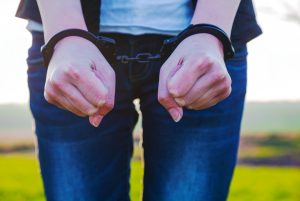
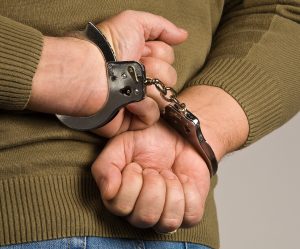
DO allow law enforcement officers to handcuff you and place you in their police vehicle. The handcuffs will be very tight, as they are designed that way for a reason, so don’t assume they are put on wrong. If you are cooperative and calm, the officer may allow you to be handcuffed from the front for a more comfortable position.

DO be polite and cooperative with all law enforcement and jail staff. Whatever they ask of you, be respectful. The more cooperative you are, the easier the entire process will be. Whether you think so or not, they want you out of there as much as you do, and they are just doing their best to make that happen. By remaining courteous and obedient, you gain trust and respect, which may get you more jail privileges for the time you are there. Keep in mind, you can be in jail for as little as one hour, to as long as 24, depending on traffic and cooperation.

DO call a criminal defense lawyer as soon as you are given an opportunity to use a phone. They can work with you over the phone to arrange a bail and get you released you from jail. Once you are out of jail, you can start working on your case with your lawyer. The sooner you contact your lawyer, to faster they can begin building your defense.

What NOT to Do:

DON’T flee. Never try to run away from police, or attempt to flee before being placed under arrest. If you are in a car, do not try and drive away. This is a huge no-no since it leads to more serious charges, harsher penalties, and jail time. It is never worth the trouble of running because they will eventually find you, and then you are in even more trouble than what you were originally.

DON’T be argumentative and disrespectful to law enforcement. Never talk back to police officers or argue with them in any way. Do not try to test them, bother them, talk over them, or persuade them. This will only get you in more trouble, and extend the amount of time the entire process of being arrested, processed, and bailed out of jail, takes.

DON’T be disobedient and difficult with police and jail staff. You should never disobey law enforcement when they are telling you what to do. DO not disagree with them or complain about anything. You are under their care and custody, and the best way to get out is to respect and accept the process.

DON’T wait for your court date in jail if you don’t have to. Do not miss the opportunity to get out of jail with the help of a licensed bail bondsmen. You could potentially wait weeks or months in jail before a judge can see your case. Never wait in jail when you can just call your lawyer and post bail. This is also beneficial because you get to await your court date from the comfort of your home and you don’t have to miss work.

Indianapolis Criminal Defense

David E. Lewis Criminal Defense Attorney

David E. Lewis Attorney at Law 317-636-7514

Call Attorney David E. Lewis at 317-636-7514 to learn your rights following an arrest in Indianapolis, Indiana. Our criminal defense law firm will stop at nothing to obtain a more favorable outcome to your criminal charges. Call 317-636-7514 to schedule a free initial consultation with an Indianapolis criminal defense attorney you can trust.

Can I Use a Recorded Phone Conversation as Evidence in Court?

Criminal Defense Law Firm 317-636-7514

Criminal Defense Law Firm 317-636-7514

When someone is accusing you of a crime against them that you are innocent of, it can be frustrating finding ways to prove that they are lying, especially in a court of law. Many people in this situation turn to voice recordings in order to catch the accuser admitting to their lies unknowingly. Although a good plan, it is unfortunately not a lucrative one. There are various federal and state laws regarding the types and limits to evidence admissible in court. Not only are the types of evidence limited, there are also strict regulations on the requirements for authentication.

Admissible Evidence

Although the laws surrounding evidence vary among jurisdictions, the general rule for evidence is that it cannot be used in court if it was obtained illegally. Under the individual penal codes in most states, superstitiously tape recording a phone conversation is illegal, therefore, it would not be admissible in court as evidence. To make it legal, you would have to notify the person that the conversation is being recorded, or receive their permission to record them.

✇ Both Parties Must Consent:

There are 12 states that require both parties to consent to a recorded conversation. These states include California, Connecticut, Delaware, Florida, Illinois, Maryland, Massachusetts, Michigan, Montana, New Hampshire, Pennsylvania and Washington.

✇ One Party Must Consent:

There are a few states in which only one party is required to give consent to a recorded conversation, and this party could be the person who chooses to record. These states include New York, Louisiana, and Texas.

The Above Rules May Be Mute Based on Predicate

Although states may have regulations that make voice recordings admissible in court, they can still be denied as evidence due to a lack of predicate. To record a conversation that can be admissible as evidence in court, you must also establish a foundation for the recorded conversation to ensure that your evidence is reliable.

Rule of Predicate Include:

1) You must show that the voice on the tape actually belongs to the person you say you are recording, rather than a person pretending to be someone else;

2) You must demonstrate that the recording device you used to make the recording is capable of providing accurate recordings.

3) You must prove that the recording is a realistic representation of the conversation that actually took place. Wind and other exterior elements can cause recordings to cut in and out, which is a problem in court.

4) You must prove that the recording was not interfered with or tampered in any way.

Consult with a Licensed Criminal Defense Lawyer

Criminal Defense Lawyer Indianapolis Indiana

Criminal Defense Lawyer 317-636-7514

Before you decide to record a conversation for the sake of having evidence for your criminal case, talk to your trusted criminal defense lawyer first. The rules and regulations for admissible evidence vary greatly among federal and state jurisdictions, so it is helpful to learn more about them from a licensed attorney with decades of experience in criminal law.

Call David E. Lewis, Attorney at Law, at 317-636-7514 for aggressive criminal defense in Indianapolis, Indiana. Our law firm offers free initial consultations to discuss the best strategies for your defense. Avoid the maximum penalties for your Indianapolis criminal charges by calling Attorney David E. Lewis at 317-636-7514, today.

Indiana Has a Zero Tolerance Law for Underage Drinking

Underage Drinking Lawyer 317-636-7514

Underage Drinking Lawyer 317-636-7514

Teenagers face peer pressure every day. Whether on television, in the movies, at school, or among friends, teens are constantly influenced by what they see and hear around them. As a minor, one of the most common influences at this age is alcohol. It can be easy for them to give in to the adolescent theory that underage drinking is acceptable and there are no real consequences to worry about. But in Indiana, this is far from the truth.

There are real consequences to underage drinking in various aspects of life, including the law. Indiana retains a Zero Tolerance Law against underage drinking, so parents and guardians should do their best to educate their pre-teens on these laws to protect them from making dangerous choices with their peers.

Continue reading to learn more about the Indiana Zero Tolerance Law, and who to call if your teenager is facing criminal charges for underage drinking in Indianapolis.

Underage Drinking in Indiana

Teenagers under the age of 17 who are caught committing an alcohol-related offense will be tried in the juvenile court system. Consequences for possessing, consuming, purchasing, or transporting alcohol under the age of 18 generally include fines, restitution, probation, community service, substance abuse treatment, drug screening, victim impact panels, alcohol and drug education courses, counseling, and more.

Teenagers are not the only ones subject to criminal consequences for underage drinking. In Indiana, an individual must be 21 years of age to lawfully purchase and consume alcoholic beverages. For those who are 18, 19, and 20 years old, this can feel quite trivial since there doesn’t seem to be much separating them from lawful drinkers except a year or two of age. But the reality is, the law is the law, and underage drinking is set at a certain limit to protect people. Even if you are a few months away from being 21 years old, it is still against the law to consume, possess, transport, and purchase alcohol. And if you are caught, the legal consequences are worse than if you were 15 years old.

Defendants over the age of 18 can be charged with a Class C Misdemeanor, which is punishable by a $500 fine, 1 year license suspension, and up to 60 days in jail. Additional consequences may apply too, depending on priors, enhancements, and jurisdiction. That is why it is vital to hire an experienced criminal defense lawyer to represent your case. They have the experience, knowledge, and resources to help you avoid the maximum penalties for your criminal charges.

Indianapolis Criminal Defense Law Firm

David E. Lewis Criminal Defense Attorney

David E. Lewis Attorney at Law 317-636-7514

Call David E. Lewis, Attorney at Law, at 317-636-7514 for aggressive and experienced criminal defense in Indianapolis, Indiana. Our law firm offers free initial consultations to discuss the best strategies for defense against your criminal charges. Call 317-636-7514 to schedule your consultation with a trusted Indianapolis criminal lawyer, today.

What is Going to Happen at My Pre-Trial?

Indiana Criminal Defense Attorney 317-636-7514

Indiana Criminal Defense Attorney 317-636-7514

If you were arrested and charged with a crime in Indiana, you have the option of taking your case to trial, rather than enter into a plea deal. Nearly all cases never go to trial, but if you are adamant about your innocence, you can opt for a trial by jury, or a bench trial. Bench trials, however, are only granted if all three parties (the judge, the prosecutor, and the defense) agree to a bench trial. In a bench trial, the judge is the sole decision making and decides on the final verdict. At a jury trial, the jury decides the verdict and the judge decides the sentence. But the sentence is not handed down at the pre-trial.

If you are preparing to go to trial to fight the criminal charges against you, it is important to know what to expect. Discuss your trial expectations and concerns with your criminal defense lawyer for a better understanding of the criminal process. In the meantime, continue reading for a brief explanation of what happens at a criminal trial in Indiana.

Trial By Jury

The judge decides which facts and evidences are allowed to be presented at trial. Both your attorney and the prosecuting attorney will take turns making certain objections until the judge makes a final decision. Then a jury is selected and instructed by the judge. From there, your pre-trial will commence with the prosecution’s opening statements.

After the prosecution’s opening statements, the prosecuting attorney will present all evidence against you. It is the burden of the prosecution to prove that you are guilty beyond a reasonable doubt. When the prosecuting attorney is finished presenting their evidence, they will begin to call witnesses to the stand for testimony. During this time, the defense will be given an opportunity to cross-examine them one at a time, questioning the honesty, validity, and accuracy of each witness’ testimony.

Indiana Criminal Defense Trial Lawyer 317-636-7514

Indiana Criminal Defense Trial Lawyer 317-636-7514

When the state rests, the defense will take their turn to give their opening statements and present their case. Once the defense has given their case summary and presented their evidence, they will begin to call their witnesses to the stand, during which the prosecution will also have a chance to cross-examine each one.

When cross-examinations are through, both parties rebuttal the evidence presented. When this portion of trial comes to a rest, closing arguments are made. The state will go first and last, with the defense closing arguments in between.

After closing arguments, the judge will instruct the jury once more, and then ask them to begin deliberations. Jury deliberations can last anywhere from a few minutes to a few hours or more. Some juries have deliberated for weeks and months at a time; it just depends on how long it takes for them to come to a unanimous agreement. But in most cases, it takes less than a few hours.

When the jury does come to an agreement, they will reenter the courtroom and the judge will ask them to read their verdict. Then they will deliver a “guilty” or “not guilty” verdict. If you are found guilty, the judge will schedule a sentencing trial, usually within 20 to 30 days. During this trial, you will be handed down a sentence for your conviction. If you are found not guilty, you are simply free to go home and will not have to appear at any more trials or hearings.

Keep in mind that all cases vary depending on their individual circumstances, and the process could differ among defendants. It is important to learn what to expect at your trial from your Indianapolis defense lawyer. They can apply your unique case details and circumstances to the trial process, and explain what will happen in a language you can understand.

Indianapolis Criminal Defense

David E. Lewis Attorney at Law

David E. Lewis Attorney at Law 317-636-7514

Call David E. Lewis, Attorney at Law, at 317-636-7514 to get the aggressive Indianapolis criminal defense you need to avoid the maximum penalties for your charges in Indiana. We offer free initial consultations to discuss your charges and the best strategies for defense. Our team works around the clock to ensure your rights are protected and your freedoms are preserved. Call 317-636-7514 to schedule a meeting with an experienced criminal defense lawyer in Indianapolis, Indiana.

Why You Never Waive Your Right to an Attorney

Indiana Criminal Defense Attorney 317-636-7514

Indiana Criminal Defense Attorney 317-636-7514

When you are arrested as a suspect in a crime, before you are even officially charged your first priority should be to contact a licensed and experienced criminal defense attorney. Being charged with a crime is a very serious matter, regardless of the severity of charges or penalties. Whether you are caught shoplifting a stick of gum or driving while intoxicated, a criminal record is a serious matter that requires adept legal representation.

A lawyer has the skills, resources, and professional connections to work the best possible defense against your charges in order to protect your rights and preserving your freedoms. If you want to avoid the maximum penalties for your criminal charges, you need an attorney.

Public Defense

Although you have the option of choosing a public defender, who are also real lawyers, there are numerous downfalls for going that route. There are monumental differences between a public defender and a criminal defense attorney, and several advantages in using private counsel rather than public defense. But having legal representation either way is important, so be sure to never waive your right to an attorney if you are charged with a crime.

You Can’t Represent Yourself

Indiana Criminal Defense Attorney 317-636-7514

Indiana Criminal Defense Attorney 317-636-7514

Thinking you can represent yourself in your criminal case is a major misconception. Anyone who does not professionally practice criminal defense is incapable of representing a criminal case successfully. There are various complexities involved, all of which vary themselves depending on the individual circumstances of the case. So taking the risk of waiving your right to counsel and losing your case can render severe short term consequences, but also ones that follow you throughout your entire life.

Criminal Charges Come With a Criminal Record

Criminal charges don’t just come with a list of penalties, like possible jail time, hefty fines, court fees, filing costs, probation, community service, suspended drivers’ license, and random drug screening. Criminal charges come with a permanent record. And a criminal record, regardless of its severity, can hold a person back from several opportunities in life, including viable employment, promotions, professional licenses, home ownership, proprietorship, governmental clearances, and much more. It can even implicate a couple’s ability to adopt a child. So it is important to handle a criminal charge it the most aggressive and sure-fire way, and that is to always take advantage of your right to hire an attorney. Never waive your right to counsel.

Indianapolis Criminal Defense

David E. Lewis Attorney at Law

David E. Lewis Attorney at Law 317-636-7514

Call David E. Lewis, Attorney at Law, at 317-636-7514 if you are facing criminal charges in Indianapolis, Indiana. He is a licensed and aggressive criminal defense lawyer that will stop at nothing to protect your rights and preserve your freedoms, regardless of the crimes you are charged with. Our Indianapolis criminal defense law firm offers free initial consultations to discuss your case and the possible strategies for defense. Call 317-636-7514 to get started on yours, today.

Can You Get in Trouble for Ignoring a Subpoena?

Criminal Defense Attorney 317-636-7514

Criminal Defense Attorney 317-636-7514

A subpoena is a legal document that legally requests a person to provide information, testimony, and/or evidence to the court regarding a criminal or civil matter. There are two types of subpoenas, one that requires your appearance in court to provide testimony, and another that simply requires you to provide records, physical evidence, or documents to the court. They are serious legal documents that require some serious attention. Continue reading to learn more about subpoenas, and what happens if you
fail to respond to one.

Court-Ordered Subpoenas

Although most commonly used for civil cases, such as divorces, accidents, and custody disputes, subpoenas are also used for criminal cases. They are used by both the prosecution and the defense to gather evidence and build a case. If the law believes that a person has information that can help prove or defend a criminal case, the courts can issue a subpoena to legally order that person to provide the information they need.

Example 1: Brenda is a cocktail waitress at the local sports bar. She witnesses a bar fight that results in serious injuries to one of the regular patrons. The regular patron files an injury lawsuit against the other participant in the fight. Later, she is served with a subpoena mandating her to provide testimony in court regarding her narrative of the incident.

Example 2: Archie is Brenda’s employer at the bar she works at. She is getting a divorce, so he is subpoenaed by the court to provide her employment and paycheck records.

Managing a Subpoena

If you are served with a subpoena, never ignore it. Failing to respond to a subpoena on time can result in serious legal consequences, including hefty fines, criminal charges, and imprisonment. If you are being represented by a lawyer, and you are served with or issuing a subpoena, your lawyer will generally handle all of the associated needs. If you are representing yourself, you can request a blank subpoena document signed by the court clerk and fill it out there.

Subpoenas must be served in-person or by registered mail. Neither yourself nor lawyers can deliver or issue subpoenas. Lawyers will appoint a process server to deliver the subpoena to the recipient since it is not allowed to have anyone involved with the case handle this part of the process. If they are not properly delivered, they cannot be enforced by law.

Indianapolis Criminal Attorney

Criminal Defense Lawyer Indianapolis Indiana

Criminal Defense Lawyer 317-636-7514

Call David E. Lewis, Attorney at Law, at 317-636-7514 if you were served a subpoena in Indianapolis, Indiana. He is an experienced and aggressive criminal defense lawyer that is eager to help you with your legal matters. He offers free initial consultations and even provides criminal record expungement services for those looking to seal their criminal history. Call 317-636-7514 to schedule your consultation with a trusted Indianapolis criminal attorney, today.

Inmate Evaluation and Prison Assignment in Indiana

Criminal Defense Attorney 317-636-7514

Criminal Defense Attorney 317-636-7514

Until the recent changes to the Indiana Criminal Code, anyone serving more than one year would be assigned to a prison rather than a county facility. But now, inmates are serving lengthier sentences in county jails, keeping prisons reserved for those facing extended periods of incarceration. Indiana is home to roughly 20 facilities that are designated as prisons. They range in security levels, categorized as either a minimum, medium, or maximum security facility.

Indiana Prisons

Minimum security prisons are set up in dormitory-style housing and less restrictive in terms of inmate security and privileges. They often include work-release programs as well. In fact, the Indiana Department of Corrections (IDOC) has 14 work-release institutions available for inmate placement. Medium security facilities are more restrictive, and usually designed with both dormitory housing and cell block living quarters. Maximum security prisons use the highest security measures for inmates, and divided in cell block fashion. Indiana has 6 minimum security prisons, 9 medium security prisons, and 4 maximum security prisons.

Inmate Placement

As of last year, The Indiana Department of Corrections uses a new system for inmate placement. In order to assign inmates to prison facilities in Indiana, each inmate is evaluated and then classified based on several factors, including the safety of the public, staff, and the offenders themselves, as well as, any educational, medical, or personal needs of offenders.

After sentencing, inmates are transferred to an intake facility, such as the Reception Diagnostic Center (RDC) in Plainfield, Indiana. There, they are evaluated and categorized, and then transferred to an assigned prison according to the factors mentioned above. This system ensures inmates are placed in the proper prison facilities.

Criminal Defense in Indiana

If you are facing criminal charges in Indiana, you need to have an aggressive and experienced criminal lawyer in your corner. They are your greatest hope at avoiding the maximum penalties for your suspected crimes. Depending on the details of your case, you could possibly evade jail time altogether! But without strong criminal defense, your future and your freedom are solely in the hands of the prosecution.

David E. Lewis Attorney at Law

David E. Lewis Attorney at Law

David E. Lewis Attorney at Law 317-636-7514

Call 317-636-7514 to schedule a consultation with aggressive Indiana criminal defense attorney, David E. Lewis. He will stop at nothing to protect your rights and preserve your freedoms. With decades of hands-on experience, you can trust Attorney David E. Lewis to build you a strong and impactful defense against your criminal charges. Call 317-636-7514 to schedule a free initial consultation for Indianapolis criminal defense, today.

Can I Tape Record an On-Duty Police Officer?

Criminal Defense Attorney 317-636-7514

Criminal Defense Attorney 317-636-7514

With the abundance of audio and video technology available today, most people are walking around with cameras and smart phones that have high-tech capabilities. And with the combination of free Wi-Fi and personal hot spot zones, they can easily and instantly share and upload their recordings from almost anywhere. Over the past few years, a popular use for personal recording devices has been to record police encounters.

As more and more police brutality stories are hitting the news, more and more citizens are becoming paranoid of cops using excessive force or unfair use of their authority. For this reason, many more people are choosing to audio tape their personal encounters with law enforcement, while many others are choosing to video record on-duty police interacting with other citizens or suspects.

Your Rights to Record

But does the law set limitations for this? Are people allowed to record and publicize on-duty police? Lately, this has been a hot topic among law enforcement, the American public, and the Supreme Court. Many people believe it is an obstruction of justice, and even dangerous, to tape record on-duty officers. They argue that the right to film could cause problems conducting sensitive investigations, securing crime scenes, and even discourage people from speaking honestly with cops.

For instance, a couple of years ago Illinois passed an eavesdropping bill that punished anyone who recorded an on-duty police officer in a public place without consent of all parties. The penalty for violators included a felony charge and up to 15 years in prison. This law was later found unconstitutional in a federal appeals court since it violated free speech rights. The opposition filed an appeal against this ruling, but the Supreme Court declined to hear it. This left the federal appeals court conclusions, binding. This means that it is LEGAL in all 50 states to record on-duty police officers in a public place (without consent) as long as it does not interfere with them doing their job.

Sending the Right Message

Criminal Defense Attorney 317-636-7514

Criminal Defense Attorney 317-636-7514

It is important to remember that the police brutality videos shared over the years are not an accurate representation of all police officers whatsoever. Every person is different, and the cops that chose the poor behaviors recorded in such videos are individuals acting out on their own personal emotions and agendas. Many times, law enforcement is unfairly publicized in a poor light, giving the impression that they have done something inappropriate when they have simply followed protocol.

It is important to know the difference, and to also appreciate and respect our city’s first line of defense.

On the other hand, the duty of law enforcement is to protect, not intimidate. So if you believe you were unfairly treated by a police officer, it is recommended to contact a criminal defense lawyer to learn your rights. Choose a lawyer with experience and a passion for justice. Choose Attorney David E. Lewis.

Indianapolis Criminal Defense

Criminal Defense Lawyer Indianapolis Indiana

Criminal Defense Lawyer 317-636-7514

Call Attorney David E. Lewis at 317-636-7514 to learn your rights following an arrest in Indianapolis, Indiana. Our criminal defense law firm works around the clock to protect your rights and preserve your freedoms. David E. Lewis, Attorney at Law, has decades of trial and litigation experience, and will stop at nothing to obtain a more favorable outcome to your criminal charges. Call 317-636-7514 to schedule a free initial consultation with an Indianapolis criminal defense attorney you can trust.

Your Social Media Activity Can and WILL Be Used Against You in Court

Twitter, Instagram, Facebook, Snap Chat, and so on. There are numerous social media platforms to choose from. But just because you set your preferences to “private” doesn’t mean your social media is truly protected and hidden from others. Anything you choose to put on the internet is documented forever, and out there for the public to see. And people are now starting to realize this as prosecutors are using social media activity against defendants more and more. And they are doing this within their legal means. Continue reading to learn how social media can be used against you in court.

Social Media is Evidence

Criminal Defense Attorney 317-636-7514

Criminal Defense Attorney 317-636-7514

The government, social services, law enforcement, and of course, the court system, can legally use a person’s social media activity as evidence in a court of law or for other case proceedings. These agencies can easily prove that incriminating statements found on your social media pages came from your device and were posted by you by using certain identifying information. This includes your unique IP address, IP history, and Meta Data. This provides dates, times, locations, email addresses, connected accounts, cloud information, and more.

For instance, if you posted an image of you vandalizing school property on Instagram, and later arrested as a suspect for the crime, prosecution CAN and WILL use those pictures as evidence that you are guilty. And the evidence will be admissible in court.

In another example, if a person posts a statement bragging about beating someone up, their post can be used against them to prove that they are guilty of assault. On the other hand, if you were arrested as a suspect for a crime, but your social media places you in a different city or state at the time that the crime took place, you could be dropped as a suspect.

Social Media Advice

Be careful what you post online, especially if you are involved in any type of legal battle. The information you think is private is not private to everyone. And even if you delete posts, they still exist in IP history (which you cannot access and permanently delete either) for quite some time. If you are facing criminal charges, it is best to avoid social media use altogether. Law enforcement does need a warrant to investigate a defendant’s social media, but these are easy for them to acquire, and they will do it. This applies to court cases for child custody, divorce, and much more. Social media is so widely-used by people of all ages, it is a huge source of evidence in many types of court cases.

Criminal Defense in Indiana

Criminal Defense Lawyer Indianapolis Indiana

Criminal Defense Lawyer 317-636-7514

Call David E. Lewis, Attorney at Law, at 317-636-7514 if you were recently arrested for a crime, and now facing criminal charges in Indiana. He is an aggressive and experienced criminal defense lawyer that will stop at nothing to protect your rights and preserve your freedoms. He offers free initial consultations, so get in touch today! Let him build a strong and impactful defense on your behalf, and guide you in the direction of your best interests. Call 317-636-7514 to get started right away.

The Tough Reality Behind Underage Drinking Arrests

Juvenile Criminal Lawyer 317-636-7514

Juvenile Criminal Lawyer 317-636-7514

The summer is a time for outdoor fun and relaxation, and many friends and family spend this season enjoying outdoor activities like pool parties, barbecues, concerts, and more. And since alcohol consumption is a part of having fun and relaxing, many people like to add it to the entertainment. Unfortunately, this also includes those who are not yet old enough to legally consume alcoholic beverages. Although underage drinking is illegal, it is bound to take place anyway. So if an underage person is caught by law
enforcement, it will lead to an arrest.

If you were recently arrested for underage drinking, you are facing a list of potential consequences. Consequences that are much worse than how your parents will react to your arrest. Continue reading to learn what to expect from underage drinking charges, and the proper steps you need to take after an arrest to secure your future.

The Outcome of Arrest

In Indiana, an underage drinking conviction is a misdemeanor, which is any crime punishable by up to one year in jail. You can expect to lose your drivers’ license, and be sentenced to several court-ordered penalties like probation, community service, large fines, ankle monitors, random drug tests, and even jail time. In fact, if you are found with a false I.D. you are more likely to face some jail time. The extent of your penalties will be entirely up to the judge and prosecution.

Criminal Defense Attorney 317-636-7514

Criminal Defense Attorney 317-636-7514

Aside from the general penalties of an underage drinking conviction, a misdemeanor can drastically change a person’s otherwise bright future. Teens and young adults arrested for this youthful mistake also face life-altering consequences. For instance, a criminal record can make it much harder to obtain college admissions and/or scholarships. It can also impact internship and job opportunities.

What to Do Next

The safest and most effective step towards minimizing the life-long consequences of an underage drinking charge is to hire an experienced Indianapolis criminal defense lawyer to professionally navigate your case. They have the knowledge, experience, and drive to build an impactful defense on your behalf, and work with the prosecution to reduce your charges and subsequent penalties as much as possible.

Indianapolis Criminal Defense

Criminal Defense Lawyer Indianapolis Indiana

Criminal Defense Lawyer 317-636-7514

Call Attorney David E. Lewis at 317-636-7514 for experienced and aggressive Indianapolis criminal defense you can trust. He is a seasoned criminal defense lawyer with decades of experience representing clients facing a wide range of criminal charges. If you or a loved one was arrested for underage drinking in Indiana, he can protect you from over-penalization and unfair sentencing conditions! Call 317-636-7514 to schedule a free initial consultation, today.